Understanding how many kW a toaster uses helps you manage energy consumption and reduce costs. Most standard toasters use between 0.8 to 1.5 kW, depending on size and features. This guide breaks down power usage, compares models, and offers tips for energy-efficient toasting.
Key Takeaways
- Standard power range: Most home toasters consume between 0.8 and 1.5 kilowatts (kW), depending on wattage and design.
- Energy use per cycle: A typical toasting session lasts 2–4 minutes and uses roughly 0.03 to 0.07 kWh of electricity.
- Higher wattage = faster toasting: Toasters above 1,500 watts heat up quicker but may use more energy if left on longer than needed.
- Energy-saving features matter: Look for auto shut-off, cool-touch exteriors, and dual slots to reduce unnecessary power draw.
- Impact on utility bills: While a toaster’s daily use is minimal, high-efficiency models can lower long-term energy costs.
- Safety first: Always unplug your toaster when not in use and avoid using it with wet hands or damp bread.
- Comparing appliances: Unlike blenders or microwaves, toasters have short run times, making their overall energy footprint small.
📑 Table of Contents
- How Many Kw Does a Toaster Use? A Complete Guide to Energy Consumption
- Understanding Kilowatts and Power Usage
- The Average Power Consumption of a Toaster
- Factors That Influence How Much Power a Toaster Uses
- Comparing Toasters: Efficiency Across Models
- How to Reduce Your Toaster’s Energy Footprint
- Environmental Impact and Cost Savings
- Safety Tips When Using High-Power Toasters
- Frequently Asked Questions About Toaster Power Usage
How Many Kw Does a Toaster Use? A Complete Guide to Energy Consumption
Have you ever wondered how much electricity your morning toaster actually uses? If you’re trying to cut down on your energy bill or just curious about appliance efficiency, understanding the power consumption of everyday kitchen gadgets like toasters is essential. In this article, we dive deep into how many kilowatts (kW) a toaster uses, why it matters, and how you can make smarter choices in the kitchen.
A toaster is one of those appliances that most people use without thinking twice—until they see their electricity bill at the end of the month. But even though it seems simple, toasters come in all shapes, sizes, and power levels. Some are old-school two-slice models with basic heating elements, while others are sleek, digital units with browning controls and defrost settings. Each type uses different amounts of energy. And yes—that does make a difference in your overall electricity usage.
In this comprehensive guide, we’ll break down everything you need to know about toaster energy consumption. From the science behind how toasters work to practical tips for saving power, you’ll be equipped to toast smarter, not harder. Let’s get started!
Understanding Kilowatts and Power Usage
What Is a Kilowatt (kW)?
A kilowatt is a unit of power equal to 1,000 watts. When we talk about how many kW a toaster uses, we’re really asking: “How fast is it consuming energy?” Think of it like comparing engines—a 1,500-watt engine runs faster than a 1,000-watt one, but both burn fuel differently over time.
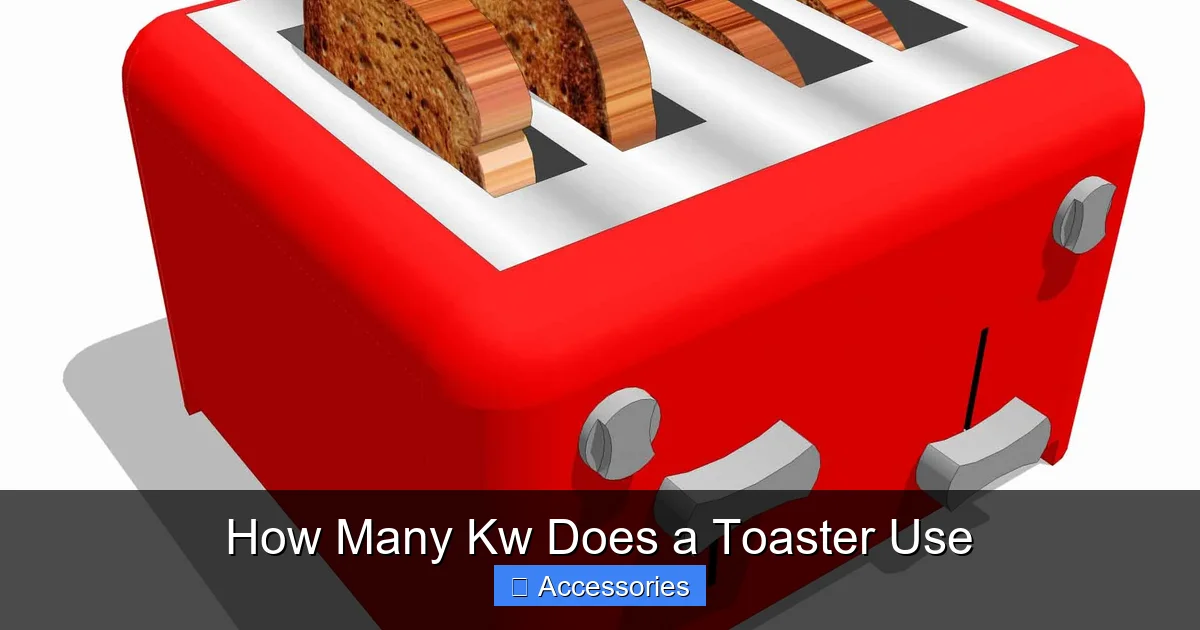
Visual guide about How Many Kw Does a Toaster Use
Image source: cookingindoor.com
Appliances like toasters don’t run continuously. They heat up, toast your bread, then shut off—usually automatically. So while their peak power might be high, their average energy use per day is quite low. Still, knowing the exact kW helps you compare models and estimate your electricity costs accurately.
How Appliances Measure Energy Use
Electricity companies measure household energy use in kilowatt-hours (kWh). One kWh equals one kilowatt of power used for one hour. For example, a 1,000-watt toaster running for one hour uses 1 kWh of electricity. But realistically, you’re not leaving your toaster plugged in all day—just a few minutes each morning.
To calculate your toaster’s actual energy cost, multiply its wattage by the number of minutes you use it daily, convert that to hours, then divide by 1,000 to get kWh. Multiply that by your local electricity rate (in dollars per kWh), and you’ll see how much your breakfast routine costs.
The Average Power Consumption of a Toaster
Typical Wattage Ranges
Most standard home toasters fall into three main categories based on power:
- Basic models: 750–900 watts
- Mid-range models: 1,000–1,350 watts
- High-performance or commercial-style: 1,500 watts or more
These numbers directly translate to kW. So a 1,200-watt toaster uses 1.2 kW when active.
For context, here’s a quick comparison:
– A 1,000-watt toaster = 1 kW
– A 1,500-watt toaster = 1.5 kW
– A 900-watt toaster = 0.9 kW
Visual guide about How Many Kw Does a Toaster Use
Image source: cookingindoor.com
Real-World Example: Daily Energy Use
Let’s say you use your 1,200-watt toaster twice a day, for 3 minutes each time. That’s 6 minutes total, or 0.1 hours per day.
Calculation:
1,200 watts × 0.1 hours = 120 watt-hours
120 ÷ 1,000 = 0.12 kWh per day
If your electricity rate is $0.12 per kWh, your daily toasting cost is about 1.44 cents. Over a month (30 days), that’s only $0.43—less than half a dollar! Even high-wattage models rarely exceed $1 per month in energy costs.
Factors That Influence How Much Power a Toaster Uses
Number of Slices and Slot Size
The more slices your toaster has, the larger the heating elements typically are—and the higher the wattage. Two-slice toasters usually run between 750–1,000 watts. Four-slice or sandwich toasters often go up to 1,500 watts because they need to heat more surface area quickly.
Visual guide about How Many Kw Does a Toaster Use
Image source: cookingindoor.com
If you frequently toast thick bagels or frozen waffles, you’ll want a higher-wattage model. But remember: faster doesn’t always mean better. A powerful toaster that runs too long wastes energy.
Browning Level Settings
Surprisingly, the browning setting affects energy use! Darker settings require longer heating cycles, meaning the element stays on longer. Light to medium settings turn off sooner due to auto shut-off mechanisms.
So if you always choose “dark,” your toaster might use 20–30% more energy than someone who prefers light toast. Adjusting your preference slightly could save a little electricity without sacrificing taste.
Type of Heating Element
Conventional toasters use nichrome wire elements. Modern ones may include ceramic or halogen elements, which heat up faster and cool down quicker. Ceramic toasters, for instance, often use less energy because they respond faster to temperature changes.
Halogen toasters are another efficient option. They generate infrared heat that warms food evenly and quickly, reducing total runtime.
Standby vs. Active Mode
Even when turned off, some toasters draw a tiny amount of power—called “vampire load” or standby power. However, modern toasters with auto shut-off and cool-touch sides minimize this. Still, unplugging rarely-used appliances saves a few extra watts over time.
Comparing Toasters: Efficiency Across Models
Compact vs. Full-Size Toasters
Compact single-slot toasters are great for small spaces or solo households. They typically use 750–900 watts and toast one slice at a time. While convenient, they take longer to heat up fully, so they may cycle on/off more frequently during use.
Full-size two-slice or four-slice toasters handle multiple items quickly and usually have consistent power delivery. High-end models include features like reheat, bagel mode, and cancel buttons—all designed to improve usability and efficiency.
Smart Toasters and Energy-Saving Tech
Some smart toasters now connect to Wi-Fi and offer apps that track energy use. Others feature sensors that detect when bread is done and shut off automatically. These innovations help prevent over-toasting and reduce wasted energy.
While smart toasters cost more upfront, their ability to optimize heating cycles can pay off in the long run—especially if you’re conscious about sustainability or high electricity rates.
Commercial vs. Home Use
Restaurant-grade toasters can exceed 2,000 watts because they’re built for heavy-duty, continuous use. They toast dozens of slices rapidly, so their total energy use per day can rival small microwaves. But for home kitchens, sticking to under 1,500 watts keeps things safe and affordable.
How to Reduce Your Toaster’s Energy Footprint
Choose the Right Wattage for Your Needs
If you only toast bread occasionally, a 900-watt model is plenty. Save the 1,500-watt toasters for families or frequent users who need speed and capacity.
Use Auto Shut-Off Features
Never leave your toaster unattended. Most have pop-up timers that eject bread and cut power once done. This prevents accidental overheating and saves energy.
Avoid Overloading Slots
Sticking more than two slices in a two-slice toaster forces uneven heating and extends cycle time. It also strains the thermostat, potentially shortening the appliance’s lifespan.
Preheat Strategically
Don’t preheat a toaster like an oven. Unlike stovetops or ovens, toasters heat instantly. Just plug it in, select your setting, and start toasting immediately.
Clean Regularly
Built-up crumbs insulate the heating elements, causing them to work harder and use more power. Wipe the interior monthly with a dry cloth or brush to maintain efficiency.
Consider Alternatives for Low-Energy Needs
If you only need light toast or warm pastries, consider using a toaster oven set to broil mode. Some models use less energy than full-size toasters, especially when toasting small items. Alternatively, you can toast a bagel without a toaster easily using a skillet or microwave.
Environmental Impact and Cost Savings
While individual toasters contribute little to global energy consumption, collectively, millions of homes add up. In the U.S., kitchen appliances account for nearly 13% of residential electricity use. Every small change—like choosing a more efficient toaster or reducing toasting time—adds up over time.
Switching from a 1,500-watt toaster to a 900-watt model saves about 0.6 kWh per use cycle. At $0.12/kWh, that’s 7.2 cents saved each time. Do that 50 times a year, and you save $3.60 annually—plus reduce carbon emissions slightly.
Moreover, energy-efficient appliances often qualify for rebates or tax incentives in certain regions. Check with your local utility company for programs that reward smart appliance choices.
Safety Tips When Using High-Power Toasters
Higher-wattage toasters generate more heat. Always place them on a stable, heat-resistant surface away from curtains, paper towels, or flammable materials. Never operate near water sources unless certified waterproof (most aren’t).
Also, avoid using metal utensils to remove toast—they can conduct electricity or damage the slot mechanism. Stick to plastic or silicone tools.
If your toaster sparks, smokes, or emits unusual smells, unplug it immediately and stop using it. Faulty wiring or damaged elements can pose fire hazards—especially important given the high current draw of powerful units.
Frequently Asked Questions About Toaster Power Usage
Is it cheaper to use a toaster or a microwave?
Generally, microwaves use less power than most toasters—especially when reheating small portions. But microwaves vary widely in efficiency. Compact microwaves may use 600–800 watts, while full-size ones hit 1,000+ watts. For single slices, a toaster is usually faster and equally affordable.
Can I leave my toaster plugged in all the time?
Yes, but it draws minimal standby power. However, unplugging reduces risk of electrical faults and saves a few watts. Smart plugs with timers offer convenience without constant plugging/unplugging.
Do thicker slices use more energy?
Not necessarily. A toaster heats based on time, not thickness. Thick bread simply requires longer toasting. The wattage remains constant; only runtime increases slightly.
Are electric kettles more efficient than toasters?
Kettles are highly efficient for boiling water—often using 1,500–3,000 watts but completing tasks in under 5 minutes. Compared to toasters, they’re great for tea or coffee prep but serve different purposes.
What’s the most energy-efficient way to toast bread?
Use a well-maintained toaster with auto shut-off, clean elements, and appropriate wattage. Avoid dark settings unless necessary, and toast only what you’ll eat. Combining efficiency with mindful habits maximizes savings.
Can a faulty toaster use more electricity?
Yes. Cracked elements, loose connections, or stuck thermostats force the toaster to run longer or repeatedly cycle on/off, increasing energy waste and fire risk. Regular cleaning and timely replacement prevent this.
Frequently Asked Questions
Is it cheaper to use a toaster or a microwave?
Generally, microwaves use less power than most toasters—especially when reheating small portions. But microwaves vary widely in efficiency. Compact microwaves may use 600–800 watts, while full-size ones hit 1,000+ watts. For single slices, a toaster is usually faster and equally affordable.
Can I leave my toaster plugged in all the time?
Yes, but it draws minimal standby power. However, unplugging reduces risk of electrical faults and saves a few watts. Smart plugs with timers offer convenience without constant plugging/unplugging.
Do thicker slices use more energy?
Not necessarily. A toaster heats based on time, not thickness. Thick bread simply requires longer toasting. The wattage remains constant; only runtime increases slightly.
Are electric kettles more efficient than toasters?
Kettles are highly efficient for boiling water—often using 1,500–3,000 watts but completing tasks in under 5 minutes. Compared to toasters, they’re great for tea or coffee prep but serve different purposes.
What’s the most energy-efficient way to toast bread?
Use a well-maintained toaster with auto shut-off, clean elements, and appropriate wattage. Avoid dark settings unless necessary, and toast only what you’ll eat. Combining efficiency with mindful habits maximizes savings.
Can a faulty toaster use more electricity?
Yes. Cracked elements, loose connections, or stuck thermostats force the toaster to run longer or repeatedly cycle on/off, increasing energy waste and fire risk. Regular cleaning and timely replacement prevent this.