
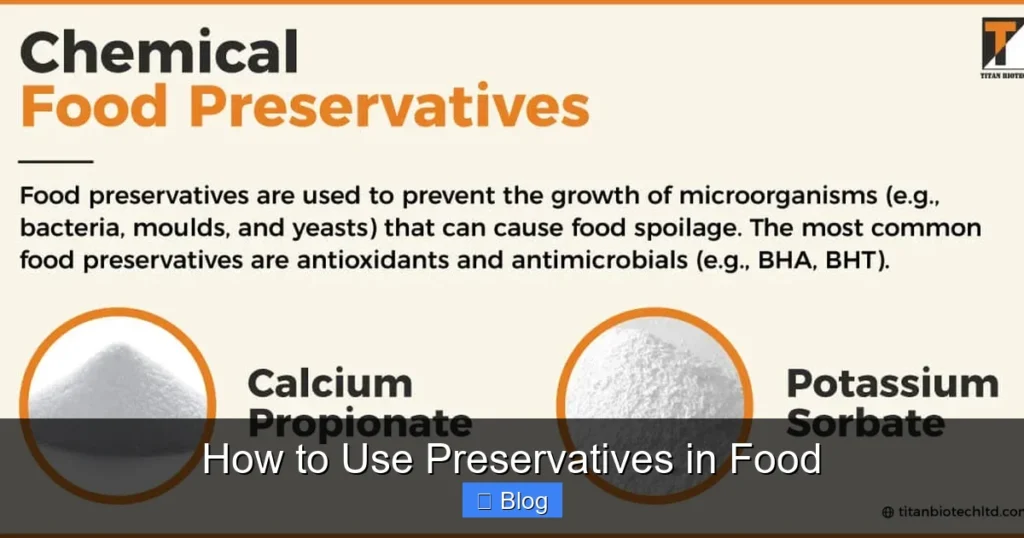
How To Use Preservatives In Food is an essential topic that provides valuable insights and practical knowledge for anyone interested in learning more about this subject.
This is a comprehensive guide about How To Use Preservatives In Food.
Key Takeaways
- Choose appropriate preservative: Match type (natural or synthetic) to the specific food product.
- Follow dosage guidelines: Use the recommended concentration to ensure safety and effectiveness.
- Mix thoroughly: Distribute preservative evenly to avoid pockets of spoilage.
- Label accurately: List all preservatives on packaging to meet regulatory requirements.
- Store correctly: Keep preserved foods in optimal temperature and humidity conditions.
- Test regularly: Conduct microbial checks to confirm preservative performance over shelf‑life.
🎥 Related Video: Are food preservatives bad for you? – Eleanor Nelsen
📺 TED-Ed
View full lesson: http://ed.ted.com/lessons/are-preservatives-bad-for-you-eleanor-nelsen Food doesn’t last. In days, sometimes …
Frequently Asked Questions
What are the most common preservatives used in food?
Common food preservatives include sodium benzoate, potassium sorbate, calcium propionate, and natural options like rosemary extract and vitamin E. They help inhibit microbial growth, prevent oxidation, and extend shelf life.
How do I safely add preservatives in food at home?
When using preservatives at home, always follow the manufacturer’s recommended dosage and measure precisely with a scale or calibrated spoons. Dissolve the preservative in a small amount of water or oil before mixing it evenly into the food.
Can I use preservatives in homemade sauces and dressings?
Yes, preservatives such as citric acid, potassium sorbate, or natural extracts can be added to sauces and dressings to prevent spoilage. Be sure to test the flavor after addition, as some preservatives can impart a slight taste.
Do preservatives in food affect nutritional value?
Most preservatives are used in low concentrations that do not significantly alter the nutritional profile of the food. However, excessive use can affect texture and flavor, so it’s best to use the minimum effective amount.
Are there any natural alternatives to synthetic preservatives in food?
Natural alternatives include salt, sugar, vinegar, lemon juice, and spices like clove or cinnamon, which have antimicrobial properties. These can be effective for short‑term preservation but may not match the longevity of synthetic options.
How to determine the right amount of preservatives in food?
Start by consulting the preservative’s label for the recommended usage rate per kilogram or liter of product. Adjust based on the food’s pH, moisture content, and intended shelf life, and always conduct a small test batch first.



