Is your kitchen smelling strange after cooking? How Do I Get Rid Of The Smell In My Air Fryer is a common question for many home cooks. You can fix this issue quickly with safe cleaning methods. We will show you easy steps to remove odors and keep your appliance fresh.
Cooking delicious meals should be a joy. But sometimes your kitchen smells like burnt oil or old grease. This happens often with countertop ovens. You might wonder how do I get rid of the smell in my air fryer after making fish or frozen fries. It is frustrating when your next meal tastes like the last one.
The good news is that you can fix this problem easily. Most odors come from leftover food particles or grease buildup. These stuck-on bits burn during the next cooking session. This creates smoke and bad scents. Cleaning your appliance properly solves the issue.
In this guide, we will walk through simple solutions. You do not need expensive tools or harsh chemicals. We will share natural methods that work well. You will learn how to maintain your machine for long-term freshness. Let us dive into the steps to restore your cooking space.
Key Takeaways
- Clean Regularly: Washing the basket after every use prevents buildup.
- Use Vinegar: White vinegar neutralizes tough odors effectively.
- Avoid Harsh Chemicals: Stick to natural cleaners for safety.
- Check the Heating Element: Grease on the element causes smoke smells.
- Dry Thoroughly: Moisture leads to musty smells over time.
- Season Your Appliance: Lightly oiling the basket helps prevent sticking.
- Ventilate the Kitchen: Open windows while cooking to reduce lingering odors.
📑 Table of Contents
Why Does My Appliance Smell Bad?
Understanding the cause helps you prevent it. Several factors contribute to unpleasant odors. Food residue is the most common culprit. Small bits of batter or cheese stick to the basket. When these particles heat up again, they burn. This creates a smoky smell that fills the room.
Grease buildup is another major issue. Oil from cooking meats or snacks coats the interior. Over time, this oil goes rancid. Rancid oil smells sour and unpleasant. It can also affect the taste of your new food. Cleaning the grease regularly stops this process.
Sometimes the smell comes from the manufacturing process. New appliances often have a protective coating. This coating smells like plastic or chemicals at first. Running a few empty cycles helps burn off this residue. It is normal for a new machine to have a slight scent initially.
Common Causes of Odors
- Leftover Food Particles: Batter or cheese stuck in corners.
- Grease Buildup: Old oil that has gone rancid.
- Burnt Heating Element: Grease splattered on the top coil.
- Plastic Residue: Normal smell from a brand new unit.
- Moisture Trapped Inside: Water left in the basket after washing.
How Do I Get Rid Of The Smell In My Air Fryer Using Natural Cleaners
You do not need strong chemicals to clean your machine. Natural ingredients are safe and effective. They remove odors without leaving toxic residues. This is important because you cook food in this appliance. You want to avoid ingesting cleaning chemicals.
White vinegar is a powerful tool for odor removal. It neutralizes smells rather than just masking them. Mix equal parts water and vinegar in a spray bottle. Spray the interior basket and wipe it down. You can also run a cycle with a vinegar bowl inside. This helps clean the heating element area too.
Lemon juice is another great option. It cuts through grease and leaves a fresh scent. Squeeze half a lemon into a bowl of warm water. Use a soft sponge to scrub the basket. The acidity breaks down sticky grease easily. Your kitchen will smell citrusy and clean afterward.
Vinegar Cleaning Method
Here is a simple step-by-step process for using vinegar:
- Unplug the Unit: Always ensure the appliance is off and cool.
- Mix Solution: Combine one cup of water with one cup of white vinegar.
- Wipe Down: Use a soft cloth to wipe the basket and tray.
- Heat Cycle: Place the bowl of solution inside and run at 350 degrees for 5 minutes.
- Rinse and Dry: Wash the basket with soap and water, then dry completely.
Cleaning the Heating Element Safely
The heating element is often overlooked during cleaning. Grease splatters can land on the top coil. When this grease burns, it creates heavy smoke. This is a common reason for persistent smells. You must clean this part carefully to avoid damage.
Never use water directly on the heating element. Water can damage the electrical components. Instead, use a damp cloth or a soft brush. Gently wipe away any loose debris. If there is sticky grease, use a little vinegar on the cloth. Do not scrub too hard or you might break the coil.
Some people ask how do I get rid of the smell in my air fryer when the element is burnt. Sometimes the element itself is damaged. If the coil is cracked or heavily corroded, it may need replacement. Check your user manual for parts information. Keeping the element clean extends the life of your machine.
Safety Tips for Element Cleaning
- Let It Cool: Wait at least 30 minutes after cooking.
- Use Soft Tools: Avoid steel wool or abrasive scrubbers.
- Avoid Excess Water: Keep liquids away from electrical parts.
- Check for Damage: Look for cracks or heavy corrosion.
- Unplug First: Never clean while the unit is plugged in.
Dealing with Grease and Stuck-On Food
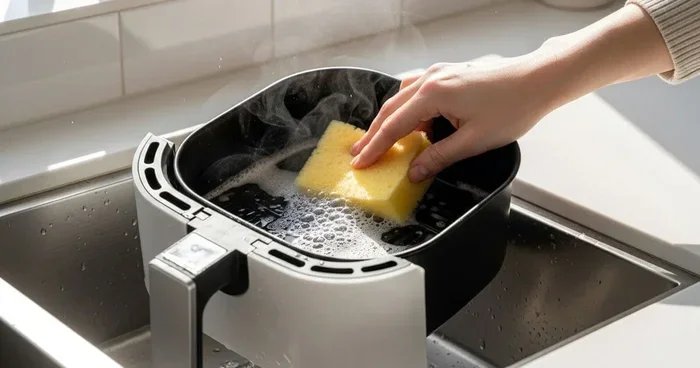
Stubborn grease requires a bit more effort. Soap and water work for daily cleaning. But deep cleaning needs soaking. Fill your sink with hot soapy water. Submerge the basket and tray if they are removable. Let them soak for 20 minutes. This loosens the hardened grease.
For stuck-on food, use a plastic spatula. Gently scrape the residue without scratching the coating. Non-stick surfaces can be damaged by metal tools. Once the bulk is removed, wash with a sponge. Rinse thoroughly to remove all soap suds. Soap residue can cause foaming during the next cook.
If you cook strong-smelling foods like fish, clean immediately. Do not let the residue sit for days. The longer it sits, the harder it is to remove. Wiping the basket while it is still warm helps too. The grease is softer when warm. This makes the cleaning process much faster.
Quick Cleaning Checklist
- Remove Basket: Take out the tray and basket after use.
- Soak if Needed: Use hot water for tough grease.
- Scrape Gently: Use plastic tools for stuck food.
- Wash with Soap: Use mild dish detergent.
- Dry Completely: Ensure no water remains before storing.
Preventing Future Odors
Prevention is better than cure. Establishing a cleaning routine saves time later. Wash the basket after every single use. Do not wait until the end of the week. This stops buildup before it starts. A quick wash takes only a few minutes.
You can also season your basket like a cast iron pan. After cleaning and drying, rub a little oil on the surface. This creates a barrier against sticking. It also helps protect the non-stick coating. Seasoning makes future cleaning even easier.
Ventilation plays a role too. Open a window while cooking strong foods. Use your kitchen exhaust fan if you have one. This pulls smoke and odors out of the house. It reduces the amount of smell that settles back into the machine. Fresh air keeps your kitchen environment pleasant.
Maintenance Routine
- Daily: Wipe down the basket after cooling.
- Weekly: Deep clean with vinegar or lemon.
- Monthly: Check the heating element for grease.
- As Needed: Run an empty cycle to burn off residues.
- Storage: Keep the appliance open to air out.
When to Replace Your Appliance
Sometimes cleaning is not enough. If the smell persists after deep cleaning, there may be internal damage. Electrical issues can cause burning smells. If you smell burning plastic constantly, unplug the unit. This could indicate a wiring problem. Safety is the top priority here.
Old appliances may simply be worn out. The non-stick coating might be peeling. Once the coating is damaged, food sticks easily. This leads to more burning and more smells. It is often better to buy a new unit than to struggle with an old one. Consider the age and condition of your machine.
If you are unsure, contact the manufacturer. They can advise on warranty or replacement parts. Do not risk using a faulty appliance. A fresh start with a new model might be the best solution. Modern units often have better cleaning features too.
Signs You Need a New Unit
- Persistent Burning Smell: Cleaning does not fix the odor.
- Peeling Coating: Food sticks constantly despite washing.
- Smoke Production: Excessive smoke during normal cooking.
- Electrical Issues: Sparks or unusual noises occur.
- Age: The appliance is several years old.
Conclusion
Keeping your kitchen fresh is easy with the right habits. You now know how do I get rid of the smell in my air fryer effectively. Natural cleaners like vinegar and lemon work wonders. Regular maintenance prevents grease buildup and bad odors. Always clean the heating element safely to avoid smoke.
Remember to dry all parts thoroughly before storing. Moisture causes musty smells over time. If the smell persists, check for damage or consider replacement. A clean appliance cooks better and tastes better. Enjoy your meals without worrying about lingering scents.
Frequently Asked Questions
Why does my air fryer smell like burning plastic?
This often happens with new appliances due to protective coatings. Run a few empty cycles to burn off the residue. If the smell persists, check for electrical issues.
Can I use baking soda to remove odors?
Yes, baking soda is great for scrubbing stuck-on food. Mix it with water to make a paste. It helps neutralize odors without harsh chemicals.
How often should I clean the heating element?
You should check it once a month for grease buildup. Clean it gently with a damp cloth if needed. Regular checks prevent smoke during cooking.
Is it safe to use soap inside the air fryer?
Yes, mild dish soap is safe for the basket and tray. Just rinse thoroughly to remove all suds. Avoid getting soap on the heating element.
What if the smell comes back after cleaning?
Ensure all parts are completely dry before storing. Check for hidden grease in the corners. You may need to deep clean the heating element area.
Can I put lemon juice directly in the basket?
It is better to mix it with water first. Direct acid might be too strong for some coatings. Use a soft sponge to apply the mixture safely.