
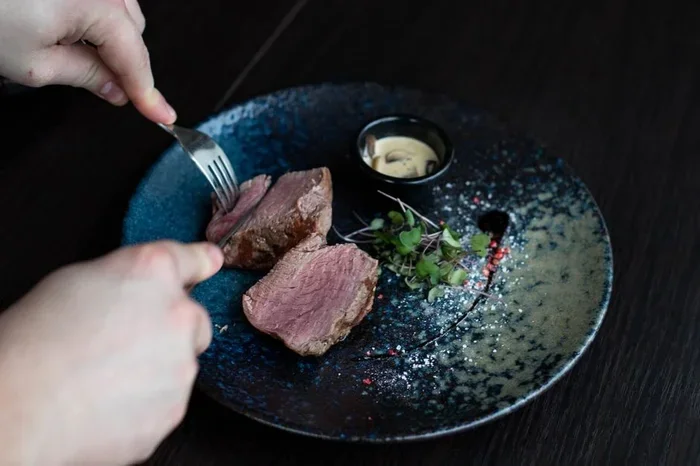
Master the art of cooking filet mignon with our ultimate temp chart. Achieve your desired doneness, from rare to well-done, every time.
## Introduction
Ever wondered how to cook the perfect filet mignon? The secret lies in mastering the filet mignon temperature chart. With the right temps, you’ll achieve your desired doneness, from rare to well-done, every time. Dive in to discover the ideal temps for cooking this luxurious cut of beef like a pro.
## Understanding Filet Mignon Temperatures
Before delving into the temp chart, let’s understand the basics. Filet mignon is cut from the tenderloin, a muscle that does little work, resulting in a lean, tender steak. To cook it perfectly, you’ll need to know the difference between internal and final temperatures.
Internal Temperature: This is the temperature inside your steak while it’s cooking. It’s measured with a meat thermometer inserted into the thickest part of the steak.
Final Temperature: Also known as carryover cooking, this is the temperature your steak reaches after you’ve removed it from the heat source. Since steak continues to cook due to residual heat, it’s crucial to remove it a few degrees below your desired final temperature.
## Filet Mignon Temp Chart: From Rare to Well-Done
Now that you understand the temperatures let’s explore the ideal temps for each doneness level. Remember, these temps are internal and will increase a few degrees due to carryover cooking.
### Rare*
Internal Temp: 120°F – 125°F (49°C – 52°C)
Final Temp: 125°F – 130°F (52°C – 54°C)
Cooking Time: About 1-2 minutes per 1/2-inch thick steak
Cooking rare filet mignon results in a steak with a cold red center, surrounded by a thin layer of gray. The exterior should have a beautiful brown sear.
### Medium-Rare
Internal Temp: 130°F – 135°F (54°C – 57°C)
Final Temp: 135°F – 140°F (57°C – 60°C)
Cooking Time: About 2-3 minutes per 1/2-inch thick steak
Medium-rare filet mignon has a warm red center, with a slightly larger gray area surrounding it. The exterior should be well-seared and browned.
### Medium
Internal Temp: 140°F – 145°F (60°C – 63°C)
Final Temp: 145°F – 150°F (63°C – 66°C)
Cooking Time: About 3-4 minutes per 1/2-inch thick steak
Medium filet mignon has a light pink center, with a larger gray area. The exterior should be well-browned and crispy.
### Medium-Well
Internal Temp: 150°F – 155°F (66°C – 69°C)
Final Temp: 155°F – 160°F (69°C – 71°C)
Cooking Time: About 4-5 minutes per 1/2-inch thick steak
Medium-well filet mignon has a small amount of pink in the center, with a larger gray area. The exterior should be well-browned and crispy.
### Well-Done
Internal Temp: 160°F – 165°F (71°C – 74°C)
Final Temp: 165°F – 170°F (74°C – 77°C)
Cooking Time: About 5-6 minutes per 1/2-inch thick steak
Well-done filet mignon has no pink center, with a solid gray interior. The exterior should be well-browned and crispy.
## Resting Time: Importance and Impact on Temperatures
Resting is a crucial step in cooking the perfect filet mignon. After removing your steak from the heat, place it on a plate or cutting board and let it rest for 5-10 minutes. This allows the juices to redistribute throughout the steak, resulting in a juicier final product.
Resting also impacts the final temperature. Since steak continues to cook during this time, your steak’s internal temp will rise a few degrees. Be sure to remove your steak from the heat when it reaches a few degrees below your desired final temperature.
## Searing and Cooking Methods: Achieving Desired Temps
To reach your desired filet mignon temperature, you have several cooking methods at your disposal. Here are a few popular methods:
### Stovetop Searing and Oven Finishing
1. Preheat your oven to 400°F (204°C).
2. Season your filet mignon with salt and pepper.
3. Heat a cast-iron skillet or oven-safe pan over high heat. Add oil with a high smoke point, such as canola or grapeseed oil.
4. Sear your steak for 1-2 minutes on each side, until well-browned.
5. Transfer the skillet to the preheated oven and cook until your steak reaches an internal temp of a few degrees below your desired final temperature.
6. Remove the steak from the oven and let it rest for 5-10 minutes.
### Reverse Sear Method
1. Preheat your oven to 275°F (135°C).
2. Season your filet mignon with salt and pepper.
3. Place the steak on a wire rack set over a baking sheet and cook in the preheated oven until it reaches an internal temp of around 125°F (52°C) for rare or 130°F (54°C) for medium-rare.
4. Remove the steak from the oven and let it rest for a few minutes.
5. Heat a cast-iron skillet or grill over high heat. Sear the steak for 1-2 minutes on each side, until well-browned and crispy.
6. Let the steak rest for an additional 5-10 minutes before serving.
### Grilling
1. Preheat your grill to high heat, around 450°F (232°C).
2. Season your filet mignon with salt and pepper.
3. Grill the steak for 1-2 minutes on each side, until well-browned and charred.
4. Reduce the heat to medium and continue cooking until your steak reaches an internal temp of a few degrees below your desired final temperature.
5. Remove the steak from the grill and let it rest for 5-10 minutes.
## Common Mistakes to Avoid When Cooking Filet Mignon
Overcooking: Filet mignon is best enjoyed when cooked to medium-rare or rare. Overcooking can lead to a dry, tough steak.
Not resting: Skipping the resting step can result in a less juicy steak. Be sure to let your steak rest for at least 5 minutes.
Not using a meat thermometer: The only way to accurately gauge your steak’s internal temperature is by using a meat thermometer. Don’t rely on guesswork or cut into your steak to check its doneness.
## Expert Insights: Achieving Picture-Perfect Results
To achieve picture-perfect filet mignon, follow these expert tips:
Use high-quality beef: Opt for USDA Prime or Choice grade beef for the best flavor and tenderness.
Bring your steak to room temperature: Before cooking, let your steak sit at room temperature for 20-30 minutes to ensure even cooking.
Preheat your cooking surface: Whether you’re using a skillet or grill, ensure it’s properly preheated before adding your steak.
Season generously: Don’t be shy with the salt and pepper. Season both sides of your steak generously before cooking.
## Conclusion
Cooking the perfect filet mignon is an art form that requires practice and patience. By mastering the filet mignon temperature chart, you’ll be well on your way to achieving your desired doneness every time. So go ahead, impress your guests with your culinary skills, and enjoy the perfectly cooked steak you deserve.
*
Key Takeaways
- Understanding degrees: Learn the difference between internal and final temperatures.
- Rare to well-done: Find ideal temps for each doneness level.
- Resting time: Understand the importance of allowing your steak to rest.
- Carryover cooking: Learn how final temps are achieved after removing from heat.
- Searing and cooking methods: Explore various methods to reach desired temps.
Frequently Asked Questions
**
What is the best temperature for a filet mignon?
The best temperature for a filet mignon is medium-rare, with an internal temperature of 130°F – 135°F (54°C – 57°C). This results in a steak with a warm red center and a well-seared exterior.
How long do you cook a filet mignon at 400 degrees?
Cooking time for filet mignon at 400°F (204°C) depends on desired doneness and steak thickness. For a 1-inch thick steak, cooking times range from 4 to 6 minutes for medium-rare to 6 to 8 minutes for medium-well.
Is it safe to eat filet mignon at 120 degrees?
Yes, it is safe to eat filet mignon at an internal temperature of 120°F – 125°F (49°C – 52°C). This results in a rare steak with a cold red center. However, consuming rare or undercooked meat may increase the risk of foodborne illness, particularly for vulnerable populations.
What temperature should I finish my filet mignon in the oven?
After searing your filet mignon, transfer it to a preheated oven set to 400°F (204°C). Cook the steak until it reaches an internal temperature of a few degrees below your desired final temperature. For example, for medium-rare, remove the steak when it reaches 125°F – 130°F (52°C – 54°C).
Why is my steak still pink in the middle?
If your steak is still pink in the middle after cooking, it’s likely that the internal temperature didn’t reach high enough. To achieve a well-done steak, cook it until the internal temperature reaches 160°F – 165°F (71°C – 74°C).
How can I tell if my steak is done without a thermometer?
While using a meat thermometer is the most accurate way to gauge doneness, you can estimate it by feel or using the finger test. Gently press the steak with your finger and compare the resistance to the fleshy part of your hand near your thumb. However, this method is not as precise as using a thermometer.



