
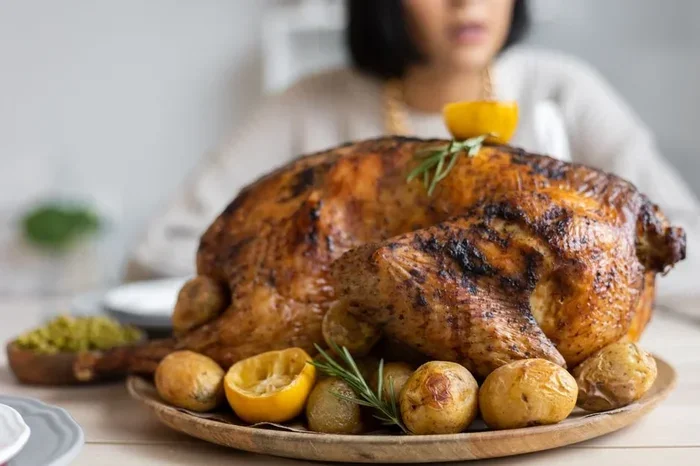
Cooking a turkey takes about 13 to 15 minutes per pound at 325°F for a perfectly juicy result. The exact turkey cooking time depends on whether your bird is stuffed, the cut you are roasting, and your oven’s accuracy. This guide walks you through minutes per pound turkey calculations, safe internal temperatures, and simple tips that make roasting easier.
Roasting a turkey can feel intimidating, especially if you have never done it before. One of the most common questions home cooks ask is, “how many minutes per pound to cook a turkey?” The answer is simpler than you think. Once you understand the basic timing and temperature rules, you can roast a turkey like a pro.
Whether you are preparing a Thanksgiving turkey or a weekend family dinner, knowing the right cooking time saves you stress and guesswork. This guide breaks down everything you need to know about turkey cooking time per pound, oven settings, and how to get perfectly juicy results every single time.
Key Takeaways
- Standard roasting time: Plan for 13 to 15 minutes per pound at 325°F for an unstuffed whole turkey.
- Use a meat thermometer: The turkey is safe when the thickest part reaches 165°F.
- Breast vs. thigh: White meat cooks faster than dark meat, so adjust your timing accordingly.
- Stuffing adds time: A stuffed turkey needs extra minutes per pound compared to unstuffed.
- Resting matters: Let your turkey rest for 20 to 30 minutes before carving for juicier results.
- Keep it warm: If you need to hold the turkey before serving, learn how to keep it warm in the oven.
📑 Table of Contents
How Many Minutes Per Pound to Cook a Turkey
The general rule for roasting a whole turkey is about 13 to 15 minutes per pound at 325°F. This applies to an unstuffed whole turkey placed in a roasting pan. Here is a quick breakdown to help you plan:
- 8 to 12 pounds: About 2.5 to 3 hours
- 12 to 14 pounds: About 3 to 3.5 hours
- 14 to 18 pounds: About 3.5 to 4.5 hours
- 18 to 20 pounds: About 4.5 to 5 hours
- 20 to 24 pounds: About 5 to 6 hours
These numbers are starting points. Every oven behaves differently, and the actual turkey roast time can vary based on your oven type, the shape of the bird, and whether you use a roasting rack. Always use a food thermometer to check the internal temperature rather than relying solely on the clock.
Why Minutes Per Pound Vary
Not all turkeys cook at the same speed. Several factors affect how long your bird takes to roast. Understanding these helps you set realistic expectations and avoid overcooking or undercooking.
Oven type plays a big role. Convection ovens circulate hot air, which can reduce cooking time by about 25 percent. If you use a convection setting, check your turkey earlier than the standard time suggests. A regular oven-baked turkey in a conventional oven follows the 13-to-15-minute rule more closely.
The shape of the turkey also matters. A wider, deeper bird takes longer than a longer, thinner one because heat has to penetrate further to the center. Similarly, a turkey with a thicker breast section may need more time than a leaner bird of the same weight.
Starting temperature is another factor. A turkey straight from the refrigerator takes longer to cook than one brought to room temperature first. Letting your bird sit out for 30 to 60 minutes before roasting helps it cook more evenly and can shave off some total time.
Turkey Cooking Time by Cut
Not everyone roasts a whole turkey. Many people prefer cooking just the breast or using thigh meat for easier serving. The minutes per pound turkey calculation changes depending on which cut you are preparing.
Turkey Breast Cooking Time
A whole turkey breast typically takes about 20 to 25 minutes per pound at 325°F. Since breast meat is leaner and cooks faster than dark meat, it is important not to overcook it. An overcooked breast becomes dry and tough, which nobody wants at the dinner table.
For a boneless turkey breast weighing 6 to 8 pounds, expect roughly 2 to 2.5 hours of roasting time. Bone-in breasts take a bit longer because the bone slows heat transfer to the meat around it.
Turkey Thigh and Leg Cooking Time
Dark meat from the thighs and legs needs a slightly different approach. These cuts are more forgiving because the higher fat content keeps them moist longer. Plan for about 30 to 35 minutes per pound for bone-in thighs and legs.
Thigh meat is done when it reaches an internal temperature of 175°F to 180°F. This is higher than breast meat because the extra collagen in dark meat needs more heat to break down into gelatin, which creates that tender, fall-off-the-bone texture.
Comparing Whole Turkey vs. Cut Cooking Times
| Cut | Minutes Per Pound | Approximate Time (per 8 lbs) |
|---|---|---|
| Whole unstuffed turkey | 13 to 15 min | 1 hr 44 min to 2 hr |
| Whole stuffed turkey | 15 to 18 min | 2 hr to 2 hr 24 min |
| Turkey breast (bone-in) | 20 to 25 min | 2 hr 40 min to 3 hr 20 min |
| Turkey breast (boneless) | 20 to 25 min | 2 hr 40 min to 3 hr 20 min |
| Thighs and legs (bone-in) | 30 to 35 min | 4 hr to 4 hr 40 min |
As you can see, cooking times vary significantly by cut. Always check the internal temperature with a reliable food thermometer to confirm doneness.
Oven Temperature for Roasting Turkey
The most common turkey cooking temperature is 325°F. This moderate heat allows the bird to cook evenly without burning the outside before the inside is done. Most cooking authorities, including the USDA, recommend this temperature for safety and quality.
Some recipes call for starting at a higher temperature, such as 400°F, for the first 20 to 30 minutes to crisp the skin. Then you reduce the heat to 325°F for the remainder of the cook. This technique gives you a beautifully golden exterior while keeping the meat moist inside.
If you are using a convection oven, reduce the temperature by about 25°F. So instead of 325°F, set your convection oven to 300°F. The circulating fan cooks food faster, so you should also check the turkey about 20 to 30 minutes earlier than the standard time suggests.
Should You Roast at a Lower Temperature?
Some cooks prefer roasting at 300°F for a longer, slower cook. This method can produce very tender meat because the low heat gives collagen more time to break down. The trade-off is that it takes longer, and you need to be extra careful about food safety. The turkey must still reach 165°F in the thickest parts.
Avoid roasting at temperatures below 300°F for whole turkeys. The bird sits in the danger zone (40°F to 140°F) for too long, which increases the risk of bacterial growth. Stick with 325°F as your reliable baseline.
Stuffing vs. Unstuffed Turkey Cooking Times
Whether you stuff your turkey or not has a direct impact on cooking time. A stuffed turkey needs more minutes per pound because the stuffing acts as insulation, slowing heat from reaching the center of the bird.
Unstuffed Turkey
An unstuffed turkey follows the standard 13 to 15 minutes per pound rule at 325°F. This is the safest and most predictable method for home cooks. The heat circulates freely inside the cavity, cooking the bird evenly from the outside in.
Many cooks prefer cooking stuffing separately in a casserole dish. This eliminates the timing uncertainty and also reduces the risk of undercooked stuffing, which can harbor bacteria if not heated to 165°F throughout.
Stuffed Turkey
A stuffed turkey requires about 15 to 18 minutes per pound at 325°F. The stuffing must also reach 165°F internally, which means the bird needs to cook longer to ensure both the meat and the stuffing are safe to eat.
If you do stuff your turkey, pack the stuffing loosely. Tightly packed stuffing takes even longer to heat through. Also, fill the cavity just before putting the turkey in the oven to keep the stuffing as cold as possible until cooking begins.
How to Tell When Your Turkey Is Done
Timing gives you a rough estimate, but only a thermometer gives you certainty. The USDA recommends cooking turkey to an internal temperature of 165°F in three key spots:
- The thickest part of the breast
- The innermost part of the thigh
- The innermost part of the wing
Insert the thermometer probe into the meat without touching bone, fat, or gristle. Bone conducts heat differently than meat, so a reading near the bone can be misleading.
After removing the turkey from the oven, the temperature will continue to rise by about 5 to 10 degrees during resting. This is called carryover cooking. Some cooks pull the turkey when it reaches 160°F in the breast, knowing it will climb to 165°F during the rest period.
Carving a turkey properly also affects how juicy each slice tastes. Use a sharp damascus knife for clean cuts that keep the juices locked inside the meat. Let the bird rest for at least 20 to 30 minutes before carving. This allows the juices to redistribute throughout the meat, making every slice tender and flavorful.
If you are serving the turkey alongside other dishes on a platter, consider how to keep everything at the right temperature. You can keep a charcuterie board cold for appetizers, but for the main turkey, you will want to learn how to keep it warm without drying it out.
Tips for a Juicy, Flavorful Turkey
Getting the timing right is only half the battle. The other half is making sure your turkey tastes great and stays moist. Here are some practical tips that make a real difference.
Brine your turkey. Soaking the bird in a saltwater solution for 12 to 24 hours before roasting adds moisture and flavor. A simple brine of 1 cup of salt per gallon of water works well. You can also add herbs, garlic, and citrus for extra flavor.
Butter under the skin. Gently loosen the skin over the breast and rub softened butter directly onto the meat. This adds richness and helps the skin crisp up beautifully during roasting.
Do not overcook. This is the number one mistake people make. Once the turkey hits 165°F in the thickest parts, it is done. Every extra minute risks drying out the breast meat.
Cover with foil if needed. If the skin is browning too quickly before the inside is done, loosely tent the turkey with aluminum foil. This slows down the browning without trapping too much steam.
Save the drippings. The pan juices left after roasting make an incredible gravy. Strain them through a sieve to remove any bits, then simmer on the stovetop with broth and a little flour or cornstarch for thickening.
When it is time to serve, if you are not ready to carve right away, you can keep the turkey warm in the oven at 200°F for up to an hour without significant drying. Just make sure the oven temperature is low enough not to continue cooking the meat.
Common Mistakes to Avoid
- Skipping the thermometer: Relying on time alone leads to dry or undercooked turkey every time.
- Cooking from frozen: Always thaw your turkey completely before roasting. A frozen turkey cooks unevenly and takes much longer.
- Opening the oven door too often: Each time you open the door, heat escapes and cooking time increases. Trust the timer and check only when needed.
- Ignoring carryover cooking: Pulling the turkey out too late means the carryover heat will push the temperature well past 165°F into dry territory.
Expert Insight
Professional chefs often recommend buying a turkey with a pop-up timer as a backup, but never as your only indicator. The pop-up timers are not always accurate. Pairing a pop-up timer with a digital instant-read thermometer gives you the best of both worlds. This double-check approach gives you confidence and peace of mind, especially when cooking for a large group during the holidays.
For those who enjoy deep-fried turkey or other cooking methods, the minutes per pound rule changes completely. Deep-fried turkeys cook much faster, typically about 3 to 4 minutes per pound. However, that method comes with its own safety considerations and is outside the scope of this oven-roasting guide.
Conclusion
Now you know the answer to the question, “how many minutes per pound to cook a turkey?” The basic rule of 13 to 15 minutes per pound at 325°F gives you a reliable starting point for any whole unstuffed turkey. Adjust for stuffing, different cuts, and your specific oven to get the best results.
Always use a food thermometer to check for 165°F in the thickest parts of the bird. Let the turkey rest before carving, and store leftovers properly within two hours of cooking. With these guidelines in hand, you can roast a turkey that is juicy, flavorful, and perfectly cooked every time.
Whether this is your first Thanksgiving turkey or your fiftieth, these tips will help you serve a roast that your whole family will love. Happy cooking!
Frequently Asked Questions
How many minutes per pound does it take to cook a turkey at 325°F?
At 325°F, a whole unstuffed turkey takes about 13 to 15 minutes per pound. A stuffed turkey needs 15 to 18 minutes per pound. Always verify doneness with a food thermometer reading 165°F in the thickest parts.
Can I cook a turkey at 350°F instead of 325°F?
Yes, you can cook a turkey at 350°F, but it will cook slightly faster. Reduce your time estimate by about 5 to 10 minutes per pound. The higher temperature can also brown the skin more quickly, so keep an eye on the exterior.
How long does a 12-pound turkey take to cook?
A 12-pound unstuffed turkey at 325°F takes roughly 2.5 to 3 hours. If the turkey is stuffed, add about 30 to 45 minutes to that estimate. Always check the internal temperature rather than relying solely on the clock.
Do I need to cover my turkey with foil while roasting?
Covering with foil is optional. It helps prevent the skin from browning too quickly if the oven runs hot. Some cooks leave the turkey uncovered for the entire cook to get crispier skin. Tent with foil loosely if you notice excessive browning.
What is the safe internal temperature for turkey?
The USDA recommends an internal temperature of 165°F for turkey. Check the thickest part of the breast, the innermost part of the thigh, and the innermost part of the wing. The temperature should read 165°F in all three spots.
How long should I let my turkey rest before carving?
Let the turkey rest for 20 to 30 minutes after removing it from the oven. This resting period allows the juices to redistribute throughout the meat, making each slice juicier and more flavorful. Tent the turkey loosely with foil during resting to keep it warm.



