
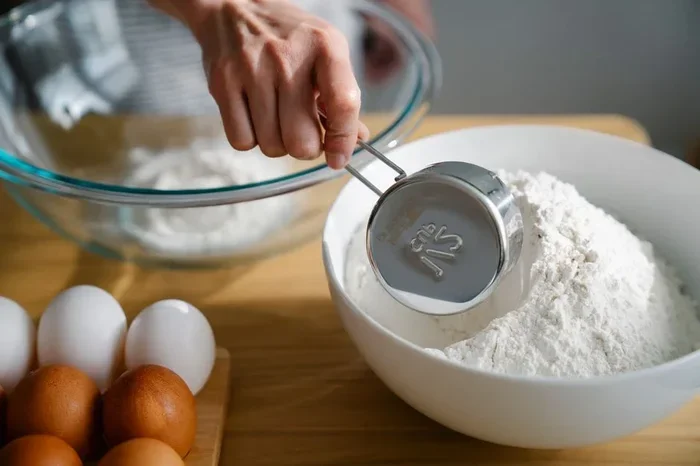
3/4 cup equals 6 fluid ounces, 177 milliliters, or 12 tablespoons — a measurement that shows up constantly in recipes. Understanding how much is 3/4 cup helps you cook and bake with confidence, scale recipes up or down, and avoid common measuring mistakes that can ruin your favorite dishes.
Key Takeaways
- 3/4 cup = 6 fl oz: This is the standard fluid ounce equivalent for measuring liquids accurately.
- 3/4 cup = 12 tablespoons: Use tablespoons as a reliable fallback when you don’t have a measuring cup.
- 3/4 cup = 177 ml: Metric cooks can use this milliliter measurement for precision.
- Half of 3/4 cup is 3/8 cup: Useful for scaling recipes down without guesswork.
- Dry and liquid measurements differ: Always use the right type of measuring tool for each ingredient.
- A kitchen scale adds accuracy: Weighing ingredients eliminates volume-based errors entirely.
- Room temperature matters: Ingredient temperature can slightly affect volume measurements.
📑 Table of Contents
What Does 3/4 Cup Actually Mean?
When you see 3/4 cup in a recipe, it refers to three-quarters of a standard measuring cup. That might sound simple, but understanding this fraction is more important than most home cooks realize. How much is 3/4 cup affects the flavor, texture, and overall success of your dish.
Fractions like 3/4 show up everywhere in cooking. Recipes use them because they allow for precise ingredient ratios. A slight change in measurements can turn a moist cake into a dry disaster. That is why knowing exactly what 3/4 cup represents matters so much.
Understanding Fraction Measurements
A fraction tells you part of a whole. In cooking, the whole is one full cup. So 3/4 means you have three parts out of four equal parts. Think of it like slicing a cup into four equal pieces and taking three of them.
Other common fractions you will see in recipes include 1/4 cup, 1/3 cup, and 1/2 cup. Each one represents a different portion. The more comfortable you get with these fractions, the easier cooking becomes. You start to see patterns and relationships between them.
For example, two 1/4 cups make a 1/2 cup. Two 1/2 cups make a full cup. These little mental math connections help you in the kitchen every single day. They also make it easier to answer the question, how much is 3/4 cup in practical terms.
Why 3/4 Cup Matters in Cooking
Three-quarters of a cup is one of the most frequently used measurements in American cooking. You will find it in cookie recipes, cake batters, soup recipes, and marinades. Many baking formulas rely on this exact amount for the perfect balance of wet and dry ingredients.
When you get this measurement wrong, the results can be noticeable. Too much liquid makes pancakes runny. Too little liquid makes bread dense and heavy. Precision is key. That is exactly why this guide exists — to help you nail this measurement every single time.
How to Measure 3/4 Cup Accurately
Knowing the answer to how much is 3/4 cup is only half the battle. The other half is measuring it correctly. Even experienced home cooks sometimes get this wrong. Let us walk through the best methods.
Using Measuring Cups
A standard set of measuring cups is the easiest tool for this job. Most sets include 1/4 cup, 1/3 cup, 1/2 cup, and 1 cup sizes. To measure 3/4 cup, simply combine the 1/2 cup and the 1/4 cup.
Here is a quick step-by-step:
- Fill the 1/2 cup measure to the brim.
- Level it off with a straight edge like a knife.
- Fill the 1/4 cup measure to the brim.
- Level it off again.
- Pour both into your mixing bowl.
That is it. You now have a precise 3/4 cup measurement. Some measuring cup sets do include a dedicated 3/4 cup size, but they are less common. The two-cup combination method works perfectly every time.
Measuring Without a Cup
What if you do not have a measuring cup on hand? Life happens. Maybe your set is in the dishwasher or packed away. You can still figure out how much is 3/4 cup using common kitchen tools.
Tablespoons are your best friend here. One full cup contains 16 tablespoons. So 3/4 cup equals 12 tablespoons. You can count out 12 level tablespoons to get an accurate measurement. This method works great for both dry and liquid ingredients.
You can also use teaspoons. There are 48 teaspoons in one cup, so 3/4 cup equals 36 teaspoons. Counting that many might take a minute, but it works in a pinch. For more on related cooking measurements, check out this guide on how much water to put in a pressure cooker for rice — it is another common measurement challenge many home cooks face.
Another trick involves using a standard water bottle. Most single-serve water bottles hold about 16.9 fluid ounces. Three-quarters of that is roughly 12.7 ounces, which is very close to the 6 fluid ounces in 3/4 cup. This is an approximate method, though, so use it only when necessary.
Using a Kitchen Scale
A kitchen scale offers the highest level of accuracy. Professional bakers almost always weigh their ingredients. Volume measurements like cups can vary, but weight does not.
The weight of 3/4 cup depends on the ingredient. For all-purpose flour, 3/4 cup weighs approximately 90 to 95 grams. For granulated sugar, it is about 150 grams. For butter, it is roughly 170 grams. Always check a conversion chart specific to the ingredient you are using.
Weighing ingredients eliminates guesswork entirely. If you bake often, investing in a good digital scale is one of the best decisions you can make. It takes the mystery out of questions like how much is 3/4 cup and replaces it with exact numbers.
3/4 Cup in Different Units
Recipes come from all over the world. Sometimes you need to convert 3/4 cup into other units. Whether you are working with metric measurements or imperial ones, here is what you need to know.
3/4 Cup in Fluid Ounces
One standard US cup equals 8 fluid ounces. Therefore, 3/4 cup equals 6 fluid ounces. This is one of the most useful conversions to memorize. It applies to all liquids including water, milk, broth, and oil.
Knowing this conversion also helps when a recipe calls for fluid ounces instead of cups. You simply divide by 8 to go from cups to ounces, or multiply by 8 to go the other way. Simple math, big payoff.
3/4 Cup in Milliliters
For our metric friends, or anyone using a metric measuring jug, 3/4 cup equals approximately 177 milliliters. One US cup is about 237 milliliters. Multiply that by 0.75 and you get 177.75 milliliters, which rounds to 177 ml.
This conversion is essential when following international recipes. Many baking recipes from Europe and Australia use milliliters. Having this number memorized saves you time and ensures accuracy every time.
3/4 Cup in Tablespoons and Teaspoons
Here is a handy breakdown:
- 3/4 cup = 12 tablespoons
- 3/4 cup = 36 teaspoons
These conversions are incredibly practical. Measuring spoons are often more precise than measuring cups for small amounts. If a recipe calls for a small quantity of a spice or extract, you might find yourself counting spoons rather than using a full cup.
Speaking of beverages and precise measurements, understanding coffee ratios is equally important. Learn more about how many scoops of coffee per cup of water to perfect your morning brew — getting those ratios right is just as critical as knowing your cup measurements.
3/4 Cup of Dry vs Liquid Ingredients
Here is something many people overlook. 3/4 cup of a dry ingredient and 3/4 cup of a liquid ingredient are not the same thing. They weigh different amounts. They behave differently in recipes. You need to treat them differently too.
Measuring Dry Ingredients
Dry ingredients like flour, sugar, and rice should be measured using dry measuring cups. These cups have flat tops and are designed to be filled and leveled. Never pack flour into the cup unless the recipe specifically says to.
The best technique is called the “spoon and level” method. Spoon the flour into the measuring cup until it mounds above the rim. Then use a straight edge to level it off. This prevents compacting and gives you a lighter, more accurate measurement.
Packing flour too tightly can add 20 to 30% more flour than intended. That kind of excess changes the entire recipe. Your cookies turn out cakey. Your bread turns out heavy. All because of a measuring mistake. That is why understanding how much is 3/4 cup and measuring it correctly for dry ingredients matters so much.
Measuring Liquid Ingredients
Liquids require a different approach. Use a liquid measuring cup — typically a glass or plastic pitcher with measurement lines on the side. Place it on a flat surface and bend down to read the measurement at eye level.
The meniscus, or the curved surface of the liquid, should sit at the line you are aiming for. For water and most clear liquids, the bottom of the meniscus is what you read. For thicker liquids like honey or oil, slight variations may occur, but the principle remains the same.
When measuring oil for cooking, precision matters more than you might think. For tips on frying without excess oil, check out this helpful guide on how to fry an egg without oil — it covers how small amounts of fat impact your cooking results.
Common Mistakes When Measuring 3/4 Cup
Even experienced cooks make measuring errors. Avoiding these common mistakes can instantly improve your cooking and baking results.
Overpacking Dry Ingredients
This is the number one mistake in home kitchens. When you scoop flour directly from the bag with your measuring cup, you compress it. That means more flour per cup than the recipe intends. Always use the spoon and level method for consistent results.
Brown sugar is a special case. It should be packed firmly into the measuring cup because of its moist, clumpy texture. But for most other dry ingredients, loose and level is the way to go.
Using the Wrong Type of Cup
Dry measuring cups and liquid measuring cups serve different purposes. Do not substitute one for the other. Dry cups are meant to be filled to the brim and leveled. Liquid cups are meant to be read at eye level with the measurement line visible.
Using a dry cup for liquids often leads to spills and inaccurate amounts. Using a liquid cup for dry ingredients makes leveling nearly impossible. Match the tool to the task.
Ignoring Temperature Effects
Temperature can affect volume measurements more than people realize. Cold butter, for instance, takes up different space than room-temperature butter. Honey becomes thinner when warm, so a level cup of warm honey weighs less than a level cup of cold honey.
When precision matters, bring ingredients to room temperature before measuring. This is especially important in baking where exact ratios control the chemical reactions that make dough rise and cakes bake properly.
Eyeballing Instead of Measuring
Some cooks trust their instincts and eyeball measurements. This works for a pinch of salt or a dash of vanilla. But for core ingredients like flour, sugar, or milk, guessing leads to inconsistent results. Always measure when the recipe calls for it.
Knowing exactly how much is 3/4 cup and measuring it properly separates a good cook from a great one. It builds confidence and reproducibility into your cooking.
Quick Tips for Perfect Measurements Every Time
Here are some practical tips to keep in your back pocket:
- Invest in a good measuring cup set. Look for ones with clear markings and durable handles. Stainless steel or heat-resistant glass options last for years.
- Keep a conversion chart nearby. Post one on your fridge or save one on your phone. Knowing that 3/4 cup equals 6 ounces or 177 milliliters at a glance saves time.
- Use a magnetic leveler. A straight-edged tool makes leveling dry ingredients quick and consistent. The flat edge of a butter knife works too.
- Measure over a bowl. This catches spills and prevents mess. It also makes transferring ingredients easier.
- Read recipes fully before starting. This helps you prepare all measurements in advance. Professional bakers call this “mise en place,” and it changes everything.
- Double-check your math. If a recipe says 3/4 cup and you are halving it, that becomes 3/8 cup. Confident math leads to confident cooking.
Scaling Recipes with 3/4 Cup
Once you understand how much 3/4 cup is, you can scale recipes up or down with ease. This is incredibly useful when a recipe serves four but you need to feed six, or when you want to make a half batch of cookies.
To double 3/4 cup, multiply by 2. You get 1.5 cups, which is the same as 1 cup plus 1/2 cup. To halve it, multiply by 0.5. You get 3/8 cup, which is equivalent to 6 tablespoons. These quick calculations make recipe adaptation feel effortless.
Here is a useful reference table for scaling 3/4 cup:
- Full amount: 3/4 cup = 12 tablespoons = 6 fl oz = 177 ml
- Half amount: 3/8 cup = 6 tablespoons = 3 fl oz = 89 ml
- Double amount: 1.5 cups = 24 tablespoons = 12 fl oz = 354 ml
- Triple amount: 2.25 cups = 36 tablespoons = 18 fl oz = 531 ml
Keep this table handy. It eliminates the need for mental math every time you adjust a recipe. It is one of those small things that makes a huge difference in the kitchen.
The Science Behind Measuring
Why does precision matter so much in cooking? Especially in baking, chemistry drives the process. Flour provides structure. Leavening agents create lift. Liquids hydrate and create steam. When you change the amount of any ingredient, you alter the chemical balance.
For instance, adding an extra 1/4 cup of flour to a cake batter can make the crumb dense and dry. Removing 1/4 cup of liquid from a bread dough can prevent proper gluten development. These small changes compound into big differences on the plate.
That is why professional recipes test and calibrate their measurements carefully. When you follow them precisely — including knowing exactly how much is 3/4 cup — you reproduce the intended result every single time. Consistency is the secret ingredient that every great cook masters.
Conclusion
Understanding how much is 3/4 cup is a fundamental kitchen skill that every home cook should master. Whether you are baking a cake, making soup, or preparing a simple weeknight dinner, this measurement shows up more often than you might think. 3/4 cup equals 6 fluid ounces, 177 milliliters, or 12 tablespoons — and now you know exactly how to measure it accurately every time.
Use the right tools for dry and liquid ingredients. Avoid common mistakes like overpacking or eyeballing. Keep conversion charts close. And when in doubt, weigh your ingredients for maximum precision.
The next time a recipe calls for 3/4 cup, you will not hesitate. You will measure with confidence, knowing exactly what that means and how to get it right. That kind of kitchen knowledge builds real cooking skill. Start applying these tips today, and watch your results improve immediately.
Frequently Asked Questions
What is 3/4 cup in tablespoons?
3/4 cup equals 12 tablespoons. Since one full cup contains 16 tablespoons, you simply multiply 16 by 0.75 to get 12. This is one of the most useful conversions to remember when you do not have a measuring cup available.
How many fluid ounces is 3/4 cup?
3/4 cup equals 6 fluid ounces. One standard US cup holds 8 fluid ounces, so multiplying 8 by 0.75 gives you 6. This conversion applies to all liquids including water, milk, and cooking oil.
What is 3/4 cup in milliliters?
3/4 cup is approximately 177 milliliters. Since one US cup equals about 237 milliliters, multiplying by 0.75 gives you 177.75 ml, which rounds to 177. This is helpful when using metric measuring tools or following international recipes.
How can I measure 3/4 cup without a measuring cup?
You can measure 3/4 cup using tablespoons by counting out 12 level tablespoons. Alternatively, you can combine a 1/2 cup and a 1/4 cup if you have those sizes. A kitchen scale also works by weighing the equivalent amount for your specific ingredient.
Is 3/4 cup more than 1/2 cup?
Yes, 3/4 cup is more than 1/2 cup. Three-quarters is greater than one-half. Specifically, 3/4 cup is 6 fluid ounces while 1/2 cup is 4 fluid ounces, making the difference exactly 2 fluid ounces or 4 tablespoons.
What happens if I use the wrong measuring method?
Using the wrong method can significantly change your results. Overpacking dry ingredients adds excess flour, making baked goods dense. Using a dry cup for liquids causes spills and inaccurate amounts. Ignoring temperature can alter volumes. Always match your measuring tool to the ingredient type for best results.



