Operating a Bosch induction cooktop is easier than you think. This guide walks you through every step, from powering on and selecting cooktop zones to adjusting heat levels and using safety features. You will learn practical tips that help you cook with confidence and get the most out of your Bosch induction cooktop.
Bosch induction cooktops have changed the way people cook at home. They heat up fast, cool down quickly, and give you precise control over every meal. If you just bought one or are thinking about getting a Bosch induction cooktop, you are in the right place.
This guide breaks down everything you need to know about how to operate Bosch induction cooktop models with confidence. We will walk you through setup, daily use, safety features, and cleaning. By the end, you will feel like a pro in your kitchen.
Bosch builds some of the best induction cooktops on the market. Their designs focus on energy efficient cooking, sleek looks, and smart features. Whether you have a single zone or a double burner setup, the basic operation stays the same. Let us dive in and make sure you get the most from your investment.
Key Takeaways
- Easy Setup: Unbox, place, and connect your Bosch induction cooktop in minutes with basic steps.
- Intuitive Controls: The touch sensors and digital display make selecting power levels and cooking modes simple.
- Safety First: Features like auto shut-off, child lock, and pan detection keep your kitchen safe.
- Right Cookware Matters: Using compatible induction cookware ensures efficient heating and great results.
- Cleaning Is Simple: The smooth glass surface wipes clean quickly with the right cloth and technique.
- Energy Efficient Cooking: Induction technology heats faster and uses less energy than traditional cooktops.
📑 Table of Contents
Understanding Your Bosch Induction Cooktop
Before you start cooking, it helps to know what is on your cooktop. Bosch induction cooktops come with a digital display, touch controls, and multiple cooking zones. Each zone works independently, so you can cook different dishes at the same time.
The Control Panel
The control panel sits at the front of the cooktop. You will find touch sensors for power levels, timer settings, and cooking modes. Most Bosch models use a sliding or tapping motion to adjust heat adjustment. The digital display shows your current settings clearly.
Take a moment to look at each button before you start. Notice how the display lights up when you touch a sensor. This feedback tells you the cooktop is responding. Some models also have a boost function that gives you maximum heat for quick boiling.
The Cooking Zones
Bosch induction cooktops have separate cooking zones for different pan sizes. Each zone has its own coil underneath the glass surface. When you place a compatible pan on a zone, the electromagnetic field activates and heats the pan directly.
This is different from traditional gas or electric cooktops. With induction cooking, the cooktop surface stays cool. Only the pan gets hot. This makes cooking safer and cleanup much easier.
Step-by-Step: How To Operate Bosch Induction Cooktop
Now let us get into the actual steps. Operating a Bosch induction cooktop is straightforward once you know the basics. Follow along and you will be cooking in no time.
Step 1: Place the Cooktop on a Flat Surface
Make sure your Bosch induction cooktop sits on a clean, flat, and stable surface. If you are installing a built-in model, follow the manufacturer’s mounting guide. The cooktop needs proper ventilation underneath, so check the clearance requirements.
Do not place the cooktop near edges where it could get bumped. A stable surface ensures even heating and prevents accidents. This is especially important if you have a double burner induction cooktop setup.
Step 2: Plug In and Power On
Connect the power cord to a grounded outlet. Press the power button on the control panel. The digital display will light up and show the home screen. Some models beep softly to confirm they are on.
If your cooktop has a child safety lock, you may need to unlock it first. Look for the lock icon on the display. Refer to your user manual if you are not sure how to disable it.
Step 3: Select a Cooking Zone
Bosch cooktops let you choose which cooking zone to activate. Tap the zone icon on the control panel or the zone itself on the surface. The display will show which zone is now active.
You can use one zone or multiple zones at the same time. This is great when you are cooking a full meal. For example, you can boil water in one zone while sautéing vegetables in another.
Step 4: Place Compatible Cookware on the Zone
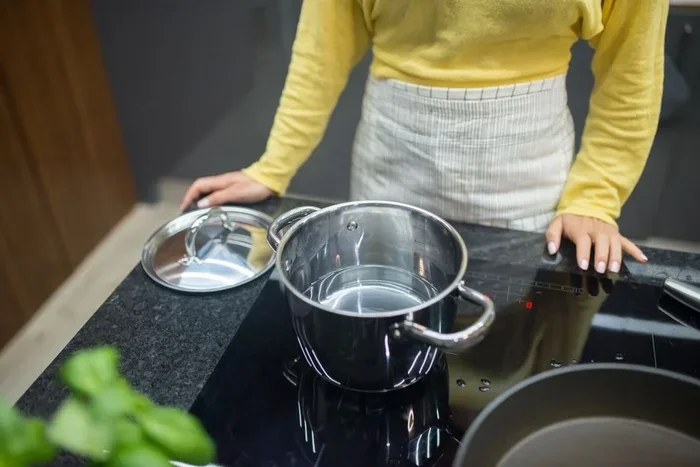
This is a key step. The Bosch induction cooktop uses electromagnetic fields to heat pans. Your cookware must be induction compatible. Pans made of cast iron, magnetic stainless steel, or certain carbon steel work well.
If you are unsure about your pans, do a simple magnet test. Stick a magnet to the bottom of your pan. If it sticks firmly, the pan works with your Bosch induction cooktop. If not, you will need to get new non stick cookware for induction cooktop or a cast iron skillet for induction cooktop.
Using the right pots and pans set for induction cooktop makes a big difference in cooking performance. Cheap or incompatible pans will not heat properly and can cause frustration.
Step 5: Set the Power Level
Once your pan is on the zone, it is time to set the power level. Use the touch controls to slide or tap to your desired level. Bosch cooktops usually offer numbered levels from 1 to 9 or 1 to 17, depending on the model.
Level 1 is for gentle simmering. Level 9 or 17 gives you maximum heat for boiling or searing. For most everyday cooking, you will use levels 3 through 7. The boost function temporarily maxes out the heat for fast boiling.
Here are some quick power level tips:
- Level 1-2: Keep food warm or melt butter gently.
- Level 3-4: Low simmer for sauces and soups.
- Level 5-6: Medium heat for frying and sautéing.
- Level 7-8: High heat for boiling water or searing meat.
- Level 9+: Maximum heat for rapid boiling or wok cooking.
Step 6: Use the Timer Function
Bosch induction cooktops come with a built-in timer. This is one of the most helpful features for busy cooks. Tap the timer button, set your desired time, and the cooktop will alert you when time is up.
The timer works independently of the heat setting. You can use it to track boiling pasta, baking in the oven, or anything else you are timing. This helps you stay organized in the kitchen and prevents overcooking.
Safety Features You Should Know
Bosch builds excellent safety features into every induction cooktop. Understanding these features keeps you and your family safe in the kitchen.
Auto Shut-Off
Most Bosch models have an auto shut-off feature. If the cooktop does not detect a pan or if it has been running for too long, it turns itself off. This prevents overheating and saves energy.
The auto shut-off is especially helpful if you forget to turn off the cooktop after cooking. You can walk away knowing the cooktop will handle it for you.
Child Lock
If you have young children at home, the child lock is a must-use feature. It locks all the controls so little hands cannot change settings or turn on the cooktop. Activate it through the control panel, and the cooktop will not respond to touches until you unlock it.
Pan Detection
Bosch induction cooktops use pan detection technology. The cooktop only heats up when it senses a compatible pan on the zone. If you remove the pan, the heat stops automatically. This saves energy and prevents burns.
Residual Heat Indicator
After you turn off a zone, the surface may still be warm. Bosch cooktops show a residual heat indicator on the display. This tells you which zones are still hot so you do not accidentally touch a warm surface.
Cooking Tips for Bosch Induction Cooktops
Now that you know how to operate the cooktop, let us talk about getting the best results. These tips will help you cook smarter and faster.
Use Flat-Bottomed Pans
Induction cooking works best with flat-bottomed pans. Warped or curved pans make poor contact with the cooking zone. This leads to uneven heating and longer cooking times. Check the bottom of your pan before placing it on the zone.
Match Pan Size to Zone Size
Using a small pan on a large zone wastes energy. The electromagnetic field spreads beyond the pan and loses efficiency. Match your pan size to the zone size for the best results. A non stick fry pan for induction hob works great for everyday frying tasks.
Preheat Before Cooking
Induction cooktops heat up very fast. Give your pan a minute to warm up before adding food. This is especially important for searing meat or frying eggs. A well-preheated pan prevents sticking and gives you better browning.
Adjust Heat Quickly
One of the biggest advantages of induction cooking is fast heat adjustment. You can go from high to low in seconds. This is perfect for recipes that need quick temperature changes. Try reducing heat right when your water starts to boil for perfectly cooked pasta.
Common Mistakes to Avoid
Even experienced cooks make mistakes with induction cooktops. Here are some common errors and how to avoid them.
- Using non-induction cookware: This is the number one mistake. Always check that your pans work with induction before cooking.
- Sliding pans across the surface: This can scratch the glass. Lift pans when moving them.
- Ignoring the residual heat indicator: The surface may still be warm after cooking. Always check before wiping it down.
- Overcrowding the cooking zone: Give each pan enough space for the electromagnetic field to work properly.
- Forgetting to clean spills quickly: Burnt-on food is harder to remove once it cools. Wipe spills while the surface is still warm.
Cleaning and Maintenance
Keeping your Bosch induction cooktop clean is simple. The smooth glass surface does not have grates or burners to scrub. A few minutes of care after each use keeps it looking new.
Wait for the surface to cool slightly, then wipe it with a damp cloth. For stubborn spots, use a cooktop cleaner designed for glass surfaces. A cloth to clean stainless steel appliances works well for polishing the edges and frame too.
Avoid using abrasive scrubbers or harsh chemicals. These can damage the glass finish. A soft microfiber cloth and a gentle cleaner do the job perfectly.
Clean up spills as soon as possible. Sugar and acidic foods can leave marks if they sit too long. A quick wipe after cooking saves you time later.
Troubleshooting Common Issues
Sometimes things do not go as planned. Here are quick fixes for common problems with Bosch induction cooktops.
Cooktop does not turn on: Check that the power cord is plugged in securely. Make sure the outlet is working. Some models require the cooktop to be unlocked before use.
Zone does not heat up: Make sure you have placed a compatible pan on the zone. The cooktop will not activate without proper cookware. Remove the pan and try again.
Error code on display: Bosch cooktops show error codes when something is wrong. Check your user manual for the meaning of each code. Most issues are simple to fix, like removing a pan that is too small for the zone.
Cooktop beeps repeatedly: This usually means the timer is up or a zone is still on. Check the display and turn off any active zones. The beeping stops once you address the alert.
Conclusion
Operating a Bosch induction cooktop does not have to be complicated. With the right setup, compatible cookware, and a little practice, you will be cooking meals with ease. The touch controls, safety features, and energy efficient design make Bosch one of the best brands in induction cooking.
Remember to always use induction compatible pans, keep an eye on the digital display, and take advantage of the timer and boost functions. Clean your cooktop regularly and store your pots and pans set for induction cooktop properly to keep everything in top shape.
Once you get comfortable with your Bosch induction cooktop, you will wonder how you ever cooked without it. The speed, precision, and safety features truly make a difference in the kitchen. Start using your cooktop today and enjoy the experience of modern induction cooking.
Frequently Asked Questions
How do I know if my pan works with a Bosch induction cooktop?
Do a magnet test. Stick a magnet to the bottom of your pan. If it sticks firmly, the pan is induction compatible. Pans made of cast iron, magnetic stainless steel, and certain carbon steel work best with Bosch induction cooktops.
Why does my Bosch cooktop show an error code?
Error codes usually mean something is not set up correctly. It could be a pan that is too small for the zone or a cookware compatibility issue. Check your user manual for the specific code meaning and follow the suggested fix.
Can I use any pot or pan on a Bosch induction cooktop?
No, only induction-compatible cookware works. Non-magnetic pans like aluminum or copper will not heat up. Look for pans labeled induction-ready or test them with a magnet before use.
How long does the auto shut-off feature wait before turning off?
Most Bosch models activate auto shut-off after a period of inactivity or when no pan is detected. The exact time varies by model. Check your user manual for the specific timing on your Bosch induction cooktop.
Is it safe to leave a Bosch induction cooktop unattended?
The auto shut-off and pan detection features make it safer to step away briefly. However, it is always best to stay nearby while cooking. The cooktop surface stays cooler than gas or electric, but accidents can still happen.
How do I clean my Bosch induction cooktop after cooking?
Wait for the surface to cool slightly, then wipe with a damp microfiber cloth. For stuck-on food, use a cooktop cleaner made for glass surfaces. Avoid abrasive pads that can scratch the finish.