Water boils at 212°F (100°C) at sea level, but this changes with altitude and pressure. Knowing the boiling point of water helps you cook better, sterilize safely, and understand basic science. This guide covers everything you need to know about water temperature and boiling.
Have you ever wondered what temperature does water boil at? It seems like a simple question. But the answer is more interesting than most people think. Water does not just boil at one fixed temperature. Many factors change when water reaches its boiling point. Altitude, pressure, and even the container you use all play a role.
Understanding the boiling point of water is useful in everyday life. It helps you cook better meals. It keeps you safe when purifying water outdoors. It even explains why your pasta takes longer to cook in the mountains. In this guide, we break down everything you need to know about water temperature and boiling. Let us dive in.
Key Takeaways
- Standard Boiling Point: Water boils at 212°F (100°C) at sea level under normal atmospheric pressure.
- Altitude Matters: At higher elevations, water boils at lower temperatures due to reduced air pressure.
- Cooking Impact: Understanding boiling points helps you cook food more evenly and efficiently.
- Measurement Tools: A reliable thermometer gives you accurate water temperature readings every time.
- Safety Factor: Boiling water is one of the simplest ways to purify and sterilize water.
- Common Myths: Many people believe boiling water always means it is at 212°F, which is not always true.
📑 Table of Contents
What Temperature Does Water Boil at Sea Level?
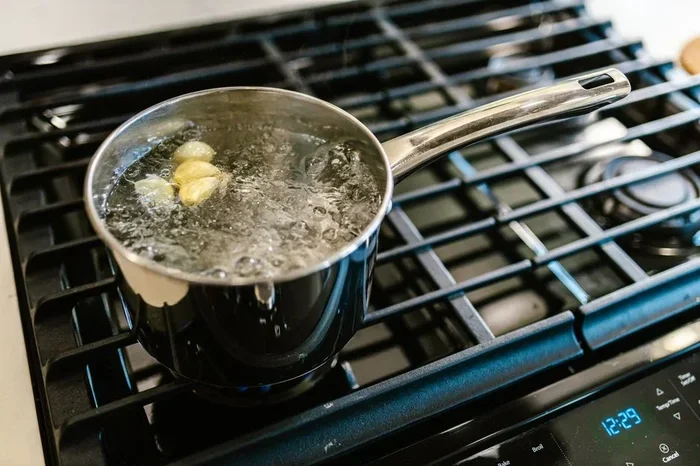
At sea level, water boils at 212 degrees Fahrenheit or 100 degrees Celsius. This is the standard answer most of us learned in school. But what does this actually mean? When water reaches this temperature, it changes from a liquid to a gas. This process is called vaporization. Bubbles form inside the water and rise to the surface.
The reason water boils at exactly 212°F at sea level comes down to atmospheric pressure. The air around us pushes down on the surface of the water. At sea level, this pressure is about 14.7 pounds per square inch. This is called one atmosphere of pressure. The water molecules need enough energy to push back against this pressure. Once they do, they escape as steam.
Why 212°F Is Not Always the Rule
Here is the thing many people miss. The 212°F number only applies at sea level. If you live in a city like Denver or Mexico City, the air pressure is lower. This means water boils at a lower temperature. We will cover this in detail in the next section. But for now, remember that sea level boiling point is the baseline.
Also, adding salt or other substances changes the boiling point. This is called boiling point elevation. Salt water boils at a slightly higher temperature than pure water. We will talk more about this later.
How Altitude Affects the Boiling Point
Altitude is the biggest factor that changes what temperature water boils. As you go higher, the air gets thinner. There is less pressure pushing down on the water. With less pressure, water molecules escape into steam more easily. This means water boils at a lower temperature.
Here is a quick look at how altitude changes the boiling point of water:
- Sea Level (0 feet): 212°F (100°C)
- 5,000 feet: 203°F (95°C)
- 10,000 feet: 194°F (90°C)
- 15,000 feet: 184°F (85°C)
- 20,000 feet: 175°F (80°C)
These numbers show a clear trend. The higher you go, the lower the water boiling temperature. For every 500 feet of elevation gain, the boiling point drops by about 1°F.
What This Means for Cooking
If you have ever tried cooking pasta in the mountains, you know it takes longer. The water boils faster because it reaches its boiling point sooner. But it is boiling at a lower temperature. That lower temperature means your food cooks more slowly.
This is why many high-altitude cooking guides recommend longer cooking times. It also explains why pressure cookers are so popular in mountainous regions. A pressure cooker increases the pressure inside the pot. This raises the boiling point back up closer to 212°F. Food cooks faster as a result.
For those who love outdoor adventures, knowing this is critical. If you are boiling water for camping or hiking, the altitude changes everything. Your water might be boiling at 195°F instead of 212°F. This affects how well you can purify it or cook your meals.
Why Knowing the Boiling Point Matters
You might be thinking, “Why do I need to know what temperature does water boil?” It turns out this knowledge has many practical uses. Let us look at the most important ones.
Cooking and Food Preparation
Cooking is the most obvious reason. Different foods need different cooking temperatures. Some dishes require a gentle simmer. Others need a full, rolling boil. A simmer is typically around 185°F to 205°F. A full boil is at or near 212°F at sea level.
Knowing the difference helps you cook better. For example, boiling eggs at a gentle simmer gives you perfect results. A hard boil can make them rubbery. Water temperature matters just as much as cooking time.
When you are making boiling water for instant meals, a microwave, or a kettle, the same principle applies. Understanding your temperature guide helps you get consistent results every time.
Water Purification and Safety
The CDC recommends boiling water to make it safe to drink. But here is the key detail. The water does not need to reach a rolling boil. Bringing it to a boil and letting it boil for one minute is enough to kill most harmful organisms.
At high altitudes, you should boil water for three minutes. This is because the water boiling temperature is lower. The lower temperature is less effective at killing pathogens. A longer boiling time compensates for this.
Science and Experiments
If you are doing science experiments at home or in school, the boiling point is a fundamental concept. It demonstrates how pressure and temperature interact. Kids and adults alike can learn a lot from simple boiling water experiments. All you need is a pot, a thermometer, and some curiosity.
How to Measure Water Temperature Accurately
Knowing what temperature water boils is one thing. Measuring it accurately is another. You need the right tools and a little patience.
Using a Kitchen Thermometer
A good kitchen thermometer is your best friend. Digital thermometers give you fast and accurate readings. You can find them at most kitchen supply stores. Look for one that reads from 0°F to 250°F or higher.
To measure boiling water, simply insert the thermometer probe into the water. Wait a few seconds for the reading to stabilize. You should see it climb toward 212°F at sea level. If you are at a higher altitude, expect a lower number.
The Rolling Boil Test
Not everyone owns a thermometer. The good news is you can still estimate boiling temperature. A rolling boil is when large bubbles form rapidly and continuously. This is your visual cue that the water has reached its boiling point.
However, this method is not precise. It does not tell you the exact water temperature. It just tells you the water is boiling. For most cooking purposes, this is good enough.
For more precise needs, especially in science or professional cooking, always use a thermometer. Temperature accuracy makes a real difference in your results.
Quick Tips for Accurate Measurement
- Place the thermometer in the center of the pot, not touching the bottom.
- Wait at least 30 seconds before reading the temperature.
- Calibrate your thermometer regularly for the best accuracy.
- Use a thermometer with a range that includes 212°F.
- Never leave a glass thermometer in boiling water, as it may break.
Common Myths About Boiling Water
There are many myths floating around about boiling water temperature. Let us clear up the most common ones.
Myth 1: Boiling Water Is Always 212°F
This is the biggest myth. As we covered, altitude and pressure change the boiling point. Water can boil at 195°F on a mountain peak. It can boil at even lower temperatures in a vacuum chamber. The 212°F number is just the standard at sea level.
Myth 2: Boiling Water Kills All Bacteria Instantly
Boiling water does kill most bacteria, but it is not instant. The water boiling temperature needs to be maintained for a specific time. One minute at sea level is usually enough. At high altitudes, three minutes is recommended. The temperature and time work together to ensure safety.
Myth 3: Cold Water Boils Faster Than Hot Water
You may have heard the claim that cold water boils faster than hot water. This is mostly false. Hot water reaches the boiling point faster because it is already closer to it. The Mpemba effect, where hot water sometimes freezes faster than cold water, is a different phenomenon. It does not apply to boiling.
Myth 4: Adding Salt Raises the Boiling Point Significantly
Adding salt does raise the boiling point, but only slightly. You would need an impractical amount of salt to see a meaningful change. A teaspoon of salt in a large pot changes the boiling point by less than 1°F. So for all practical purposes, salt does not affect your cooking time.
Practical Tips for Everyday Use
Now that you understand what temperature does water boil, let us put that knowledge to work. Here are some practical tips you can use right away.
Adjust Your Cooking Time for Altitude
If you live above 3,000 feet, adjust your cooking recipes. Pasta, rice, and beans all take longer to cook at high altitudes. Increase your cooking time by about 25%. You may also need to add more water since it evaporates faster.
Use a Lid to Boil Water Faster
Covering your pot with a lid traps heat. This helps the water reach its boiling point faster. If you are in a hurry, always use a lid. Just remember to leave a small gap to prevent the water from boiling over.
Store Boiled Water Safely
If you boil water for drinking or storage, let it cool first. You can store it in clean, sealed containers. For longer storage, consider using mason jars designed for water storage. This keeps your water fresh and safe for days.
Know Your Equipment
Different heat sources bring water to a boil at different speeds. Gas stoves, electric stoves, and induction cooktops all vary. A powerful kettle or instant hot water tap can boil water in seconds. Understanding your equipment helps you plan your cooking better.
Also, the size and material of your pot matter. A thin pot conducts heat faster than a thick one. A wide pot boils water faster than a narrow one because more surface area is exposed to the heat source.
Use Boiling Water for More Than Cooking
Boiling water is not just for cooking. You can use it to sterilize baby bottles, water bottles, and kitchen utensils. It is also the most reliable method for purifying water during emergencies. A simple pot and a heat source are all you need.
Conclusion
So, what temperature does water boil? The short answer is 212°F (100°C) at sea level. But the full answer is much more nuanced. Altitude, pressure, and dissolved substances all change the boiling point of water. Understanding these factors makes you a better cook, a safer camper, and a more informed person.
Whether you are boiling pasta in your kitchen or purifying water on a mountain trail, knowing the science behind boiling water gives you an edge. Use a thermometer for accuracy. Adjust your cooking times at high altitudes. And never trust the myths you hear about boiling water.
The next time you see bubbles forming in a pot, you will know exactly what is happening at the molecular level. That is the power of understanding water temperature and the boiling point. Use this knowledge every day, and you will see the difference in your cooking and your confidence in the kitchen.
Frequently Asked Questions
At what temperature does water boil?
At sea level, water boils at 212 degrees Fahrenheit or 100 degrees Celsius. This is under standard atmospheric pressure of one atmosphere. However, this temperature changes with altitude and pressure.
Why does water boil at a lower temperature at high altitudes?
At higher altitudes, the air pressure is lower. With less pressure pushing down on the water, molecules escape into steam more easily. This causes water to boil at a lower temperature the higher you go.
Does adding salt change the boiling point of water?
Yes, adding salt raises the boiling point slightly. This is called boiling point elevation. However, the change is very small for normal cooking amounts. You would need a lot of salt to see a meaningful difference.
How long should you boil water to make it safe to drink?
The CDC recommends boiling water for one minute at sea level. At altitudes above 6,500 feet, you should boil it for three minutes. The lower boiling temperature at high altitudes is less effective at killing pathogens.
Can water boil at room temperature?
Under normal conditions, no. Water needs heat to reach its boiling point. However, in a vacuum chamber where pressure is very low, water can boil at room temperature. This is because reduced pressure lowers the boiling point significantly.
What is the difference between simmering and boiling?
A simmer occurs at temperatures between 185°F and 205°F. A full boil is at or near 212°F at sea level. Simmering uses gentler heat and is ideal for slow-cooked dishes. Boiling uses maximum heat and is better for quick cooking tasks like blanching vegetables.