Water boils at 100°C (212°F) at sea level, but this changes with altitude, pressure, and dissolved minerals. Understanding the boiling point of water helps you cook better, sterilize safely, and choose the right hot water solutions for your home.
Have you ever stood at the stove watching a pot of water and wondered, at what temperature does water boil? It seems like a simple question. But the answer is more interesting than you might think. The boiling point of water is not always a fixed number. It shifts based on where you are, what you add to the water, and how much pressure surrounds it.
Understanding water boiling temperature matters more than most people realize. It affects how you cook pasta, how you sterilize baby bottles, and even how your instant hot water tap works at home. Whether you are a home cook, a coffee lover, or just curious about science, this guide covers everything you need to know.
Let us break it all down in simple terms. No confusing physics jargon. Just clear facts that you can use every single day.
Key Takeaways
- Pure water boils at 100°C (212°F) under standard sea-level atmospheric pressure.
- Altitude dramatically lowers the boiling point, which affects cooking times and food safety.
- Dissolved minerals and impurities can raise the boiling point slightly through boiling point elevation.
- Pressure cookers increase pressure to raise the boiling point and cook food faster.
- Knowing the boiling point helps with sterilization, brewing, and everyday kitchen tasks.
- Instant hot water taps and dispensers provide convenient access to near-boiling water at the touch of a button.
- Water temperature matters more than boiling time for many cooking and cleaning applications.
📑 Table of Contents
What Is The Boiling Point Of Water?
The Standard Answer
Pure water boils at 100 degrees Celsius, which equals 212 degrees Fahrenheit. This is true at sea level, where standard atmospheric pressure is about 101.3 kilopascals (or 1 atmosphere). Scientists call this the standard boiling point. It is the number you learned in school, and for most everyday situations, it is accurate enough.
But here is the catch. This number only applies under very specific conditions. Change the pressure. Change the altitude. Add salt or other minerals. And the boiling point shifts. This is why a simple answer like “water boils at 100 degrees” only tells part of the story.
Celsius vs Fahrenheit
Most of the world uses degrees Celsius for measuring the boiling point. The United States uses degrees Fahrenheit. Here is a quick conversion to keep in mind:
- 100°C = 212°F at sea level
- 0°C = 32°F (freezing point, for reference)
- Water boils at lower temperatures in Fahrenheit when at high altitudes
Converting between the two is easy once you know the baseline. Most cooking thermometers show both scales. This makes it simple to follow recipes from anywhere in the world.
What Does Boiling Actually Mean?
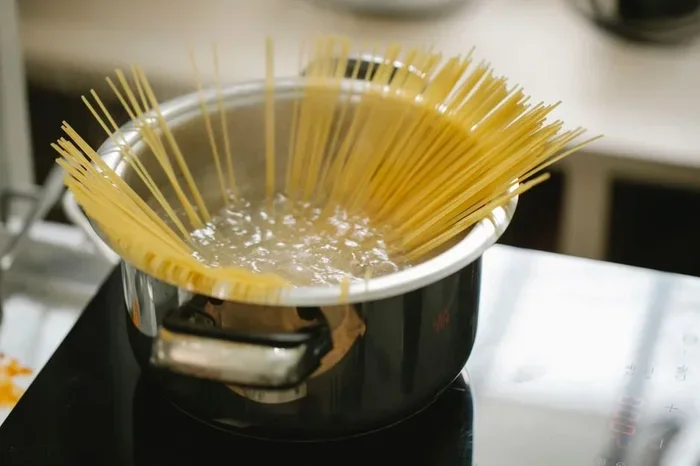
Boiling happens when the vapor pressure of water equals the pressure pushing down on it from the atmosphere. In plain English, the water molecules have enough energy to escape as steam faster than the air above can push them back down. When this balance is reached, you see bubbles forming throughout the liquid. That is boiling. Not just some steam rising from the surface. Real, rolling bubbles from the bottom of the pot.
How Altitude Changes The Boiling Point
This is one of the most fascinating aspects of water boiling temperature. The higher you go, the lower the atmospheric pressure. And lower pressure means water boils at a lower temperature. This is why high altitude boiling is such an important topic for hikers, mountain climbers, and anyone living in elevated areas.
Altitude and Boiling Point Chart
Here is a simple breakdown of how altitude affects the boiling point:
- Sea level (0 feet): 100°C (212°F)
- 5,000 feet: about 95°C (203°F)
- 10,000 feet: about 90°C (194°F)
- 15,000 feet: about 85°C (185°F)
- 20,000 feet: about 80°C (176°F)
As you can see, the drop is significant. At 10,000 feet, water boils nearly 10 degrees cooler than at sea level. This has real consequences for cooking. Pasta might take longer to cook. Hard-boiled eggs may need more time. And sterilizing water for drinking becomes trickier because the water is not hot enough to kill all pathogens quickly.
Why This Matters for Cooking
If you live in Denver or similar high-altitude cities, you have probably noticed that recipes often need adjustments. Boiling water at altitude is cooler, so food cooks more slowly. Many baking recipes include high-altitude instructions for this exact reason. The lower boiling point also means evaporation happens faster, which can dry out dough and batter more quickly than expected.
Pro tip: When cooking at high altitude, use a lid to trap heat and raise the effective temperature inside the pot. A tight-fitting lid makes a real difference.
Why Does Water Boil? The Science Explained
Let us look under the hood at what is really happening when water reaches its boiling point. Understanding the science behind it makes the whole topic much more interesting.
Heat Energy and Molecular Movement
When you apply heat to water, the molecules start moving faster. They vibrate and bounce around with more energy. As the temperature rises, the molecules gain enough kinetic energy to overcome the attractive forces holding them together in the liquid state. They break free and become gas molecules. That is steam. The phase change from liquid to gas happens at the boiling point.
The Role of Atmospheric Pressure
Atmospheric pressure is the weight of the air above you pushing down. At sea level, this pressure is at its highest for everyday life. It pushes down on the surface of the water, making it harder for molecules to escape as gas. That is why water needs to reach 100°C before it boils at sea level.
At higher altitudes, there is less air above you. The pressure is lower. Water molecules can escape into the gas phase more easily. So they boil at a lower temperature. This is the same reason why astronauts in space experience very different boiling behavior. In a vacuum, water can boil at room temperature.
Boiling Point Elevation
Adding substances to water, like salt, raises the boiling point. This is called boiling point elevation. It is a colligative property, meaning it depends on the number of dissolved particles, not what those particles are. A typical tablespoon of salt in a large pot raises the boiling point by less than half a degree. So for everyday cooking, the effect is tiny. But in industrial settings, the impact can be meaningful.
Practical Ways The Boiling Point Matters
Knowing at what temperature does water boil is not just academic trivia. It has real-world applications in the kitchen, the laboratory, and around the house.
Cooking and Food Preparation
Boiling water is one of the most common cooking methods. Whether you are making pasta, rice, eggs, or vegetables, understanding the boiling point helps you cook more efficiently. Water that is boiling at 100°C cooks food faster than water that is boiling at 90°C at high altitude. Adjusting your cooking time based on the actual boiling temperature can save you from undercooked or overcooked meals.
Many people also use boiling water for sterilizing baby bottles, jars, and utensils. The water needs to reach and maintain a high enough temperature for long enough to kill harmful bacteria. At sea level, a rolling boil for one minute is generally sufficient. At high altitudes, the CDC recommends boiling for three minutes because the lower temperature is less effective at killing pathogens.
Making Coffee and Tea
Coffee and tea enthusiasts pay close attention to water temperature. The ideal brewing temperature for most coffees is between 195°F and 205°F (90°C to 96°C). That is just below the boiling point. For green tea, you want even cooler water, around 170°F to 180°F (75°C to 82°C). Using water that is too hot can scorch delicate leaves and create bitter flavors.
This is where a quality instant hot water tap becomes incredibly useful. These taps let you set the exact temperature you want, so you never have to guess or wait for water to cool down.
Water Purification and Safety
The CDC and WHO both recommend boiling water as a reliable method of purification. When clean drinking water is not available, bringing water to a rolling boil kills most disease-causing organisms. But remember, at high altitudes, the lower boiling temperature means you need to boil longer. This is critical information for campers, hikers, and anyone preparing for emergencies.
Using a water filter before boiling can also improve the taste and remove additional contaminants. Boiling does not remove chemicals or heavy metals, so filtration first is often the best approach.
Home Appliances and Hot Water Systems
Many modern kitchen appliances are designed with the boiling point in mind. Instant Pots and pressure cookers work by increasing the internal pressure, which raises the boiling point above 100°C. This allows food to cook at higher temperatures and in less time. The same principle applies to industrial autoclaves used for sterilization in hospitals and laboratories.
On the other side of the spectrum, some appliances provide hot water without ever reaching a full boil. Insulated hot water bottles and portable dispensers keep water at safe drinking temperatures without the risk of overheating. Understanding the boiling point helps you choose the right appliance for your needs.
Common Myths About Boiling Water
Myth: Cold Water Boils Faster Than Hot Water
This is one of the most persistent myths in the kitchen. Cold water does not boil faster than hot water. It simply takes longer to reach the boiling point because it has further to go. Hot water, starting closer to the target temperature, gets there sooner. If you want to save time, start with hot tap water.
Myth: Adding Salt Makes Water Boil Faster
Salt does raise the boiling point slightly. But the amount of salt you add to pasta water is far too small to make a noticeable difference in boiling time. The effect is so tiny that it is practically meaningless in a home kitchen. What salt does do is flavor the water, which is the real reason to add it.
Myth: Boiling Water Removes All Contaminants
Boiling kills biological pathogens effectively. But it does not remove chemical contaminants, heavy metals, or dissolved solids. In fact, boiling can sometimes concentrate certain impurities as water evaporates. For comprehensive purification, combine boiling with a proper filtration system.
Final Thoughts
At what temperature does water boil is a question with a surprisingly nuanced answer. The standard boiling point of 100°C (212°F) at sea level is a great starting point. But altitude, pressure, and dissolved substances all play a role in changing that number. Whether you are cooking at high altitude, brewing the perfect cup of coffee, or purifying water for your family, understanding the boiling point gives you more control and better results.
The science behind water boiling temperature is fascinating. But the practical benefits are what really matter in your daily life. From choosing the right kitchen appliance to adjusting your cooking times, this knowledge pays dividends every single day. Keep these facts in mind, share them with friends, and never look at a boiling pot of water the same way again.
Next time you are in the kitchen, take a moment to appreciate the science happening right in front of you. That rolling boil is not just a visual cue. It is a precise physical process that you now understand better than most people do.
Frequently Asked Questions
Does water always boil at 100 degrees Celsius?
No, water only boils at 100°C at standard sea-level atmospheric pressure. At higher altitudes, the boiling point drops because of lower air pressure. Dissolved substances like salt can also raise the boiling point slightly.
Why does water boil at a lower temperature at high altitudes?
At higher altitudes, atmospheric pressure is lower. This means there is less force pushing down on the water surface. Water molecules can escape into the gas phase more easily, so boiling happens at a lower temperature.
Can water boil at room temperature?
Yes, under very low pressure conditions, such as in a vacuum chamber, water can boil at room temperature. This is because the reduced pressure allows molecules to escape as gas without needing high heat energy.
How long should you boil water to make it safe to drink?
At sea level, a rolling boil for one minute is sufficient to kill most pathogens. At altitudes above 6,500 feet, the CDC recommends boiling for three minutes because the lower boiling temperature is less effective at eliminating harmful organisms.
Does a pressure cooker change the boiling point of water?
Yes, a pressure cooker increases the internal pressure above atmospheric levels. This raises the boiling point of water, typically to around 120°C (248°F). The higher temperature cooks food faster and more efficiently.
Is boiling water the same as sterilizing water?
Boiling water is one of the most effective sterilization methods for killing biological pathogens. However, it does not remove chemical contaminants, heavy metals, or dissolved solids. For comprehensive water safety, combine boiling with proper filtration.