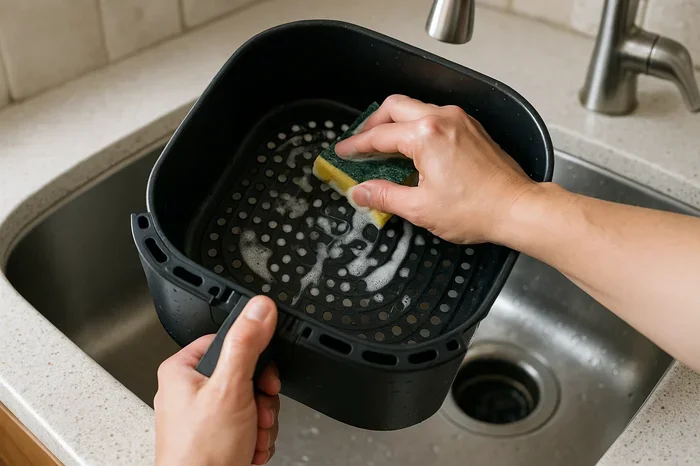
Cleaning the top of your air fryer keeps it safe and looking new. Grease and smoke can build up on the outside over time. You do not need harsh chemicals to remove this grime. A soft cloth and warm soapy water work best for most models. Regular care helps your appliance last longer and cook better.
Air fryers have become a staple in many modern kitchens. They cook food quickly and use less oil than traditional frying methods. But like any cooking appliance, they get dirty over time. While most people focus on cleaning the basket or the tray, the top of the air fryer often gets ignored. This area can collect grease, smoke residue, and dust. Keeping this surface clean is important for hygiene and safety.
You might wonder why the top matters so much. Grease buildup can affect how heat circulates around the unit. It can also cause unpleasant odors when the machine gets hot. Some people worry about damaging the electronics if they wipe the outside. Others are unsure about what cleaning products are safe to use. The good news is that cleaning the exterior is simple. You just need the right tools and a gentle approach.
In this guide, we will walk you through everything you need to know. We will cover safe cleaning methods, tools you should use, and mistakes to avoid. You will learn how to handle stubborn stains without scratching the surface. By the end, you will feel confident about maintaining your appliance. Let us dive into the details of keeping your kitchen helper spotless.
Key Takeaways
- Safety First: Always unplug the unit and let it cool down before cleaning.
- Gentle Tools: Use a soft sponge or microfiber cloth to avoid scratches.
- Avoid Excess Water: Never soak the top or let liquid enter internal parts.
- Stubborn Grease: A mix of baking soda and water helps remove stuck-on grime.
- Regular Maintenance: Wipe the exterior after every few uses to prevent buildup.
- Check the Manual: Always follow the manufacturer instructions for your specific model.
- Dry Thoroughly: Ensure the surface is completely dry before plugging it back in.
📑 Table of Contents
Why Cleaning the Top Matters
Many owners focus only on the cooking basket. They forget that the exterior gets dirty too. The top of the unit is close to where steam and smoke escape. Over time, this creates a layer of sticky grease. This buildup is not just ugly. It can also be a fire hazard if it gets too thick. Keeping the surface clean helps prevent these risks.
A clean exterior also helps your appliance last longer. Dirt and grime can corrode plastic parts over time. It can also make buttons and dials hard to read or use. If you plan to resell the item later, a clean unit holds more value. Plus, a shiny kitchen appliance looks much better on your counter. It shows you take care of your tools.
Health is another big reason to clean regularly. Bacteria can grow on old food residue. If you touch the top and then touch your food, you spread germs. Wiping it down removes these contaminants. It is a simple step that protects your family. You should make this part of your regular kitchen cleaning routine.
Heat and Grease Buildup
When you cook fatty foods, smoke rises to the top. This smoke leaves behind a thin film of oil. As it cools, it hardens into grease. This is common when cooking items like frozen fries or chicken wings. The heat from the internal components can warm this grease. Sometimes it drips down the sides. Cleaning it early prevents it from becoming a hard stain.
Some models vent hot air from the top. This means the surface gets hot during cooking. The heat can bake the grease onto the plastic or metal. This makes it harder to remove later. You need to be careful not to scratch the surface while scrubbing. Gentle cleaning agents work best here. Harsh scrubbers can damage the finish.
Hygiene and Safety
A dirty kitchen appliance can harbor bacteria. Food particles can fall on the top during cooking. These particles can attract pests or grow mold. Keeping the top clean ensures a sanitary cooking environment. It also prevents accidental burns. Grease can make the surface slippery or sticky. You might accidentally touch a hot, greasy spot while reaching for something else.
Safety also involves electrical components. Water should never enter the vents or controls. Cleaning the top requires care around buttons and displays. You want to remove dirt without damaging the electronics. Always read the manual before starting. Some materials react poorly to certain cleaners. Using the wrong product can cause cracking or discoloration.
Tools You Need for Cleaning
You do not need expensive equipment to clean your air fryer. Most households already have what you need. The key is choosing tools that are gentle. Abrasive scrubbers can scratch the plastic or metal. This creates spots where dirt can hide later. Here is a list of safe tools to gather before you start.
A microfiber cloth is one of the best options. It traps dust and grease without leaving lint behind. Soft sponges work well for tougher spots. You can also use a soft-bristled brush for crevices. For cleaning solutions, warm water and dish soap are usually enough. Vinegar is great for cutting through grease. Baking soda helps with stubborn stains.
Here are the essential tools you should keep handy:
- Microfiber cloths: Soft and lint-free for wiping surfaces.
- Soft sponge: For gentle scrubbing on plastic or metal.
- Soft brush: To clean around buttons and vents.
- Dish soap: Mild soap cuts through grease effectively.
- White vinegar: Natural deodorizer and grease cutter.
- Baking soda: Mild abrasive for stuck-on grime.
- Dry towel: To dry the surface completely after cleaning.
Safe Cleaning Agents
Not all cleaners are safe for kitchen appliances. Avoid bleach or harsh chemicals. These can leave behind strong smells. They might also damage the plastic casing. Stick to natural ingredients when possible. Dish soap mixed with warm water is the safest bet. It removes grease without harming the finish.
Vinegar is another excellent choice. It helps dissolve mineral deposits and grease. You can mix it with water in a spray bottle. Just do not spray directly onto the unit. Spray the cloth instead. This prevents liquid from seeping into internal parts. Baking soda paste works for stubborn spots. It is gentle enough not to scratch.
Tools to Avoid
Some tools can cause permanent damage. Steel wool is too abrasive for most surfaces. It will scratch the plastic and metal. Scouring pads with rough sides should also be avoided. They can remove the non-stick coating if you touch internal parts. Never use sharp objects like knives or scrapers. They can puncture the casing.
High-pressure water sprays are dangerous too. They can force water into the electronics. This can short-circuit the unit. Avoid putting the top in the dishwasher unless the manual says it is safe. Most units are not designed for this. Hand washing is always the safest method. It gives you control over the water amount.
Step-by-Step Cleaning Guide
Now that you have your tools, let us start cleaning. Follow these steps to clean the top safely. Take your time and do not rush. Rushing can lead to mistakes or damage. A thorough clean ensures every spot is covered.
Step 1: Unplug and Cool Down. Safety is the most important step. Always unplug the air fryer from the wall. Let it cool down completely. The top can remain hot for a while after cooking. Touching a hot surface can burn your hands. It can also melt cleaning cloths. Wait at least thirty minutes after use.
Step 2: Wipe Loose Debris. Use a dry cloth to wipe away loose dust. This prevents mud from forming when you add water. Gently sweep over the top and around the vents. Be careful not to push dirt into the holes. You want to remove it, not hide it inside.
Step 3: Prepare Cleaning Solution. Mix a few drops of dish soap with warm water. You do not need a lot of soap. Too many suds can be hard to rinse. Dip your soft sponge or cloth into the solution. Wring it out well. It should be damp, not dripping wet.
Step 4: Wipe the Surface. Gently wipe the top of the air fryer. Use circular motions to lift the grease. Focus on areas near the vents where smoke collects. Do not press too hard. Let the soap do the work. If the cloth gets dirty, rinse it and wring it out again.
Step 5: Tackle Stubborn Stains. For hard-to-remove grime, use a baking soda paste. Mix baking soda with a little water to make a paste. Apply it to the stain and let it sit for five minutes. Gently scrub with a soft brush. Wipe it away with a damp cloth. This method is effective for air fryer maintenance.
Step 6: Rinse and Dry. Use a clean cloth with plain water to wipe off soap residue. Soap left behind can attract more dirt. Dry the surface thoroughly with a dry towel. Make sure no moisture remains near buttons or vents. Let it air dry for a few more minutes before plugging it in.
Dealing with Vent Areas
Vents are tricky because water should not go inside. Use a dry soft brush to loosen dust from the slats. You can use a cotton swab dipped in a little vinegar for deep grime. Be very gentle around these areas. Do not pour liquid directly into the vent holes. This protects the internal heating elements.
If grease is stuck in the vents, use a toothpick carefully. Gently dislodge the debris without poking too deep. Follow up with a dry cloth to catch the loose particles. Regular attention to vents prevents airflow issues. It also keeps the unit from overheating. This is a key part of knowing how do you clean the top of an air fryer properly.
Cleaning Control Panels
Control panels have buttons and screens. These areas need extra care. Moisture can damage the electronics behind the buttons. Use a slightly damp cloth for the panel. Never spray cleaner directly on the buttons. Wipe gently around the edges. Dry immediately with a separate cloth.
If the panel is sticky, use a tiny amount of soap on the cloth. Test it on a small corner first. Ensure it does not remove any labels or prints. Some screens have protective coatings. Harsh chemicals can strip these coatings. Stick to mild soap and water for the safest results.
Common Mistakes to Avoid
Even simple tasks can go wrong if you are not careful. Many people make mistakes that damage their appliance. Avoiding these errors saves you money and stress. Here are some common pitfalls to watch out for.
One big mistake is using too much water. Excess water can seep into the electronics. This can ruin the heating element or the timer. Always wring out your cloth well. Another mistake is using abrasive scrubbers. Steel wool or rough pads scratch the surface. Scratches make it easier for dirt to stick later.
People also forget to unplug the unit. Cleaning a plugged-in appliance is dangerous. You could get an electric shock. You might also accidentally turn it on while cleaning. Always disconnect the power first. Another error is using harsh chemicals. Bleach or ammonia can discolor the plastic. They leave strong odors that transfer to food.
Using Harsh Chemicals
Strong cleaners might seem effective, but they are risky. They can degrade the plastic over time. This makes the casing brittle and prone to cracking. Some chemicals leave residues that are not food safe. Since the air fryer cooks food, you want to avoid toxins. Stick to natural cleaners like vinegar or soap.
If you must use a commercial cleaner, check the label. Ensure it is safe for kitchen appliances. Look for non-toxic formulas. Rinse the surface well after using any chemical. You do not want any residue left behind. When in doubt, soap and water are always safer.
Soaking the Exterior
Never soak the top of the air fryer. Unlike the basket, the exterior is not waterproof. Water can enter the seams and damage the internals. It can also cause rust on metal parts. If the unit is very dirty, wipe it multiple times. Do not try to clean it all in one wet pass.
If grease is thick, let the damp cloth sit on the spot for a minute. This softens the grease without soaking the unit. Then wipe it away. Patience works better than force. Forcing water into the unit can void your warranty. Always treat the electronics with respect.
Tips for Stubborn Stains
Sometimes regular wiping is not enough. Old grease can harden like cement. You need special tricks to remove these stains. Do not panic if you see a tough spot. There are gentle ways to handle it. These methods work on most plastic and metal surfaces.
Baking soda is a miracle worker for stains. Make a thick paste with water. Apply it to the stain and let it sit. The baking soda softens the grease. After ten minutes, scrub gently with a soft brush. Wipe it clean with a damp cloth. This often removes years of buildup.
Vinegar is also great for sticky residues. Heat the vinegar slightly in a microwave. Do not make it boiling hot. Dip a cloth in the warm vinegar. Wipe the stained area. The warmth helps dissolve the grease. Follow up with soap and water to remove the vinegar smell.
Grease Removal Tricks
For heavy grease, try dish soap directly. Put a drop of soap on the greasy spot. Add a little warm water to make it sudsy. Let it sit for five minutes. The soap breaks down the oil bonds. Then wipe it away with a soft sponge. This is effective for cleaning air fryer exterior surfaces.
If the stain is on a metal part, you can use a magic eraser. Be very gentle with this tool. It acts like fine sandpaper. Test it on a small hidden area first. Ensure it does not remove the finish. Use light pressure to avoid scratches. Always dry the area well after using it.
Polishing the Surface
Once clean, you might want to polish the top. This makes it look new and repels dust. You can use a tiny amount of olive oil on a cloth. Rub it in lightly and buff it off. This works well on stainless steel parts. For plastic, just a dry buff is enough.
Some people use car wax on smooth surfaces. This creates a protective layer. It makes future cleaning easier. Just ensure the product is non-toxic. You do not want chemicals near your food. A simple dry cloth buff is usually sufficient. It brings back the shine without extra products.
Maintenance and Prevention
Cleaning is easier if you prevent messes. Simple habits reduce the amount of work needed. You do not need to deep clean every week. Regular light cleaning keeps the top in good shape. Here are some tips to maintain your appliance.
Wipe the top after every few uses. A quick pass with a damp cloth removes fresh grease. It is much easier than removing hardened grime. You can do this while the unit is cooling down. Just ensure it is not too hot to touch. This habit keeps the surface looking new.
Use liners or covers when possible. Some people place a foil cover over the top. This catches smoke and grease before it lands. However, ensure it does not block vents. Airflow is crucial for safety. Check your manual before using any covers. Proper airflow prevents overheating.
Regular Wiping Schedule
Set a reminder to clean your air fryer monthly. Mark it on your calendar. This ensures you do not forget. A monthly wipe-down prevents heavy buildup. It also lets you inspect the unit for damage. Look for cracks or worn parts during cleaning. Catching issues early saves money.
If you cook greasy foods often, clean more frequently. Foods like wings or sausages produce more smoke. The top will get dirty faster. Adjust your schedule based on your cooking habits. A little effort now saves a lot of scrubbing later. Consistent care is the best strategy.
Protecting the Exterior
Keep your air fryer away from splatters. Do not place it under cabinets that drip grease. Store it in a clean area when not in use. Dust can settle on the top if it sits idle. Cover it with a cloth if you have space. This keeps it ready for the next use.
Avoid placing the unit near open windows. Wind can blow dust and pollen onto the surface. It also brings in moisture which can cause rust. A stable, indoor location is best. Treat your appliance like a valuable tool. It will serve you well for years with proper care.
Learning how do you clean the top of an air fryer is simple. It just requires patience and the right tools. You do not need special skills to do it. Follow the steps we discussed above. Your appliance will look and work better. A clean kitchen makes cooking more enjoyable. Start your maintenance routine today.
Conclusion
Taking care of your air fryer ensures it lasts longer. Cleaning the top is just as important as washing the basket. It prevents grease buildup and keeps your kitchen hygienic. You now know the safe methods to use. Remember to unplug the unit and let it cool. Use gentle tools like microfiber cloths and mild soap.
Avoid harsh chemicals and excessive water. These can damage the electronics and finish. Regular wiping prevents stubborn stains from forming. With a little effort, your appliance will stay in top condition. You can cook with confidence knowing your unit is clean. Follow these tips for the best air fryer maintenance.
We hope this guide helps you keep your kitchen spotless. A clean appliance is a happy appliance. Enjoy your cooking and your shiny new surface. If you have other questions, check your manual or ask experts. Happy cooking and cleaning.
Frequently Asked Questions
Can I use vinegar to clean the top of my air fryer?
Yes, white vinegar is safe for most air fryer exteriors. Mix it with water and apply it to a cloth, not directly on the unit. It helps cut through grease and removes odors effectively.
How often should I clean the exterior of my air fryer?
You should wipe the exterior every few uses to prevent buildup. A deeper clean once a month is usually enough for most households. If you cook greasy foods often, clean it more frequently.
Is it safe to spray cleaner directly on the air fryer top?
No, you should never spray cleaner directly on the appliance. Liquid can seep into vents and damage the electronics. Always spray the cloth first and then wipe the surface.
What should I do if there is grease stuck in the vents?
Use a dry soft brush or a cotton swab to gently remove debris. You can dampen the swab with a little vinegar for stubborn grime. Be careful not to push liquid into the internal components.
Can I put the top of the air fryer in the dishwasher?
Most air fryer tops are not dishwasher safe unless specified in the manual. The heat and water pressure can damage the electronics and plastic. Hand washing is the safest method for cleaning the exterior.
Why does the top of my air fryer get so greasy?
Grease rises with smoke during cooking, especially with fatty foods. This residue settles on the top and hardens as it cools. Regular wiping prevents this buildup from becoming difficult to remove.