

Rice cookers use a combination of thermal sensors, temperature changes, and timing mechanisms to determine when to stop cooking. These devices monitor the internal temperature and detect when water has evaporated, signaling the end of the cooking cycle. Modern rice cookers often incorporate smart technology and steam release systems to ensure consistent results.
Key Takeaways
- Thermal Sensors: Rice cookers use built-in thermal sensors to detect temperature changes, which signal when water has boiled away and rice is fully cooked.
- Temperature Differential: When water evaporates, the temperature inside rises sharply, triggering the cooker to switch from cooking to warming mode.
- Mechanical Systems: Older models may rely on simple timers or mechanical thermostats to control the cooking process and shut off automatically.
- Timing Mechanisms: Basic rice cookers often use preset timers that estimate cooking time based on rice quantity and type.
- Steam and Pressure: Some advanced models monitor steam release and pressure levels to determine when rice has absorbed enough water.
- Smart Technology: Modern rice cookers feature microprocessors and fuzzy logic to adjust cooking parameters in real-time for optimal results.
- User Maintenance: Proper cleaning and care of sensors and heating elements ensure accurate temperature detection and reliable automatic shut-off.
📑 Table of Contents
- Introduction: The Magic Behind Perfect Rice
- Understanding Thermal Sensors in Rice Cookers
- Temperature Differential: The Key to Automatic Shut-Off
- Mechanical Systems in Traditional Rice Cookers
- Smart Technology and Fuzzy Logic
- Steam Release and Pressure Monitoring
- Maintaining Your Rice Cooker for Optimal Performance
- Conclusion: Trust in Technology
Introduction: The Magic Behind Perfect Rice
Have you ever wondered how your rice cooker magically knows when to stop cooking? It’s not magic—it’s clever engineering! Rice cookers are designed to automatically detect when your rice has absorbed enough water and is fully cooked. This smart technology ensures you get fluffy, perfectly cooked rice every time without constant monitoring. Whether you’re using a basic model or a high-tech fuzzy logic cooker, understanding how they work can help you use them more effectively and troubleshoot any issues that arise.
Most of us take for granted that our rice cooker will switch from “cooking” to “warm” mode at just the right moment. But there’s fascinating science behind this process. From simple thermal sensors to advanced microprocessors, these appliances use various methods to determine when your rice is ready. In this article, we’ll explore the different technologies that make modern rice cookers so reliable and convenient.
Understanding Thermal Sensors in Rice Cookers
The Science of Heat Detection
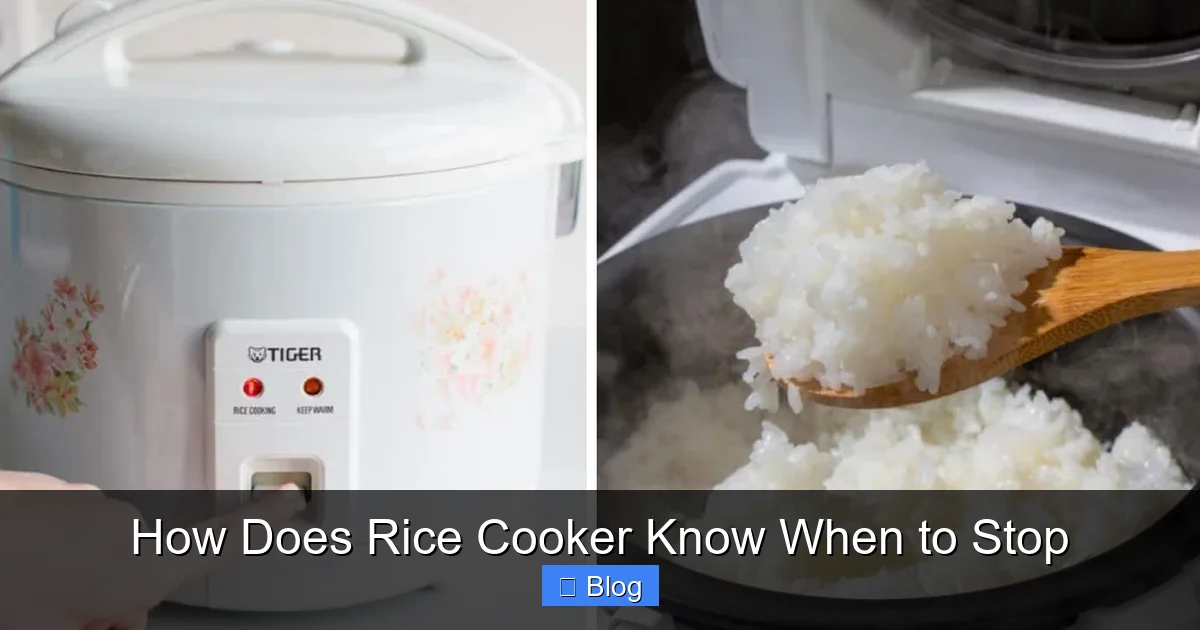
At the heart of most rice cookers lies a thermal sensor, also known as a thermistor. This small device monitors the temperature inside the cooking pot continuously. When you first start cooking rice, the water inside keeps the temperature relatively stable around 100°C (212°F) because it’s boiling. The thermal sensor detects this steady temperature and keeps the heating element running.
Visual guide about How Does Rice Cooker Know When to Stop
Image source: thekitchenix.com
However, once all the water has been absorbed by the rice, the temperature begins to rise rapidly. This sudden increase triggers the thermal sensor to send a signal to the control unit, which then switches the cooker to warming mode. The key insight here is that plain rice typically reaches temperatures above 105°C (221°F) when fully cooked, while boiling water stays at 100°C. This temperature differential is what tells your rice cooker when to stop cooking.
Types of Thermal Sensors
There are two main types of thermal sensors used in rice cookers:
- Thermistors: These are the most common sensors found in modern rice cookers. They change electrical resistance based on temperature changes.
- Bimetallic Thermometers: Found in older models, these consist of two metals with different expansion rates bonded together. As temperature changes, the metals bend and trigger a mechanical switch.
Thermistors offer more precise temperature control and faster response times compared to bimetallic systems. This precision is why modern rice cookers can produce more consistent results across different rice types and quantities.
Temperature Differential: The Key to Automatic Shut-Off
Why Temperature Matters
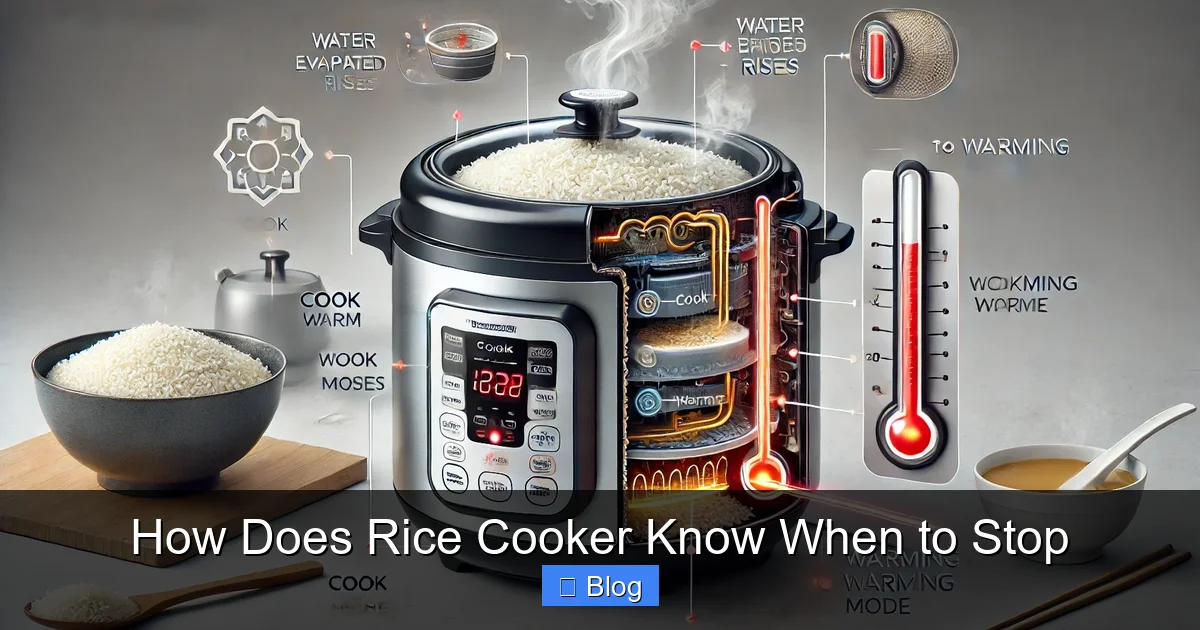
The fundamental principle behind rice cooker operation is the relationship between water temperature and dry rice temperature. Water boils at 100°C (212°F) at standard atmospheric pressure, maintaining this temperature as long as liquid water remains. However, once the water is absorbed, the temperature can rise significantly beyond this point.
Visual guide about How Does Rice Cooker Know When to Stop
Image source: expertreviewsbestricecooker.com
This temperature shift is crucial because it provides a clear signal to the rice cooker’s control system. When the internal temperature exceeds approximately 105°C (221°F), the sensors recognize that the water has been absorbed and the rice is approaching completion. This triggers the automatic switch from cooking to warming mode.
Practical Examples
Consider what happens when you cook different types of rice. White rice typically absorbs its water faster than brown rice due to its thinner bran layer. A good rice cooker will adjust its timing accordingly, using temperature feedback to determine when each variety is done. Similarly, if you accidentally add too much water, the extended boiling period will be detected, and the cooker will wait for the temperature to rise before shutting off.
This system works so well that many users don’t even need to measure their rice and water precisely. The rice cooker compensates for small variations through its temperature monitoring system.
Mechanical Systems in Traditional Rice Cookers
Timer-Based Operation
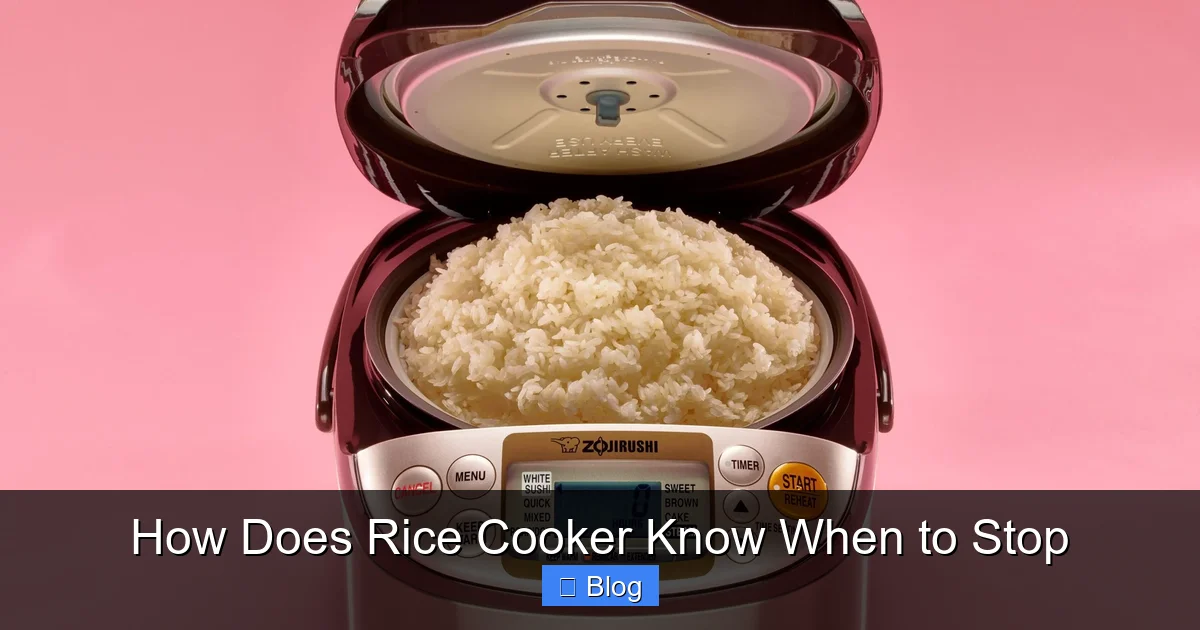
Older rice cookers often relied on simple mechanical timers rather than sophisticated temperature sensors. These models would estimate cooking time based on the amount of rice and water added. While less precise than modern sensors, timer-based systems were reliable enough for basic rice cooking needs.
Visual guide about How Does Rice Cooker Know When to Stop
Image source: bestcookhouse.com
These traditional cookers typically used a weighted mechanism that would drop as steam escaped through a vent. Once enough steam had been released, the weight would trigger a mechanical switch to turn off the heating element. This system required careful attention to water-to-rice ratios to work effectively.
Limitations and Advantages
Mechanical systems have their limitations. They can’t adapt to variations in rice quality, altitude, or environmental conditions. However, they’re also less prone to electronic failures and can last for decades with proper maintenance. Many users appreciate the simplicity and durability of these older models.
Modern rice cookers combine the best of both worlds: the reliability of mechanical systems with the precision of electronic controls. This hybrid approach gives users consistent results while maintaining ease of use.
Smart Technology and Fuzzy Logic
Advanced Microprocessor Control
Premium rice cookers today feature microprocessors that use fuzzy logic algorithms to optimize cooking. These systems don’t just rely on a single temperature threshold—they monitor multiple factors including:
- Initial temperature readings
- Rate of temperature change
- Moisture levels in the rice
- Quantity and type of rice
- Ambient environmental conditions
By analyzing these variables, smart rice cookers can make real-time adjustments to cooking time and temperature. This results in perfectly cooked rice regardless of slight variations in ingredients or conditions.
Fuzzy Logic Explained
Fuzzy logic is a mathematical approach that deals with uncertainty and imprecision. Rather than requiring exact measurements, it works with ranges and probabilities. In a rice cooker, this means the system can recognize that “slightly overcooked” or “almost perfect” conditions and adjust accordingly.
For example, if the rice is cooking faster than expected due to high heat, the fuzzy logic system might reduce power slightly. Conversely, if cooking is taking longer, it might extend the cooking time or increase temperature gradually. This adaptive approach produces more consistent results than fixed-temperature systems.
Steam Release and Pressure Monitoring
The Role of Steam in Cooking
Steam plays a crucial role in the rice cooking process, and many advanced rice cookers monitor steam release to determine doneness. As water turns to steam, it carries heat to all parts of the rice, ensuring even cooking. The rate and volume of steam production provide valuable information about the cooking progress.
Some rice cookers have dedicated steam sensors that measure humidity levels inside the cooking chamber. When humidity drops significantly, it indicates that most of the water has been absorbed, signaling the approaching end of the cooking cycle.
Pressure-Assisted Cooking
Certain rice cookers use pressure to enhance the cooking process. These pressure rice cookers can achieve higher temperatures and cook rice more quickly. Pressure sensors monitor internal pressure levels, which correlate with temperature and moisture content. When pressure drops to a certain level, indicating that steam production has decreased, the cooker knows it’s time to stop.
Pressure cooking also helps create a more sealed environment, preventing steam from escaping too quickly and allowing for more precise control over the cooking process. This method is particularly effective for tougher grains like brown rice or wild rice blends.
Maintaining Your Rice Cooker for Optimal Performance
Cleaning Sensors and Heating Elements
To ensure your rice cooker continues to know when to stop cooking accurately, regular maintenance is essential. Mineral deposits from hard water can coat thermal sensors, affecting their ability to detect temperature changes. Similarly, food particles stuck to heating elements can create hot spots or interfere with even heating.
Most manufacturers recommend cleaning the inner pot and heating plate after each use. For stubborn mineral buildup, white vinegar solutions can help dissolve deposits without damaging electronic components. Always unplug your rice cooker before cleaning and avoid getting water into electronic compartments.
Troubleshooting Common Issues
If your rice cooker seems to be stopping too early or not stopping at all, check these common causes:
- Mineral buildup on sensors: Clean the inner pot and heating element regularly
- Incorrect water ratios: Too much water extends cooking time; too little causes premature shut-off
- Damaged seals: Check the lid gasket for wear that might affect pressure retention
- Old or worn parts: Some sensors may need replacement after years of use
Refer to your owner’s manual for specific troubleshooting steps. Many issues can be resolved with simple cleaning or recalibration procedures.
Conclusion: Trust in Technology
Rice cookers have evolved from simple heated pots to sophisticated kitchen appliances that combine multiple sensing technologies to achieve perfect results. Whether using basic thermal sensors, mechanical timers, or advanced fuzzy logic systems, these devices reliably detect when rice has finished cooking through temperature changes, steam patterns, and pressure variations.
Understanding how your rice cooker knows when to stop can help you use it more effectively and troubleshoot any issues that arise. Regular maintenance ensures these systems continue working properly, giving you years of convenient, perfectly cooked rice. The next time your rice cooker switches from cooking to warm mode, you’ll appreciate the clever engineering that made it possible.
Modern innovations continue to improve rice cooker technology, with some models now featuring Bluetooth connectivity, smartphone apps, and even AI learning capabilities. While these advanced features offer convenience, the core principles of temperature monitoring and automatic shut-off remain the foundation of reliable rice cooking. Whether you choose a basic model or a premium smart cooker, you can trust that these appliances will know exactly when to stop cooking your rice.
🎥 Related Video: How does a rice cooker know when to stop heating?
📺 Vincent Stevenson
I discuss how engineers make use of the different temperature of a mixture and a material property of magnets to control this batch …
Frequently Asked Questions
How does a rice cooker know when to switch to warm mode?
When all the water is absorbed by the rice, the temperature inside the cooker rises sharply above 100°C. This temperature change is detected by thermal sensors, which signal the control system to switch from cooking to warming mode automatically.
Can I override the automatic shut-off feature?
Most rice cookers don’t allow manual override of the automatic shut-off for safety reasons. However, some models offer extended warming functions or programmable settings that give you more control over the cooking duration.
Why does my rice cooker stop cooking too early?
Premature shut-off can occur due to mineral buildup on sensors, incorrect water-to-rice ratios, or damaged heating elements. Check that you’re using the correct amount of water and clean the inner pot and heating plate regularly to maintain proper function.
Do all rice cookers use the same technology to detect doneness?
No, different models use varying technologies. Basic cookers may rely on timers or simple mechanical thermostats, while advanced models use thermal sensors, fuzzy logic processors, and steam monitoring systems to determine when rice is perfectly cooked.
How accurate are rice cooker sensors?
Modern thermal sensors are highly accurate, typically detecting temperature changes within 1-2 degrees Celsius. This precision allows rice cookers to distinguish between boiling water (100°C) and fully cooked rice (above 105°C) reliably.
What happens if I leave my rice cooker on after cooking is complete?
Rice cookers automatically switch to a low-power warming mode when cooking is complete. They continue to monitor temperature and may cycle on and off periodically to maintain food safety while preventing overcooking. Most models have automatic shut-off timers for added safety.



