
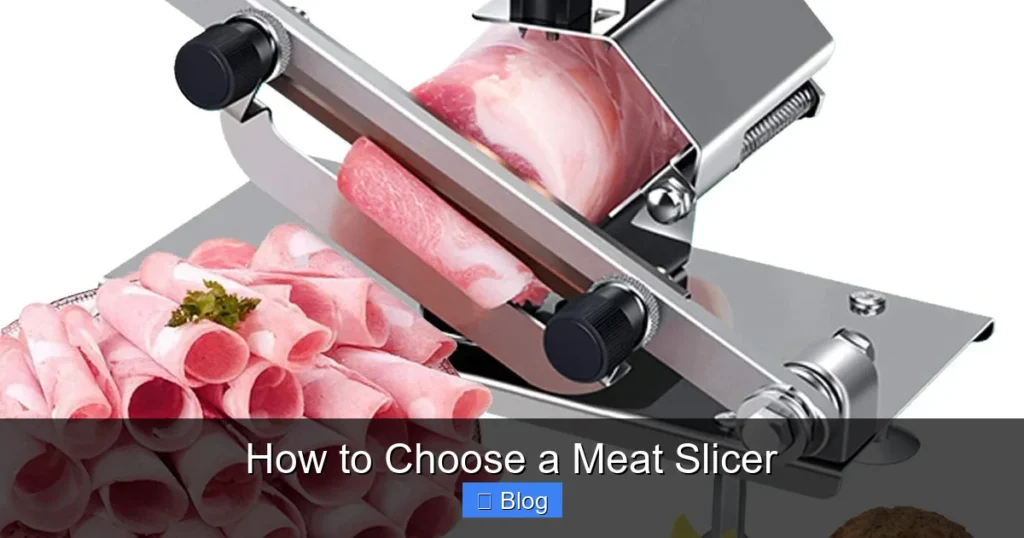
Choosing the right meat slicer doesn’t have to be confusing. In this guide we break down the essential features, safety tips, and budget considerations so you can slice like a pro, whether you’re a home cook or a small‑shop owner. Read on for practical advice you can apply today.
Key Takeaways
- Blade size matters: Larger blades handle big cuts, while smaller blades give finer slices.
- Motor power is key: ½‑hp motors suit home use; 1‑hp+ motors are best for commercial volume.
- Safety first: Look for blade guards, emergency stop buttons, and non‑slip bases.
- Adjustability counts: Easy thickness controls let you switch from paper‑thin deli slices to thick steak cuts.
- Maintenance affects longevity: Removable blades, easy‑clean surfaces, and good warranty keep your slicer running.
- Space and power: Measure your countertop and check voltage before you buy.
- Budget vs. features: You don’t need a $2,000 machine for home use; mid‑range models often deliver the best value.
📑 Table of Contents
- Introduction: Why a Good Meat Slicer Is Worth the Investment
- 1. Understand the Core Components of a Meat Slicer
- 2. Match the Slicer to Your Use‑Case
- 3. Evaluate Key Features Before You Buy
- 4. Practical Tips for Setting Up and Using Your Slicer
- 5. Budgeting: How Much Should You Spend?
- Conclusion: Make an Informed Choice and Slice with Confidence
Introduction: Why a Good Meat Slicer Is Worth the Investment
Imagine slicing a roast into perfect, even pieces for a sandwich or carving a ham for a holiday feast. A quality meat slicer turns a tedious, uneven job into a quick, professional‑looking task. Whether you’re a home cook who loves deli‑style cuts or a small café owner serving customers daily, the right slicer can save time, reduce waste, and keep your knives sharper for longer.
But the market is crowded. From countertop models that sit on a kitchen island to heavy‑duty floor units, each design promises “precision” and “durability.” How do you separate hype from reality? This guide walks you through every factor—blade size, motor power, safety features, and more—so you can pick a slicer that matches your needs and budget.
1. Understand the Core Components of a Meat Slicer
Blade Size and Material
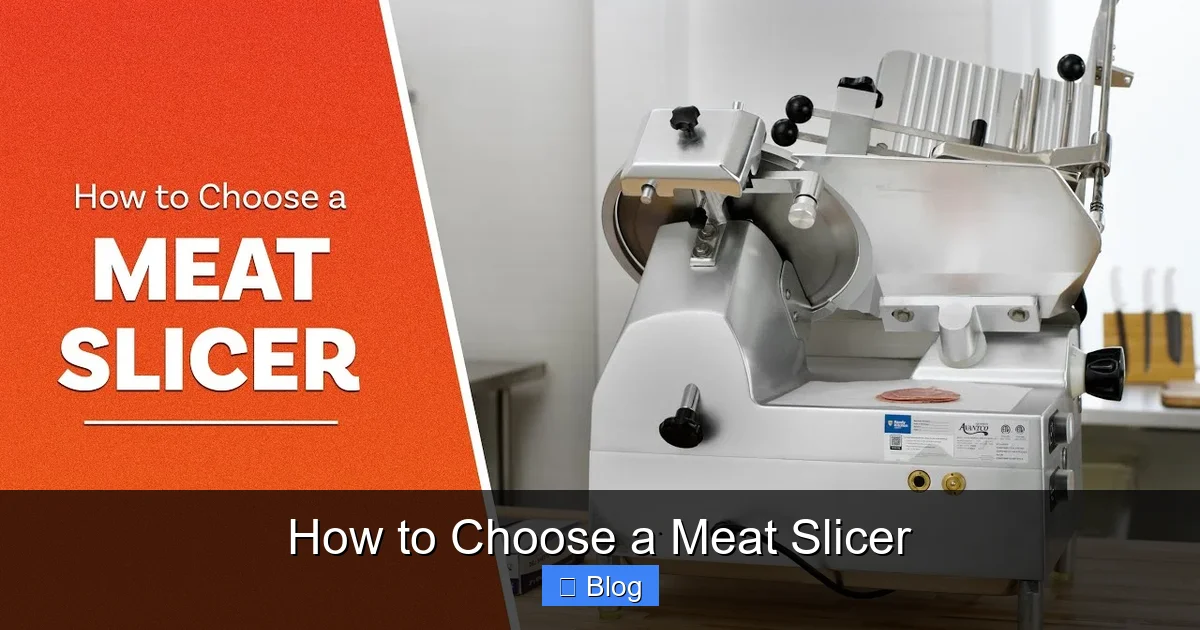
The blade is the heart of the slicer. Most blades range from 7 inches to 14 inches. A 7‑inch blade is compact, perfect for home kitchens and small cuts of meat, cheese, or vegetables. A 14‑inch blade handles large roasts, whole turkeys, and bulk cheese wheels. Stainless steel is standard; look for “high‑carbon” or “titanium‑coated” blades if you want extra edge retention.
Visual guide about How to Choose a Meat Slicer
Image source: i.ytimg.com
Motor Power and Speed
Motor power is measured in horsepower (hp). Home users typically need ½ hp to ¾ hp. This provides enough torque to cut through a chilled roast without stalling. Commercial settings benefit from 1 hp or more, especially when slicing continuously for hours. Speed (RPM) influences how smooth the cut feels; a range of 1000‑1500 RPM is common and offers a balance between speed and control.
Thickness Adjustment Mechanism
Precision slicing hinges on easy thickness control. Look for a knob or lever that clicks into place at each millimeter (or 1/16‑inch) increment. Some models feature a digital display for exact measurements—handy for recipes that demand uniform slices.
Safety Features
Safety isn’t optional. Essential features include:
- Blade guard that locks the blade when not in use.
- Emergency stop button that cuts power instantly.
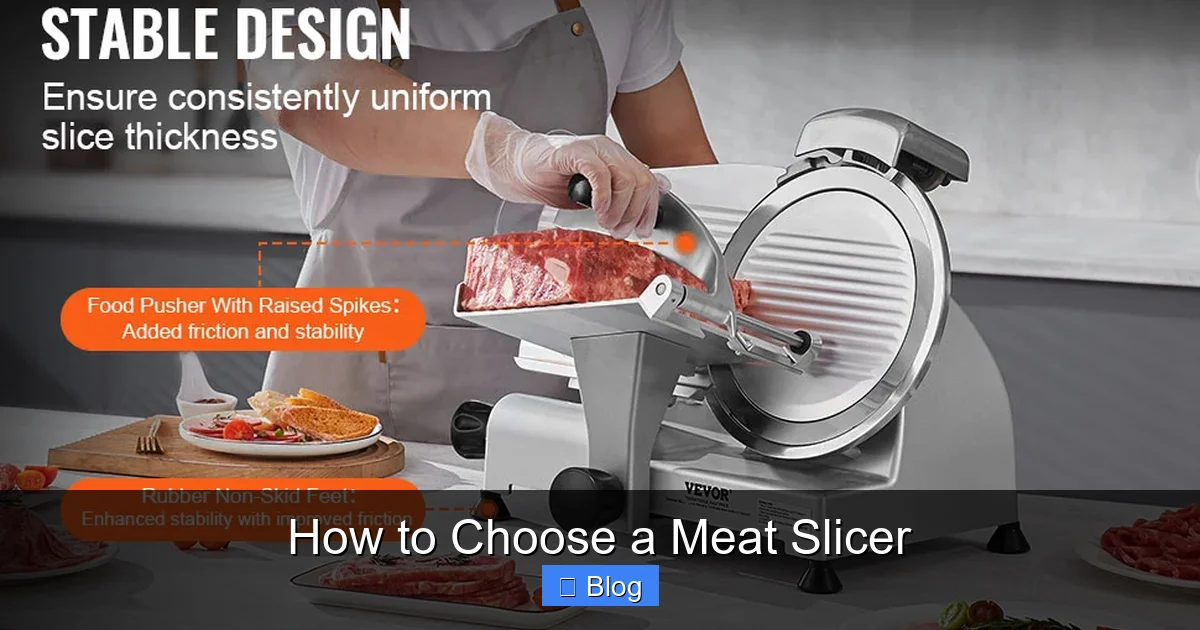
- Non‑slip base or suction cups to keep the unit stable.
- Finger guard or hand‑rail for safe feeding of food.
2. Match the Slicer to Your Use‑Case
Home Kitchen
For most families, a countertop slicer with a 7‑9 inch blade, ½ hp motor, and simple knob adjustment is ideal. These units weigh under 30 lb, fit under most cabinets, and cost between $150‑$400. They’re perfect for slicing deli meats, cheese, and occasional roasts.
Visual guide about How to Choose a Meat Slicer
Image source: food-prep.com
Small Business (Deli, Café, Food Truck)
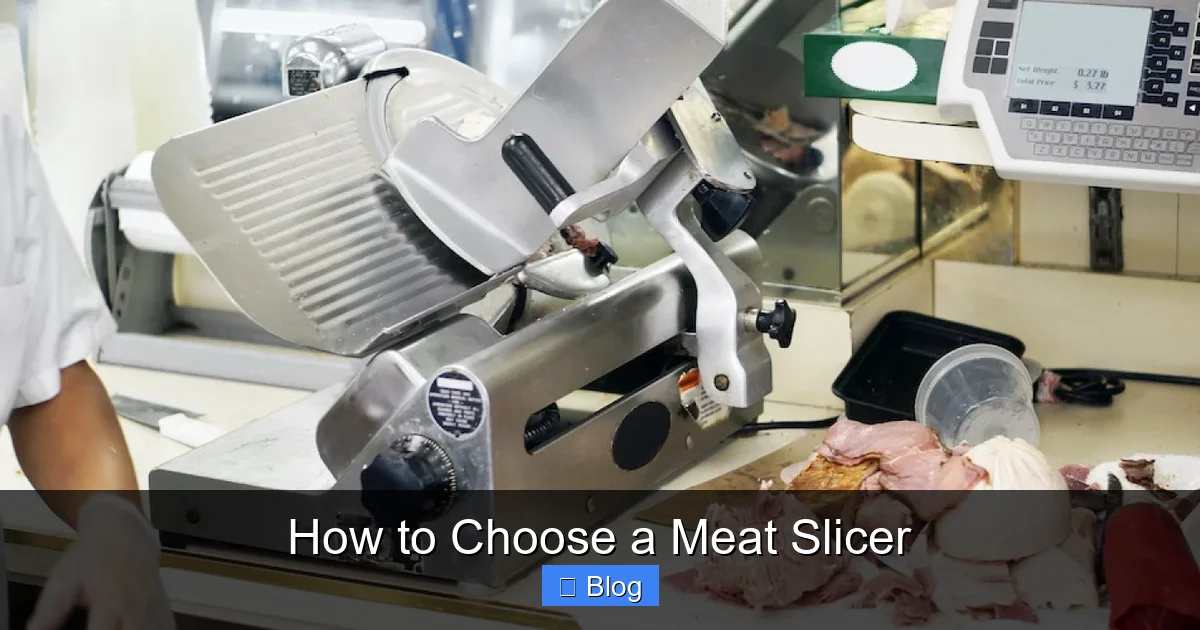
A 10‑12 inch blade gives flexibility for larger cuts while staying compact enough for a back‑of‑house area. Aim for at least ¾ hp motor, a sturdy stainless‑steel housing, and a quick‑release blade for easy cleaning. Expect to spend $500‑$1,200.
Commercial Kitchen or Butcher Shop
Floor‑standing units with 14‑inch blades, 1 hp+ motors, and heavy‑duty frames are the norm. These slicers often include dual‑speed controls, digital thickness settings, and reinforced safety guards. Prices range from $1,500 to $3,500, but the durability and speed pay off in high‑volume environments.
3. Evaluate Key Features Before You Buy
Adjustability and Controls
Simple rotary knobs are reliable, but digital controls offer precise repeatability. If you often switch between 1 mm and 5 mm slices, a digital readout can save time.
Visual guide about How to Choose a Meat Slicer
Image source: m.media-amazon.com
Ease of Cleaning
Food residue can harbor bacteria. Look for slicers with removable blades, wipe‑clean surfaces, and a built‑in drip tray. Some models are dishwasher‑safe for the tray and guard.
Noise Level
High‑power motors can be loud—up to 80 dB. If your slicer will sit in an open kitchen, consider models marketed as “quiet” or with insulated motor housings.
Warranty and Customer Support
A solid warranty (at least 2 years on the motor, 1 year on the blade) indicates confidence from the manufacturer. Check reviews for responsiveness of support teams; quick parts replacement can extend the life of your slicer.
4. Practical Tips for Setting Up and Using Your Slicer
Installation Basics
Place the slicer on a stable, level surface near a grounded outlet. Use the supplied anti‑vibration pads if the floor is uneven. For floor‑standing units, secure the base with bolts if recommended.
Blade Maintenance
After each use, brush off meat scraps and wipe the blade with a damp cloth. For stainless steel blades, a light application of food‑grade mineral oil prevents rust. Sharpen the blade once a year or when you notice ragged cuts.
Safety Routine
Always turn off and unplug the slicer before changing the blade or cleaning the guard. Keep fingers behind the hand‑rail and never force food through the blade; let the motor do the work.
Optimizing Slice Quality
Cold meat slices more cleanly. Chill larger cuts in the freezer for 15‑20 minutes before slicing. Adjust thickness a notch at a time and use a smooth, even feed motion.
5. Budgeting: How Much Should You Spend?
Entry‑Level (<$300)
These models are great for occasional home use. Expect a 7‑inch blade, ½ hp motor, and basic safety guards. Brands like Chef’sChoice and Cuisinart dominate this range.
Mid‑Range ($300‑$800)
Offers better motor durability, larger blades, and enhanced safety features. Ideal for enthusiastic home chefs and small cafés. Look for models with removable blades and digital thickness control.
High‑End (> $800)
Built for heavy, continuous use. Features include industrial‑grade motors, 14‑inch blades, reinforced frames, and advanced safety interlocks. Brands such as Berkel, Hobart, and Globe are leaders.
Conclusion: Make an Informed Choice and Slice with Confidence
Choosing a meat slicer is less about chasing the highest price tag and more about aligning features with your real‑world needs. By understanding blade size, motor power, safety mechanisms, and maintenance requirements, you can pick a machine that delivers consistent, restaurant‑quality slices without breaking the bank.
Take a moment to assess your kitchen space, typical volume, and the types of foods you’ll slice. Then match those needs to the categories we’ve outlined—home, small‑business, or commercial. With the right slicer in place, you’ll enjoy faster prep, less waste, and that satisfying “perfect slice” feeling every time you serve.
🎥 Related Video: How to Choose a Meat Slicer
📺 WebstaurantStore
When selecting a commercial meat slicer, there are a few key factors that you need to consider. First, consider whether or not your …
Frequently Asked Questions
What blade size is best for a home kitchen?
A 7‑ to 9‑inch blade is usually sufficient for most home tasks, such as slicing deli meats, cheese, and small roasts. It fits comfortably on countertops and is easy to store.
Do I need a stainless‑steel blade?
Yes. Stainless steel resists rust and is easy to clean. For longer edge life, consider a high‑carbon or titanium‑coated blade.
Can I use a meat slicer for vegetables?
Absolutely. Most slicers handle firm vegetables like carrots and cucumbers. Just make sure the blade is clean and adjust the thickness for the desired texture.
How often should I sharpen the blade?
Sharpen the blade once a year or when you notice uneven cuts. Some users sharpen more often if they slice daily in a commercial setting.
Is a digital thickness setting worth the extra cost?
If you need precise, repeatable slices—such as for a deli or specialty restaurant—a digital readout can save time and reduce errors. For occasional home use, a simple knob works fine.
What safety features should I never skip?
Never compromise on a blade guard, an emergency stop button, and a non‑slip base. These three basics protect you from accidental cuts and machine malfunctions.



