3/4 cup equals 6 fluid ounces for liquid ingredients like water and milk. For dry ingredients, 3/4 cup weighs differently depending on the substance, ranging from about 4 to 6 ounces. This guide breaks down every conversion so you never have to guess in the kitchen again.
Have you ever stared at a recipe and wondered exactly how much 3/4 cup really is? Maybe you are trying to convert 3/4 cup to oz because your measuring cups are missing that specific line. Or perhaps you are scaling a recipe up or down and need to get the numbers just right.
Converting cups to ounces is one of the most common kitchen questions home cooks face. The answer depends on whether you are measuring liquids or dry ingredients. For liquids, 3/4 cup equals 6 fluid ounces. But for dry ingredients like flour or sugar, the weight in ounces changes based on the ingredient itself. This simple guide will walk you through everything you need to know about 3/4 cup to oz conversion.
Key Takeaways
- 3/4 cup equals 6 fluid ounces for all liquid ingredients.
- Dry ingredient weights vary, so always check a conversion chart for your specific ingredient.
- Use a kitchen scale for the most accurate dry ingredient measurements.
- Know the difference between fluid ounces and weight ounces to avoid recipe errors.
- Keep a conversion chart handy in your kitchen for quick reference.
- Measuring correctly can make or break your baked goods and cooked dishes.
📑 Table of Contents
What Does 3/4 Cup to Oz Actually Mean?
Before we dive into the numbers, let us clear up a common confusion. The word “ounce” can mean two very different things in cooking. Fluid ounces measure volume, which is how much space a liquid takes up. Weight ounces measure how heavy something is. These are not the same thing at all.
When a recipe says 3/4 cup, it is referring to volume. So when we talk about 3/4 cup to fluid ounces, we are converting one volume measurement to another. But when a recipe lists ounces for a dry ingredient, it is usually talking about weight. This distinction matters a lot in the kitchen.
Think of it this way. A cup of water and a cup of flour both take up the same amount of space. But they weigh completely different amounts. That is why understanding volume versus weight is so important for accurate cooking and baking.
Why the Distinction Matters
Using the wrong type of ounce can ruin a recipe. If a recipe calls for 6 fluid ounces of milk and you use a weight-based scale, you will get the wrong amount. On the other hand, if a recipe asks for 4 ounces of flour by weight and you measure out 4 fluid ounces, your dough could turn out completely wrong.
This is why many bakers prefer using a kitchen scale for dry ingredients. A scale gives you the exact weight every time. It removes all the guesswork from measuring cups and spoons. If you do not own a scale yet, it is a great investment for any home kitchen.
How Many Ounces Are in 3/4 Cup?
The short answer for liquids is simple. 3/4 cup equals 6 fluid ounces. This is true for water, milk, oil, broth, and any other liquid ingredient you might use in cooking or baking.
But the story changes when we look at dry ingredients. The weight of 3/4 cup of a dry ingredient depends entirely on how dense that ingredient is. Here are some common examples:
- All-purpose flour: 3/4 cup weighs about 3 ounces (85 grams).
- Granulated sugar: 3/4 cup weighs about 6 ounces (170 grams).
- Brown sugar (packed): 3/4 cup weighs about 5.5 ounces (155 grams).
- Butter: 3/4 cup weighs about 6 ounces (170 grams).
- Honey: 3/4 cup weighs about 12 ounces (340 grams).
- Oats: 3/4 cup weighs about 3 ounces (85 grams).
As you can see, the range is huge. Honey weighs twice as much as flour for the same 3/4 cup volume. This is exactly why you cannot use a single conversion for all dry ingredients.
The Quick Conversion Math
Here is a simple formula you can use for liquids. One cup equals 8 fluid ounces. So to find out how many fluid ounces are in 3/4 cup, you just multiply:
3/4 times 8 = 6 fluid ounces.
That is it. For any liquid ingredient, 3/4 cup is always 6 fluid ounces. This works for water, juice, milk, coconut milk, and any other liquid you can think of.
For dry ingredients, the math is not as straightforward. You need to know the specific weight per cup for each ingredient. This is why many cooking websites and recipe blogs include both cup measurements and weight measurements. It helps home cooks get the right amount every single time.
Quick Conversion Chart for Common Ingredients
Having a conversion chart on hand makes cooking and baking so much easier. You can tape one to your fridge or save it on your phone. Here is a handy chart for 3/4 cup conversions across common ingredients:
| Ingredient | 3/4 Cup Volume | Weight (Ounces) | Weight (Grams) |
|---|---|---|---|
| Water | 6 fl oz | 6 oz | 170 g |
| Milk | 6 fl oz | 6.5 oz | 185 g |
| All-Purpose Flour | 6 fl oz | 3 oz | 85 g |
| Granulated Sugar | 6 fl oz | 6 oz | 170 g |
| Brown Sugar (Packed) | 6 fl oz | 5.5 oz | 155 g |
| Butter | 6 fl oz | 6 oz | 170 g |
| Honey | 6 fl oz | 12 oz | 340 g |
| Oats | 6 fl oz | 3 oz | 85 g |
| Coconut Oil | 6 fl oz | 6 oz | 170 g |
| Cornstarch | 6 fl oz | 2.5 oz | 70 g |
This chart covers most of the ingredients you will encounter in everyday recipes. Keep it bookmarked for your next cooking session. You will save yourself a lot of frustration and wasted ingredients.
If you ever need to convert other measurements, understanding the basics of volume and weight relationships helps a lot. For instance, knowing that 1 cup equals 8 fluid ounces gives you a starting point for any liquid conversion. You can easily scale up or down from there.
Tips for Accurate Measuring
Getting the right amount of an ingredient can make or break a recipe. Here are some practical tips to help you measure accurately every time.
For Liquid Ingredients
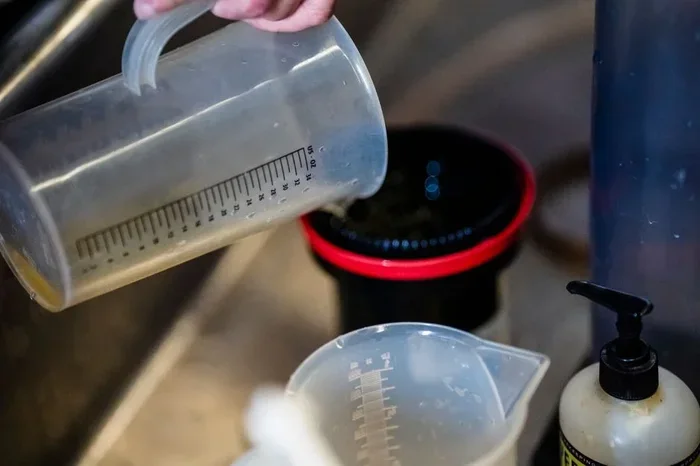
Always use a clear liquid measuring cup for liquids. Place it on a flat surface and bend down to eye level. Read the measurement at the bottom of the meniscus, which is the curved surface of the liquid. This small trick makes a big difference in accuracy.
When measuring 3/4 cup of a liquid, pour slowly and stop when the liquid reaches the 3/4 mark. Do not fill it right to the brim and then try to scoop off the excess. That approach leads to inconsistent results.
For Dry Ingredients
For dry ingredients, use the spoon and level method. Spoon the ingredient into your measuring cup and then level it off with a flat edge like a knife. Never pack the ingredient down unless the recipe specifically says to do so.
If a recipe calls for 3/4 cup of flour and you want to be extra precise, consider using a kitchen scale. Simply weigh out 3 ounces (85 grams) of flour. This method eliminates any variation caused by how tightly you pack the flour into the cup.
Another helpful tip is to sift your dry ingredients before measuring, especially for baking. Sifting breaks up clumps and aerates the ingredient. This leads to a more accurate and consistent measurement every time.
Invest in Good Measuring Tools
Not all measuring cups are created equal. A good set of dry measuring cups and a liquid measuring pitcher will serve you well for years. Look for cups with clear markings that are easy to read. Stainless steel and glass options tend to last longer and stay accurate over time.
For smaller amounts, a set of measuring spoons is essential. These are especially important when a recipe calls for fractions of a teaspoon or tablespoon. Having the right tools makes measuring faster and more accurate.
When to Use 3/4 Cup in Recipes
The 3/4 cup measurement comes up more often than you might think. It is a common amount in many recipes, especially for baking. Here are some situations where you might encounter 3/4 cup to oz conversions:
- Baking recipes: Many cake, cookie, and bread recipes call for 3/4 cup of flour, sugar, or milk.
- Sauce and dressing recipes: Vinaigrettes and sauces often use 3/4 cup of liquid ingredients.
- Scaling recipes: When you want to make half or double a recipe, 3/4 cup is a common adjusted amount.
- Meal prep: Portioning out ingredients for the week often involves measuring out 3/4 cup servings.
- Making boiled dishes in the Instant Pot: Many Instant Pot recipes call for 3/4 cup of liquid to create enough steam for cooking.
Knowing your conversions inside and out gives you confidence in the kitchen. You will not have to second-guess yourself every time a recipe uses an unfamiliar measurement. This knowledge also helps you adapt recipes to your preferences or dietary needs.
For example, if you are making a dish that calls for 3/4 cup of oil and you want to reduce the fat, knowing that equals 6 fluid ounces helps you decide on a substitute. You might use 3/4 cup of applesauce or yogurt instead, keeping the volume the same but cutting the calories.
Common Mistakes to Avoid
Even experienced cooks make measurement mistakes sometimes. Here are the most common errors and how to avoid them.
- Confusing fluid ounces with weight ounces: Always check whether the recipe is asking for volume or weight. The two are not interchangeable.
- Using the wrong type of measuring cup: Liquid measuring cups and dry measuring cups are designed differently. Using a liquid cup for dry ingredients (or vice versa) leads to inaccurate amounts.
- Packing ingredients too tightly: Unless the recipe says to pack, keep your measuring cups lightly filled and level.
- Not checking your scale calibration: If you use a kitchen scale, make sure it is calibrated correctly. An uncalibrated scale can throw off all your measurements.
- Guessing instead of measuring: “Eyeballing” ingredients might work for some dishes, but for baking especially, precise measurements are crucial.
- Ignoring ingredient temperature: Some ingredients change weight depending on their temperature. For example, cold honey is denser than warm honey, which affects the weight per cup.
Avoiding these simple mistakes will improve your cooking results dramatically. Taking the extra 30 seconds to measure correctly can save you from a failed dish and wasted ingredients.
Expert Insight: Why Precision Matters in Baking
Baking is a science. Unlike cooking, where you can often adjust flavors on the fly, baking depends on precise ratios of ingredients. Too much flour makes a cake dense. Too little liquid makes bread tough. Getting the 3/4 cup to oz conversion right is just one small piece of the puzzle, but it matters.
Professional bakers almost always use weight measurements instead of volume. This is because weight is more consistent and reliable. A cup of flour can vary by up to 30% depending on how it is scooped and packed. But 3 ounces of flour is always 3 ounces, no matter who measures it.
If you are serious about improving your baking, consider switching to a kitchen scale for all your dry ingredients. Start with recipes that give you both cup and weight measurements. Over time, you will get comfortable working with grams and ounces instead of cups.
For those who love experimenting in the kitchen, understanding conversions also helps you create your own recipes. You can easily scale a recipe up or down, substitute ingredients, or adjust serving sizes with confidence. This creative freedom comes from having a solid foundation of measurement knowledge.
Even something as simple as knowing that 3/4 cup of milk equals 6 fluid ounces can help you when you are adapting a family recipe or trying a new one from a different country. Different regions use different measurement systems, and being able to convert between them is a valuable kitchen skill.
Key Takeaways
- 3/4 cup equals 6 fluid ounces for all liquid ingredients.
- Dry ingredient weights vary based on density, so always check a specific conversion chart.
- Use a kitchen scale for the most accurate dry ingredient measurements.
- Know the difference between fluid ounces and weight ounces to avoid recipe errors.
- Keep a conversion chart handy in your kitchen for quick reference.
- Measuring correctly can make or break your baked goods and cooked dishes.
Frequently Asked Questions
Is 3/4 cup the same as 6 ounces?
Yes, for liquid ingredients, 3/4 cup equals 6 fluid ounces. This is a standard conversion used in all liquid measurement calculations. However, for dry ingredients, the weight in ounces varies depending on the ingredient’s density.
How many dry ounces are in 3/4 cup?
The number of dry ounces in 3/4 cup depends on the ingredient. For example, 3/4 cup of all-purpose flour weighs about 3 ounces, while 3/4 cup of granulated sugar weighs about 6 ounces. Always check a conversion chart for the specific ingredient you are using.
Can I use a kitchen scale instead of measuring cups?
Absolutely. A kitchen scale is actually more accurate than measuring cups, especially for dry ingredients. Many professional bakers prefer using scales because they eliminate the variability that comes with scooping and packing ingredients into cups.
What is the difference between fluid ounces and weight ounces?
Fluid ounces measure volume, which is how much space a liquid takes up. Weight ounces measure mass, which is how heavy something is. One fluid ounce of water weighs about one weight ounce, but this is not true for all ingredients. Honey, for example, weighs much more per fluid ounce than water does.
How do I convert 3/4 cup to ounces for baking?
For baking, first determine if the recipe is asking for a liquid or dry ingredient. If it is a liquid, 3/4 cup equals 6 fluid ounces. If it is a dry ingredient, you need to know the specific weight per cup for that ingredient. Using a kitchen scale is the most reliable method for baking.
Why does 3/4 cup of flour weigh less than 3/4 cup of sugar?
Flour is less dense than sugar, which means it takes up more space per ounce. A cup of flour weighs less than a cup of sugar because the particles are lighter and more airy. Sugar particles are denser and pack more weight into the same volume.
=== CONCLUSION ===
Converting 3/4 cup to oz is a simple but essential skill for any home cook or baker. For liquids, the answer is always 6 fluid ounces. For dry ingredients, the weight varies, so having a reliable conversion chart is key. With the tips and information in this guide, you will never have to guess at your measurements again.
Remember that precision matters, especially in baking. Taking the extra moment to measure correctly can transform your cooking results. Whether you are following a detailed baking recipe or scaling a family favorite, knowing your conversions gives you confidence and consistency.
Keep this guide bookmarked for future reference. Share it with friends who might find it helpful. And next time you reach for that 3/4 cup measure, you will know exactly how many ounces you are working with. Happy cooking and happy measuring.