
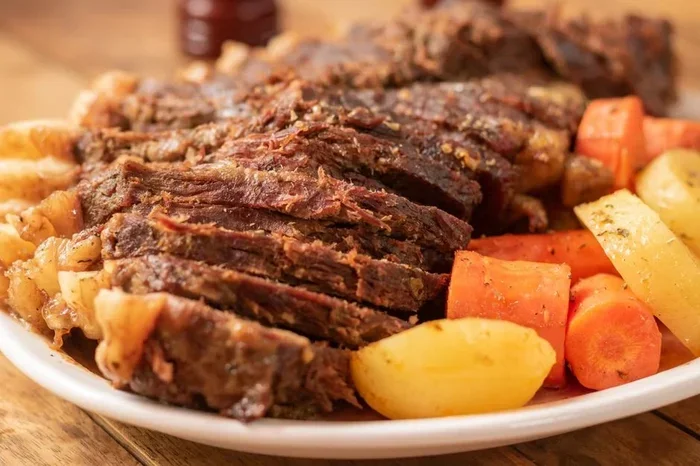
A chuck roast is one of the most affordable and flavorful cuts of beef you can cook low and slow. This guide covers everything from choosing the right cut and seasoning to cooking methods like braising, slow cooking, and oven roasting. You will learn pro tips, common mistakes, and how to get melt-in-your-mouth tenderness every single time.
Key Takeaways
- Chuck roast comes from the shoulder area and is packed with connective tissue that breaks down into rich, tender flavor during long cooking.
- Braising and slow cooking are the best methods for achieving a juicy, fall-apart chuck roast.
- Searing the meat first locks in moisture and builds a deep, savory crust that elevates the entire dish.
- A meat thermometer is essential for knowing when your roast has reached the perfect internal temperature.
- Letting the roast rest after cooking redistributes the juices for a more flavorful and moist result.
- Avoid common mistakes like skipping the sear, cooking at too high a temperature, or cutting into the meat too early.
- Pair your chuck roast with root vegetables, beef broth, and aromatic herbs for a complete, satisfying meal.
📑 Table of Contents
- Why a Chuck Roast Deserves a Spot in Your Kitchen
- What Exactly Is a Chuck Roast?
- How to Choose the Best Chuck Roast
- The Best Cooking Methods for a Perfect Chuck Roast
- Step-by-Step: How to Cook a Chuck Roast Like a Pro
- Common Mistakes to Avoid When Cooking a Chuck Roast
- Pairing Your Chuck Roast with the Right Sides
- Storing and Reheating Leftover Chuck Roast
- Final Thoughts
Why a Chuck Roast Deserves a Spot in Your Kitchen
If you love beef but want to keep your grocery bill reasonable, a chuck roast is your best friend. This cut comes from the shoulder area of the cow. It has lots of marbling and connective tissue. That might sound unappealing, but it is exactly what makes this cut so special.
When you cook a chuck roast low and slow, all that tough tissue melts away. What you are left with is incredibly tender, juicy, and full of beefy flavor. Few other cuts can match the versatility of a good chuck roast. You can braise it, slow cook it, or roast it in the oven.
Whether you are a beginner or a seasoned home cook, mastering the chuck roast will level up your kitchen game. This cut is forgiving. It thrives on time and gentle heat. Let us walk through everything you need to know.
What Exactly Is a Chuck Roast?
A chuck roast is a beef cut taken from the shoulder and upper chest area. It is sometimes called a chuck eye roast, pot roast, or braising beef. The muscle does a lot of work in the animal. That is why it contains more collagen and fat than leaner cuts like sirloin or tenderloin.
Here are the most common types of chuck roast you will find at the butcher or grocery store:
- Standard Chuck Roast: The basic, rectangular cut. Great for all cooking methods.
- Chuck Eye Roast: Sometimes called the “poor man’s ribeye.” It has a bit more marbling.
- Chuck Steak: A thicker slice cut from the chuck roast. Works well for grilling or pan-searing.
- Seven-Bone Roast: Named for its distinctive bone shape. Excellent for braising.
All of these cuts share the same quality. They become tender and flavorful when cooked slowly with moisture. This process is called braising, and it is the gold standard for preparing a chuck roast.
How to Choose the Best Chuck Roast
Look for Good Marbling
The fat streaks running through the meat are called marbling. When you are shopping for a chuck roast, look for pieces with fine, even marbling. Avoid cuts that look lean or dry. The fat melts during cooking and keeps the meat juicy.
A good chuck roast should have a bright red color with white fat throughout. If the meat looks brown or gray, it may have been sitting too long. Freshness matters a lot for flavor.
Size and Weight Matter
Most chuck roast recipes call for a piece that weighs between 2 and 5 pounds. A 3-pound roast is ideal for a family of four. It fits well in most slow cookers and Dutch ovens. If you are feeding a crowd, go for a larger cut but plan for more cooking time.
Here is a quick reference guide for choosing the right size:
| Number of People | Recommended Weight | Estimated Cooking Time |
|---|---|---|
| 2-3 people | 1.5 to 2.5 lbs | 4 to 6 hours |
| 4-6 people | 3 to 4 lbs | 6 to 8 hours |
| 6-8 people | 5 to 6 lbs | 8 to 10 hours |
Keep in mind that these times vary based on your cooking method. A slow cooker takes longer than a Dutch oven in the oven. Always use a meat thermometer to check doneness.
The Best Cooking Methods for a Perfect Chuck Roast
There are several ways to cook a chuck roast. Each method brings out different flavors and textures. Let us explore the top approaches.
Braising in a Dutch Oven
Braising is the classic way to cook a chuck roast. You sear the meat first, then simmer it in liquid at a low temperature. This method works beautifully in a heavy Dutch oven.
The steps are simple:
- Pat the roast dry and season it generously with salt and pepper.
- Sear all sides in hot oil until you get a deep brown crust.
- Remove the roast and add aromatics like onions, garlic, and carrots.
- Return the roast and add beef broth or red wine to cover about two-thirds of the meat.
- Cover and cook in the oven at 300 to 325 degrees Fahrenheit for several hours.
The low oven temperature gently breaks down the collagen in the meat. The result is a tender chuck roast with a rich, savory sauce. This method takes patience, but the flavor is worth every minute.
Slow Cooking
A slow cooker is one of the easiest ways to prepare a chuck roast. You can set it and forget it. Simply place the seasoned roast in the crockpot with your favorite liquids and vegetables.
For even better results, try one of the many crockpot beef roast recipes available online. A slow cooker Mississippi pot roast is another crowd favorite that uses ranch seasoning, pepperoncini peppers, and butter for incredible flavor. These methods let the chuck roast cook gently over 8 to 10 hours on low heat.
If you want to explore more options, check out these 24 Crockpot Beef Roast Recipes That Are Juicy Tender for inspiration. You will find plenty of variations to suit every taste.
Oven Roasting
Some cooks prefer a higher-heat approach. Roasting a chuck roast at 350 to 375 degrees Fahrenheit gives you a deeper crust and faster cook time. This method works best if you sear the meat thoroughly first.
The key difference is that oven roasting uses less liquid than braising. The roast sits in a bed of chopped vegetables and a small amount of broth. The lid stays on tight to trap moisture. After about 3 to 4 hours, you will have a beautifully roasted chuck roast with caramelized edges.
Instant Pot and Pressure Cooking
If you are short on time, a pressure cooker or Instant Pot can cook a chuck roast in about 60 to 90 minutes. The high pressure forces moisture into the meat fibers, breaking them down quickly.
Just be careful not to overcook it. A chuck roast in a pressure cooker can go from perfectly tender to mushy in a short window. Use a meat thermometer and aim for an internal temperature of 195 to 205 degrees Fahrenheit for the best texture.
Step-by-Step: How to Cook a Chuck Roast Like a Pro
Step 1: Prep the Meat
Remove your chuck roast from the refrigerator about 30 minutes before cooking. Let it come to room temperature. This helps the meat cook more evenly. Pat it dry with paper towels. Moisture on the surface prevents a good sear.
Step 2: Season Generously
Do not be shy with your seasoning. A chuck roast needs salt, pepper, garlic powder, onion powder, and smoked paprika. You can also add dried herbs like rosemary, thyme, or oregano. The seasoning creates a flavorful crust during the sear.
Step 3: Sear All Sides
Heat a heavy-bottomed pot or Dutch oven over medium-high heat. Add a high-smoke-point oil like avocado or canola oil. Once the oil is shimmering, place the roast in the pot. Do not move it for 3 to 4 minutes per side. You want a deep, golden-brown crust on every surface.
This step is non-negotiable. Searing creates the Maillard reaction, which produces complex, savory flavors. Skipping the sear is one of the biggest common mistakes people make when cooking a chuck roast.
Step 4: Add Aromatics and Liquid
After searing, remove the roast and set it aside. Add diced onions, minced garlic, and chopped carrots to the pot. Cook for a few minutes until they soften. Pour in beef broth, red wine, or a combination of both.
Scrape the bottom of the pot to lift any browned bits. Those bits are packed with flavor. They form the base of your braising liquid.
Step 5: Cook Low and Slow
Return the roast to the pot. Cover it tightly. Cook at a low temperature for several hours. The exact time depends on the size of your roast and your cooking method.
A good rule of thumb is about 1 hour per pound at 300 to 325 degrees Fahrenheit in the oven. In a slow cooker, plan for 8 hours on low or 4 to 5 hours on high. In an Instant Pot, 60 to 90 minutes on high pressure works well.
Step 6: Rest and Serve
Once the chuck roast reaches an internal temperature of 195 to 205 degrees Fahrenheit, it is done. Remove it from the pot and let it rest for at least 15 to 20 minutes. This allows the juices to redistribute throughout the meat.
Slice against the grain and serve with the braising liquid spooned over the top. Pair it with mashed potatoes, roasted root vegetables, or crusty bread to soak up every drop of sauce.
Common Mistakes to Avoid When Cooking a Chuck Roast
Even experienced cooks make mistakes with a chuck roast. Here are the ones to watch out for:
- Skipping the sear: This is the number one mistake. Searing builds flavor. Do not skip it.
- Cooking at too high a temperature: A chuck roast needs gentle, low heat. High temperatures make the meat tough and dry.
- Using too little liquid: The roast should be partially submerged. If it dries out, the meat becomes chewy.
- Cutting into the meat too early: Resist the urge to check early. Let the roast cook undisturbed.
- Not letting it rest: Cutting into a hot roast releases all the juices. Resting keeps the meat moist.
- Using the wrong cut: Make sure you are actually buying a chuck roast. Other cuts like round roast will not give you the same tender results.
Expert Insight
Professional chefs often say that a chuck roast is a “forgiving cut.” This means that even if you slightly overcook it, the high collagen content keeps the meat moist. That is not true of leaner cuts like filet mignon. Embrace the process, and do not stress over small timing issues.
Pairing Your Chuck Roast with the Right Sides
A great chuck roast deserves great sides. Here are some pairing ideas that complement the rich, beefy flavor:
- Mashed potatoes: A classic choice. The creamy texture balances the hearty meat.
- Roasted root vegetables: Carrots, parsnips, and turnips caramelize beautifully alongside the roast.
- Crusty bread: Perfect for soaking up the braising liquid.
- Buttered egg noodles: A simple side that soaks up every drop of sauce.
- Steamed green beans: A lighter option that adds freshness to the plate.
For more slow cooker inspiration, you might also enjoy this 22 Slow Cooker Mississippi Pot Roast Recipe. It is a favorite among home cooks for its bold, easy-to-follow approach.
Storing and Reheating Leftover Chuck Roast
A chuck roast often tastes even better the next day. Here is how to store and reheat leftovers properly:
- Refrigerator: Store cooked roast in an airtight container for up to 4 days.
- Freezer: Wrap the meat tightly in foil or freezer bags. It keeps for up to 3 months.
- Reheating: Warm the roast gently in a covered pot with a splash of beef broth. This keeps it moist. Avoid microwaving, which can dry out the meat.
Leftover chuck roast makes amazing sandwiches, tacos, and beef stew. Do not let any of it go to waste.
Final Thoughts
Cooking a perfect chuck roast is one of the most rewarding things you can do in the kitchen. It is affordable, versatile, and incredibly delicious. Whether you choose to braise it in a Dutch oven, slow cook it in a crockpot, or pressure cook it in an Instant Pot, the results are always satisfying.
Remember the key steps. Sear the meat, cook it low and slow, use enough liquid, and let it rest before serving. Follow these guidelines and your chuck roast will be tender, juicy, and packed with flavor every single time.
Now it is your turn. Pick up a chuck roast at your next grocery run, grab your favorite seasonings, and get cooking. You will be glad you did.
Frequently Asked Questions
What temperature is a chuck roast done?
A chuck roast is done when it reaches an internal temperature of 195 to 205 degrees Fahrenheit. At this point, the collagen has fully broken down and the meat is tender and juicy. Always use a meat thermometer for the most accurate reading.
Can you cook a chuck roast without searing it first?
You can, but searing adds a significant layer of flavor through the Maillard reaction. It is not strictly required for tenderness, but it does make a big difference in taste. If you are short on time, you can skip it, but your roast will have a less complex flavor profile.
How long does it take to cook a chuck roast in a slow cooker?
A 3 to 4-pound chuck roast typically takes 8 to 10 hours on low or 4 to 6 hours on high in a slow cooker. The exact time depends on your machine and the size of the roast. Always check for tenderness with a fork before serving.
What is the difference between a chuck roast and a pot roast?
A chuck roast is the specific cut of meat from the shoulder area. A “pot roast” refers to the cooking method, which involves braising a tough cut of meat in liquid. In practice, people often use the terms interchangeably. Most pot roasts are made with a chuck roast because it is ideal for braising.
Why is my chuck roast tough after cooking?
If your chuck roast is tough, it likely did not cook long enough or at a low enough temperature. The collagen needs time and gentle heat to break down into gelatin. Return the roast to the pot and continue cooking until it shreds easily with a fork.
Can I use beef broth instead of red wine for braising?
Absolutely. Beef broth is a great alternative and works very well for braising a chuck roast. You can also use a mix of broth and wine for added depth of flavor. If you avoid alcohol, just use extra broth and add a splash of balsamic vinegar for richness.



