Most dentists recommend waiting at least 30 minutes after drinking coffee before you brush your teeth. This simple pause protects your tooth enamel from acid erosion and helps keep your smile bright. We will walk you through the science, safe cleaning habits, and smart timing tricks that fit your busy morning routine.
Your morning cup of coffee does more than wake you up. It also changes the environment in your mouth. That warm, flavorful drink can leave behind acids and pigments that interact with your teeth. If you grab your toothbrush right away, you might do more harm than good. The good news is that a small timing change can make a big difference.
Many people ask how long after drinking coffee can I brush my teeth because they want fresh breath and a clean feeling without damaging their smile. The answer is simple, but the reason behind it matters. Coffee is mildly acidic. That acidity can soften the outer layer of your teeth for a short time. Brushing during that window can wear the surface faster than normal. Waiting a bit gives your mouth time to recover.
In this guide, we will break down what happens after you drink coffee, why timing matters, and what you can do in the meantime. You will also find easy habits that fit real life, not just ideal routines. Whether you drink one cup or several, these tips can help you protect your enamel and keep your smile feeling clean.
Key Takeaways
- Wait 30 to 60 minutes after coffee before brushing to protect softened enamel.
- Coffee acidity temporarily weakens tooth surfaces, making immediate brushing risky.
- Rinsing with water or chewing sugar-free gum helps neutralize acids while you wait.
- Using a soft-bristled toothbrush and fluoride toothpaste supports long-term enamel health.
- Morning brushing order matters; many people benefit from brushing before coffee instead.
- Consistent oral hygiene habits matter more than perfect timing for most people.
- If you notice sensitivity or staining, adjust your routine and consult a dental professional.
📑 Table of Contents
Why Timing Matters After Coffee
Coffee may taste comforting, but it is not neutral when it touches your teeth. Like many drinks, it has an acidic pH. That means it can temporarily soften the hard outer shell of your teeth. This outer shell is called enamel. Enamel is strong, but it is not indestructible. When it softens, it becomes more vulnerable to wear.
If you brush immediately, you may spread that acid around and scrub the softened surface. Over time, that can contribute to thinning enamel. Thinner enamel can lead to sensitivity and a duller appearance. The goal is not to avoid coffee. The goal is to enjoy it wisely. A short pause helps your mouth return to a more balanced state.
What Happens in Your Mouth After Coffee
After you finish a cup, several things happen at once. The liquid leaves behind residue. The acids linger for a while. Your saliva begins to work right away to neutralize the environment. Saliva is your mouth’s natural defense system. It helps wash away particles and restore balance.
This is why rushing to brush can be counterproductive. You want saliva to do its job first. Once the acid level drops, your enamel is safer to clean. That is the basic idea behind the waiting period. It is not about fear. It is about timing.
The Acid Softening Window
The softening window is short, but it is real. During that time, the surface of your teeth is more delicate. Even a soft toothbrush can be too aggressive if the enamel is still affected by acid. Waiting gives the tooth surface a chance to reharden.
Think of it like cleaning a wet chalkboard. If you wipe it too soon, you smear the surface. If you wait, the cleanup is smoother. Your teeth work in a similar way after an acidic drink. A brief delay supports better long-term care.
How Long After Drinking Coffee Can I Brush My Teeth
So, what is the ideal wait time? Most dental guidance points to about 30 minutes. Many people aim for 30 to 60 minutes after finishing coffee before brushing. That window is usually enough for saliva to reduce the acid impact and for the tooth surface to settle.
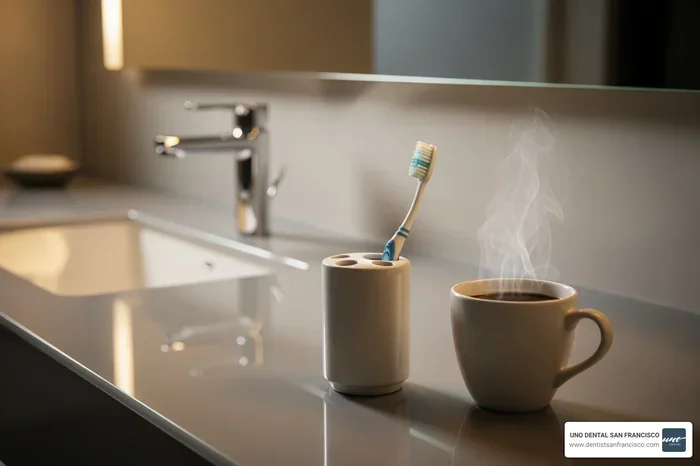
Visual guide about person brushing teeth after coffee
Image source: dentistsanfrancisco.com
If you are in a hurry, 30 minutes is a practical target. If you have time, a full hour is even more comfortable. The key is consistency. You do not need perfection. You just need a reasonable pause that protects your enamel.
General Recommendation
A simple rule works well for most people. Finish your coffee. Rinse your mouth with water. Then wait before brushing. This approach keeps your routine practical while reducing risk. You still get a clean mouth, but you give your teeth a better starting point.
If your coffee is especially strong or if you sip it slowly over a long period, the acid exposure may last longer. In that case, a slightly longer wait can make sense. The more you sip, the more often your mouth returns to an acidic state.
Why 30 Minutes Is a Good Rule of Thumb
Thirty minutes is easy to remember. It also lines up with how long it often takes for saliva to start neutralizing acids. That does not mean every person is identical, but it is a reliable starting point. If you want a simple habit, this is one of the easiest to build.
You can use that time to do other morning tasks. Pack your bag. Check your messages. Stretch. Drink a glass of water. The wait does not have to feel like downtime. It can fit naturally into your routine.
What Coffee Does to Enamel and Stains
Coffee affects teeth in two main ways. First, it can soften enamel temporarily because of acidity. Second, it can leave stains over time. These are different issues, but both matter if you care about your smile. Understanding the difference helps you make better choices.
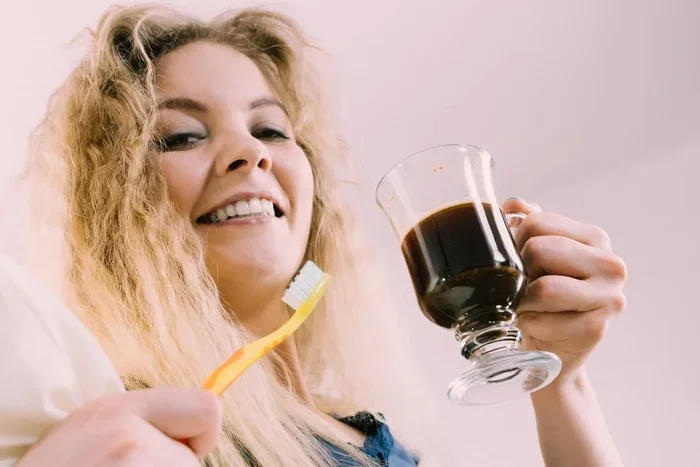
Visual guide about person brushing teeth after coffee
Image source: roastycoffee.com
Acid Effects on Tooth Surface
Acid does not instantly destroy enamel. The bigger concern is repeated exposure and immediate brushing. If you brush often right after acidic drinks, the surface can experience more wear than it would otherwise. That is why the waiting advice shows up so often in dental conversations.
Enamel wear is gradual. You may not notice it right away. Sensitivity to cold or sweet foods can be one sign. A change in smoothness or shine can be another. Protecting enamel early is easier than dealing with damage later.
Staining and Surface Residue
Coffee contains compounds that can cling to tooth surfaces. These pigments do not usually cause damage in the same way acid does, but they can build up. That is why coffee drinkers often notice yellowing or dark spots over time. Staining is mostly a cosmetic concern, but it still matters to many people.
Brushing too soon does not remove stains better. In fact, it may not help much at all if the surface is still coated with residue. A rinse, a short wait, and then a proper brushing is usually more effective. Good technique matters more than force.
Smart Things to Do While You Wait
Waiting does not mean doing nothing. There are helpful steps you can take right after coffee. These steps support cleanliness without putting extra stress on your enamel. They are simple, quick, and easy to repeat every day.
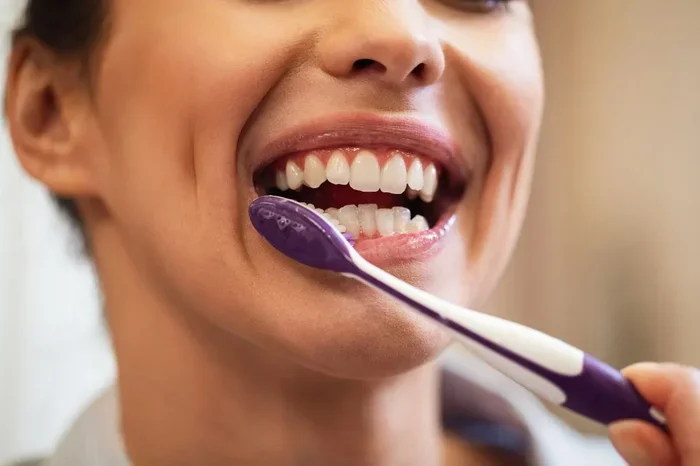
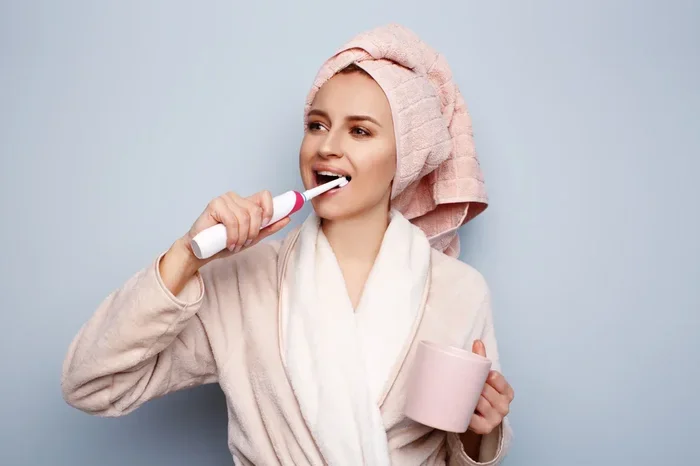
Visual guide about person brushing teeth after coffee
Image source: parkwaysmiles.com
Rinse With Water
Water is one of the best immediate tools. A gentle rinse helps wash away loose coffee residue and dilutes acids. It does not replace brushing, but it is a great first step. If you keep a water bottle or glass nearby, this habit takes almost no effort.
You can also sip water after coffee. That keeps your mouth moist and helps saliva do its job. Dry mouth can make acids linger longer, so staying hydrated is useful.
Chew Sugar-Free Gum
Sugar-free gum can encourage saliva flow. More saliva means faster neutralization of acids. This is a practical option if you need to head out the door and do not have a full 30 minutes before brushing. Choose a gum that is gentle and free of sugar.
This is not a substitute for brushing. It is a bridge. It helps your mouth recover while you finish getting ready. For many people, that small boost makes the wait feel more productive.
Use a Soft Toothbrush Later
When you do brush, choose a soft-bristled toothbrush. Soft bristles clean effectively without being harsh. Pair that with a fluoride toothpaste for everyday protection. Gentle, thorough brushing is better than hard scrubbing.
If you worry about stains, focus on consistency and technique. Clean all tooth surfaces carefully. Do not rush. A calm, complete brushing session is more useful than a quick, aggressive one.
Better Morning Routine Options
If waiting after coffee feels inconvenient, you may want to change the order of your routine. Many people brush before coffee instead of after. That can solve the timing problem entirely. You start the day with clean teeth, then enjoy your drink without worrying about immediate brushing.
Brushing Before Coffee
Brushing before coffee can be a smart choice. It removes overnight buildup and gives you a fresh base. After that, coffee becomes the last step before you leave or settle in. If you do not brush again right away, you avoid the acid-timing issue.
This approach works well for people with tight schedules. It also reduces the temptation to brush too soon. You still get a clean mouth, and you protect enamel at the same time.
If You Prefer Brushing After Coffee
If you like finishing with a brush, plan for the pause. Set a small timer if it helps. Keep water nearby for a rinse. Make the wait part of your routine so it feels automatic. Over time, it becomes easy.
You can also keep a travel toothbrush for later use if your schedule allows. That way, you are not forced into an immediate brush after your first cup. Flexibility can make oral care feel less stressful.
Common Mistakes to Avoid
Even with good intentions, people often make small errors that reduce the benefits of their routine. Avoiding these mistakes is simple once you know what to watch for.
Brushing Too Soon
This is the most common issue. People finish coffee and reach for the brush right away because they want that clean feeling. The problem is that the enamel may still be softened. A short wait is safer and still keeps your routine on track.
Brushing Too Hard
Force does not equal better cleaning. Hard brushing can irritate gums and wear surfaces over time. Use light pressure and steady motion. Your teeth do not need to be scrubbed like a pan. They need careful cleaning.
Skipping Rinsing
Some people go straight from coffee to waiting without any rinse. A quick water rinse is a small step, but it helps. It removes loose residue and supports a healthier mouth environment while you wait.
Ignoring Sensitivity
If coffee or brushing starts to feel uncomfortable, pay attention. Sensitivity can signal that your enamel needs gentler care. You may need to adjust your timing, toothbrush, or toothpaste. If the problem continues, a dental professional can help.
Expert Insights and Key Takeaways
Dental professionals often emphasize balance. Coffee can be part of a normal routine. The main goal is to avoid unnecessary enamel stress. Waiting after acidic drinks, using gentle tools, and keeping up with regular cleaning all support a healthier smile.
Here is the practical version: enjoy your coffee, rinse with water, wait before brushing, and use a soft toothbrush. If that feels easier, brush before coffee instead. Both approaches can work. The best routine is the one you can actually keep.
A few final reminders can help you stay on track:
- Give your teeth time to recover after acidic drinks.
- Water and saliva are your friends in the waiting window.
- Gentle brushing beats aggressive brushing every time.
- Consistency matters more than perfection.
- If sensitivity appears, adjust your habits early.
A healthy smile is built through small daily choices. The answer to how long after drinking coffee can I brush my teeth is not complicated. A short pause protects your enamel, and a few simple habits make the wait easy. With the right timing, you can enjoy your coffee and still care for your teeth with confidence.
Frequently Asked Questions
Can I rinse my mouth right after coffee instead of brushing?
Yes, rinsing with water is a great first step because it helps remove residue and dilute acids. It is a safe way to freshen your mouth while you wait to brush.
Is it better to brush before or after coffee in the morning?
Brushing before coffee is often easier on your enamel because you avoid brushing right after an acidic drink. If you prefer brushing after, just wait a bit and rinse first.
What if I only have 10 minutes before I need to leave?
Rinse with water, sip some water, and consider sugar-free gum to help neutralize acids. You can brush once you have a bit more time or later when your schedule allows.
Does coffee permanently damage teeth?
Coffee does not usually cause permanent damage on its own, but frequent exposure and poor timing can contribute to staining or enamel wear over time. Good habits reduce those risks.
Should I use a special toothpaste after drinking coffee?
A fluoride toothpaste with a soft toothbrush is a solid everyday choice. If you have sensitivity, a toothpaste for sensitive teeth may help, but timing and gentle brushing still matter.
When should I talk to a dentist about coffee-related sensitivity?
If you notice lingering sensitivity, visible changes, or discomfort when brushing, it is a good idea to ask a dental professional for guidance. They can check for enamel wear, staining, or other issues and suggest a routine that fits your needs.