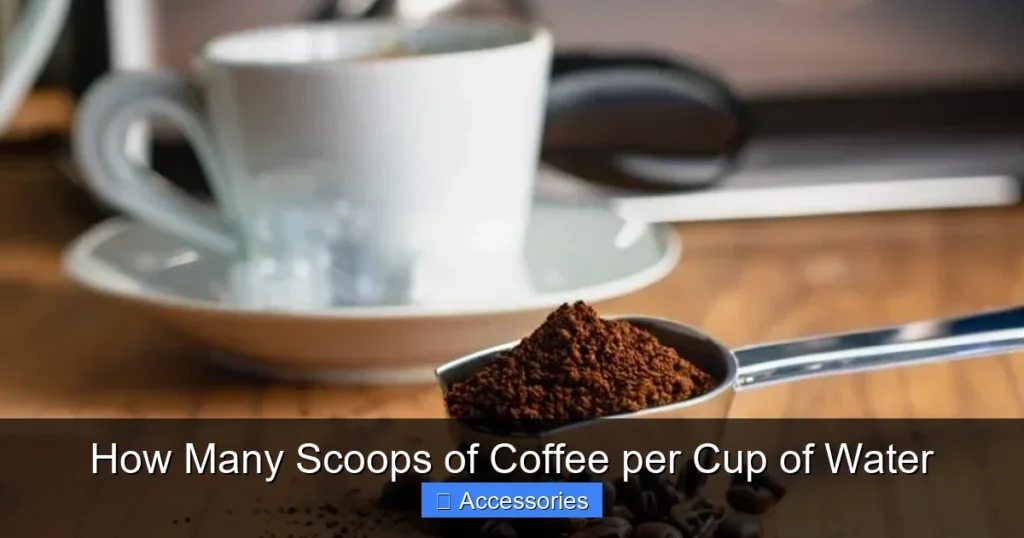
Finding the right balance between coffee and water is key to a great cup of coffee. While personal preference plays a role, most experts recommend using 1 to 2 tablespoons (or 5 to 7 grams) of coffee per 6 ounces of water, which translates roughly to 1 scoop per cup if you’re using a standard coffee scoop. This guide breaks down everything you need to know about coffee ratios, brewing methods, and how to adjust strength based on your taste.
Key Takeaways
- The standard coffee ratio: Most baristas and home brewers use 1 to 2 tablespoons (about 5–7 grams) of ground coffee per 6 ounces (180 ml) of water—roughly one scoop per cup.
- Brewing method matters: Espresso requires more concentrated grounds, while pour-over or French press may use slightly less per cup due to longer extraction times.
- Coffee grind size affects yield: A finer grind holds more volume than coarse, so measuring by weight (grams) is more accurate than volume (scoops).
- Adjust based on taste: If your coffee tastes weak, increase the amount; if too strong or bitter, reduce it.
- Use a kitchen scale: For consistent results, weigh your coffee instead of relying on scoops—precision makes all the difference.
- Water quality counts: Filtered water enhances flavor, so consider upgrading your filtration system for better-tasting coffee.
- Experiment safely: Start near the standard ratio and tweak gradually—small changes lead to noticeable improvements.
[FEATURED_IMAGE_PLACEHOLDER]
How Many Scoops Of Coffee Per Cup Of Water
There’s nothing quite like starting your morning with a warm, aromatic cup of freshly brewed coffee. But have you ever stopped to wonder: how many scoops of coffee per cup of water should you actually be using? The answer isn’t as simple as “one scoop” because it depends on your taste preferences, brewing method, and even the type of coffee beans you’re using. Yet, there are general guidelines that can help you find your perfect brew without endless trial and error.
Whether you’re new to coffee or a seasoned enthusiast looking to refine your routine, understanding the ideal coffee-to-water ratio is essential. Too little coffee, and your drink might taste weak or insipid. Too much, and it could become overpowering or bitter. Finding that sweet spot means balancing flavor intensity, extraction efficiency, and personal enjoyment. In this guide, we’ll walk through everything from basic ratios to advanced tips so you can master your daily brew—every time.
Why the Right Coffee-to-Water Ratio Matters
Coffee is essentially an extractive beverage. When hot water passes through ground coffee, it pulls out soluble compounds like caffeine, oils, acids, and sugars—creating the complex flavors we love. If you use too little coffee relative to water, those flavors won’t fully develop, leaving your cup tasting flat. Conversely, too much coffee can overwhelm delicate notes and create bitterness due to excessive tannin extraction.
Think of it like seasoning food: adding just enough salt brings out natural flavors, but too much ruins the dish. The same principle applies to coffee. A well-balanced ratio ensures optimal flavor development while avoiding waste or disappointment. Plus, getting it right saves money—you won’t be overusing expensive beans trying to salvage a weak brew.
The Standard Ratio Explained
So, what’s the magic number? According to the Specialty Coffee Association (SCA), the gold standard for drip coffee is 1 to 2 tablespoons (approximately 5 to 10 grams) of medium-coarse ground coffee per 6 fluid ounces (about 180 ml) of water. That works out to roughly 1 scoop per cup, assuming you’re using a standard tablespoon-sized scoop.
However, this range isn’t rigid. Some people prefer stronger coffee (closer to 2 tablespoons), especially when using darker roasts that pack bold, smoky flavors. Others enjoy lighter brews made with fewer grounds—especially if they’re drinking multiple cups throughout the day. Ultimately, the best ratio is the one that satisfies your palate.
How Brewing Methods Influence Your Ratio
Different brewing techniques require different approaches because of how water interacts with coffee grounds. For example:
– Pour-over (e.g., Chemex, V60): These methods allow precise control over extraction time and water flow. Because contact time is shorter than in immersion brewers, you often need slightly more coffee to compensate.
– French Press: Since the grounds steep directly in water, less coffee may be needed compared to pour-over since full saturation happens quickly.
– Drip Machines: Automatic machines vary widely in their spray patterns and brew cycles. Some models recommend specific scoops per carafe—check your machine’s manual!
– Espresso: Here, pressure forces water through finely ground coffee at high speed, producing a concentrated shot. The ratio here is much denser—typically around 7 grams of fine powder per 30 ml espresso.
Understanding these nuances helps you tailor your scoop count accordingly. Don’t assume all coffee makers use the same proportions!
Measuring Coffee: Scoops vs. Weight
Here’s a common misconception: scoops aren’t always reliable. Why? Because coffee density varies by roast level, origin, and grind consistency. One scoop of Ethiopian light roast might weigh less than one scoop of French roast dark blend due to differences in bean structure and moisture content.
For true consistency, many baristas and serious home brewers use a digital kitchen scale. Weighing your coffee in grams removes guesswork and ensures repeatability across batches. Most scales display both metric (grams) and imperial (ounces) measurements, making conversion easy.
If you don’t own a scale yet, start with the scoop-and-adjust approach. Measure out one scoop per cup, brew, then sample. If it’s too mild, add half a scoop next time; if too intense, cut back by a quarter scoop. Gradual tweaks will help you zero in on your ideal ratio faster than random experimentation.
Adjusting Strength Based on Taste Preferences
Everyone has unique taste thresholds. Maybe you’re someone who drinks black coffee straight from the pot without sugar—that person likely leans toward stronger ratios. Or perhaps you prefer adding milk and sweetness, allowing for milder brews. There’s no wrong choice here—only what works for you.
Consider these scenarios:
– Weak coffee? Increase coffee by 10–20% (e.g., go from 1.5 to 2 scoops).
– Bitter or harsh taste? Reduce coffee by 10–20% or ensure your grind isn’t too fine.
– Balanced flavor? You’ve nailed it! Keep doing what you’re doing.
Also remember: freshness impacts perception. Stale beans lose volatile aromatics, so even with correct ratios, older coffee may taste weaker. Always store beans in airtight containers away from light, heat, and moisture.
Common Mistakes People Make With Coffee Ratios
Even experienced coffee drinkers occasionally stumble. Here are frequent errors to avoid:
- Using pre-ground coffee exclusively: Pre-ground beans oxidize faster, losing flavor. Grind fresh whenever possible.
- Neglecting water temperature: Ideal brewing temp is between 195°F–205°F. Too hot causes bitterness; too cool yields sourness.
- Reusing old grounds: Second brews are significantly weaker—don’t try to stretch last night’s grounds!
- Ignoring filter quality: Cheap paper filters can impart papery flavors. Invest in high-quality ones.
Avoiding these pitfalls complements proper scoop usage and elevates your overall coffee experience.
Advanced Tips for Coffee Enthusiasts
Ready to level up? Try these pro-level strategies:
1. Use a Conical Burr Grinder
Consistent particle size ensures uniform extraction. Blade grinders pulverize unevenly, leading to over- or under-extracted flavors regardless of your scoop count.
2. Monitor Brew Time
For pour-overs, aim for a total brew time of 2.5–4 minutes. Adjust grind fineness or coffee quantity if your extraction drifts outside this window.
3. Experiment With Roast Levels
Lighter roasts are brighter and more acidic—often requiring slightly more coffee to balance. Darker roasts are richer and fuller-bodied, sometimes needing less to prevent heaviness.
4. Consider Water Hardness
Mineral-rich water enhances sweetness; soft water highlights acidity. If yours is unusually hard or soft, you might adjust ratios slightly to compensate.
5. Track Your Variables
Keep a brewing journal noting date, bean type, roast level, grind setting, scoop count, water volume, and subjective taste notes. Over weeks, patterns emerge that guide future adjustments.
These tactics take effort, but they transform casual sipping into a refined ritual.
Final Thoughts: It’s All About Balance
At its core, figuring out how many scoops of coffee per cup of water boils down to personal preference backed by sound fundamentals. Start with the SCA-recommended baseline—1–2 tablespoons per 6 oz—and let your senses guide refinements. Whether you measure by scoop, spoon, or scale, consistency beats guesswork every time.
Remember, great coffee isn’t about perfection—it’s about enjoyment. So brew boldly, taste freely, and savor each sip knowing you’ve got the basics covered. And when in doubt? More data (like a good scale) always helps narrow the search for your ideal cup.
Now grab your favorite mug, fire up that grinder, and get brewing!
This is a comprehensive guide about How Many Scoops Of Coffee Per Cup Of Water.
Key Takeaways
- Understanding How Many Scoops Of Coffee Per Cup Of Water: Provides essential knowledge
Frequently Asked Questions
What is the ideal amount of coffee per cup of water?
The Specialty Coffee Association recommends 1–2 tablespoons (5–10 grams) of ground coffee per 6 ounces (180 ml) of water. This equals roughly one scoop per cup, depending on scoop size.
Should I measure coffee by volume (scoops) or weight (grams)?
Weight is more accurate because coffee density varies. A digital scale ensures consistent results across different beans and roasts, eliminating variability from scoops.
How does brewing method affect coffee-to-water ratios?
Espresso uses a much higher concentration (around 7g per 30ml), while pour-over or French press may use slightly less due to differences in extraction time and technique.
Why is my coffee tasting bitter even with the right scoop count?
Bitterness often comes from over-extraction—usually caused by too fine a grind, water that’s too hot, or brewing time that’s too long. Adjust grind coarseness first.
Can I reuse coffee grounds for a second brew?
Not effectively. Second brews are significantly weaker because most solubles were extracted the first time. Fresh grounds make a big difference.
Does water quality impact coffee flavor?
Yes. Filtered water removes impurities that dull flavor and allows coffee’s natural characteristics to shine. Consider investing in a good water filter for better-tasting brews.