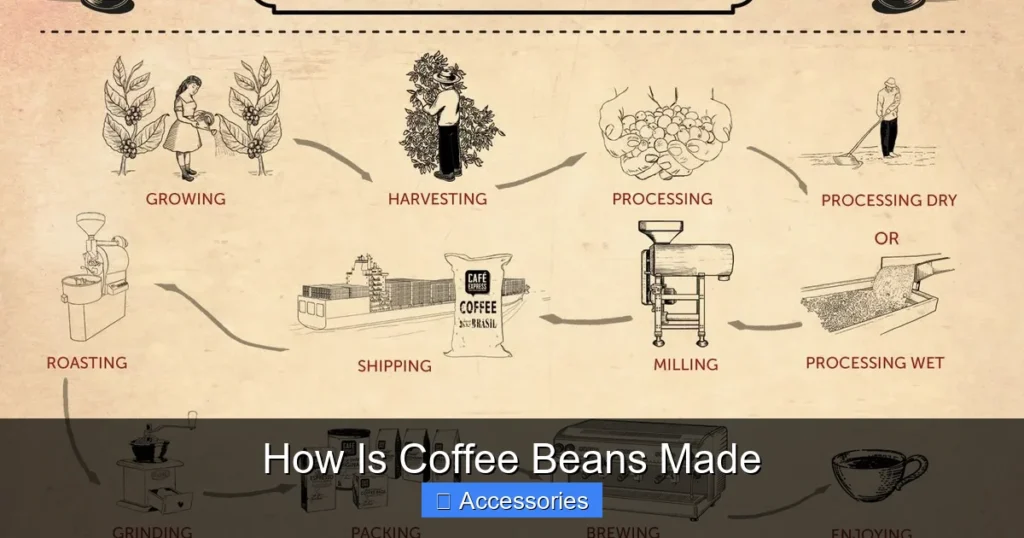
Ever wondered how those rich, aromatic coffee beans you love every morning actually come to be? The process begins in lush coffee farms where cherries are hand-picked at peak ripeness. From there, they undergo several transformation stages—processing, drying, roasting, and grinding—before becoming the brew you enjoy. Understanding each step helps you appreciate not just the flavor, but also the craftsmanship behind every cup.
Coffee is more than just a daily ritual—it’s an art form rooted in science, tradition, and geography. Whether you’re sipping espresso at a bustling café or brewing pour-over at home, understanding how coffee beans are made adds depth to your appreciation. From the sun-drenched hills of Ethiopia to your kitchen counter, coffee undergoes a remarkable transformation that turns tiny seeds inside colorful cherries into the rich beverage we know today.
But what many don’t realize is that coffee production involves multiple stages across continents—each playing a vital role in shaping the final flavor. In this article, we’ll walk you through every step of the journey: from planting trees in tropical climates to roasting green beans until they crackle with potential. Along the way, we’ll share tips on selecting quality beans and even connect some concepts to related kitchen processes—like how proper drying prevents spoilage (similar to preserving meat without refrigeration).
Key Takeaways
- Coffee cherries are harvested by hand or machine: Most high-quality coffee is hand-picked when fully ripe, ensuring only the best beans make it into processing.
- Processing methods affect flavor profile: Whether using the dry (natural), wet, or honey method, each technique influences acidity, body, and sweetness in the final brew.
- Drying is critical for preservation: After processing, beans must be dried to 11% moisture content to prevent spoilage and prepare them for roasting.
- Roasting unlocks coffee’s aroma and taste: Heat transforms green coffee beans through chemical reactions like the Maillard reaction, creating complex flavors and aromas.
- Grinding adjusts extraction efficiency: The grind size determines how quickly water extracts flavor from coffee, making it essential for optimal brewing performance.
- Storage matters for freshness: Proper storage in airtight containers away from light, heat, and moisture preserves flavor and extends shelf life.
📑 Table of Contents
The Journey Begins: Coffee Trees and Cherries
Coffea arabica and Coffea canephora—the two primary species used worldwide—thrive in high-altitude regions between the Tropics of Cancer and Capricorn. These areas offer ideal conditions: warm temperatures, consistent rainfall, and volcanic soil rich in nutrients. Farmers plant seedlings in rows, often intercropped with shade trees to protect delicate young plants from harsh sunlight and pests.
Each tree typically produces flowers that bloom white and fragrant before developing into small, round fruits known as coffee cherries. Inside each cherry lies one or two seeds—what we call green coffee beans—wrapped in a soft pulp and surrounded by mucilage.
Harvesting Methods That Shape Quality
The first major decision in coffee production happens during harvest: when to pick and how. Ripe cherries turn deep red or purple depending on variety, signaling peak sugar content and flavor development. However, not all cherries mature at once; this creates a challenge for farmers.
For premium single-origin coffees, selective hand-picking is standard practice. Workers climb trees or use ladders, carefully plucking only fully ripe cherries while leaving underripe or overripe ones behind. This labor-intensive method ensures uniformity but requires skilled workers and higher costs.
Alternatively, strip picking involves shaking entire branches so all cherries fall at once—ripe and unripe alike. While faster and cheaper, this method often leads to mixed batches, requiring sorting later during processing.
In large plantations, mechanical harvesters may be used, though they’re less common due to damage risks and inconsistent results.
Processing: Turning Cherries Into Green Beans

Visual guide about How Is Coffee Beans Made
Image source: coffeebeans.ph
Once harvested, cherries must be processed within hours to avoid fermentation and spoilage. Three main methods exist: natural (dry), washed (wet), and honey (pulped natural). Each yields distinct flavor characteristics.
Natural Processing: Sun-Dried Sweetness
With natural processing, whole cherries are spread on raised beds or patios to dry under direct sunlight for up to three weeks. As they dehydrate, the outer skin hardens, and the bean slowly loses moisture.
This method enhances fruity, wine-like notes and gives coffee a heavier body. Countries like Ethiopia, Yemen, and Brazil frequently use natural processing for their signature bold profiles.
Tip: Rotate cherries daily to ensure even drying and prevent mold growth—a principle similar to how you should stir frozen vegetables while air-frying (see How To Cook Frozen Asparagus In An Air Fryer).
Wet Processing: Clean and Bright Flavors
Washed coffee starts by removing the cherry’s skin and pulp using water tanks and fermentation basins. Then, the beans sit submerged for 12–48 hours to break down remaining mucilage before being rinsed and dried.
Because this method removes much of the fruit layer early, resulting beans tend to have brighter acidity and cleaner tastes—ideal for espresso blends or specialty roasts.
Fun fact: Water usage in wet processing is significant, which is why many modern farms invest in eco-friendly systems that recycle water efficiently.
Honey Processing: A Middle Ground
Also called pulped natural, honey processing skips full fermentation but retains some mucilage during drying. This balances sweetness from natural methods with clarity from washed coffees.
Colombia and Costa Rica are notable for producing excellent honey-processed beans that offer balanced sweetness and medium-body mouthfeel.
Drying: Preserving Flavor and Preventing Spoilage

Visual guide about How Is Coffee Beans Made
Image source: vietnox.com
Regardless of processing type, drying is the bridge between raw cherries and storable green beans. Moisture content must drop below 12% to prevent mold and insect infestation. Traditionally, farmers use sun-drying, but mechanical dryers provide more control over temperature and humidity.
During this phase, beans gradually darken in color and develop their characteristic hardness. They’re periodically turned to avoid hot spots or uneven drying—much like how you’d flip meat evenly when searing (check out How To Tenderize Beef With Baking Soda for tips on even cooking techniques).
After drying, beans are stored in jute sacks for months—sometimes years—until roasted. Proper storage keeps them stable and ready for transformation.
Roasting: Unlocking Aroma and Complexity

Visual guide about How Is Coffee Beans Made
Image source: highlandercoffee.com
Green coffee beans are pale, bland, and odorless. Roasting is where magic happens: applying dry heat triggers hundreds of chemical reactions that create coffee’s signature aroma, flavor, and color.
The Science Behind Roasting
As beans heat up, several key events occur:
– Evaporation: Moisture escapes, causing beans to expand.
– Caramelization: Sugars break down, adding sweetness and reducing bitterness.
– Maltose formation: Starches convert into simple sugars.
– Maillard reaction: Proteins and sugars combine, producing hundreds of new flavor compounds.
These changes happen at different temperatures depending on roast level:
– Light roast: 356°F–401°F (180°C–205°C)
– Medium roast: 410°F–428°F (210°C–220°C)
– Dark roast: Above 437°F (225°C)
Lighter roasts preserve origin characteristics, while darker roasts emphasize roast-derived flavors like smokiness or chocolate notes.
Roast Development Stages
Professional roasters monitor beans closely using thermocouples and airflow control. Key milestones include:
– First crack: Beans pop like popcorn as internal pressure builds—this marks the end of light roast territory.
– Second crack: A sharp cracking sound signals readiness for dark roasts; beyond this point, oils rise to the surface.
Many specialty roasters stop just before second crack to highlight terroir, while commercial brands often go past it for consistency.
Tip: Store roasted beans in opaque, airtight containers to slow oxidation—similar to vacuum-sealing meat for freshness (How To Vacuum Seal Meat For Freshness).
Grinding: Preparing for Brewing
Grinding transforms roasted beans into particles of uniform size tailored to your brewing method. Whether you’re using a French press, drip machine, or AeroPress, particle distribution affects extraction speed and flavor balance.
Grind Sizes and Their Uses
| Grind Type | Best For | Particle Size |
|——————|————————|————————|
| Extra Coarse | Cold brew, French press | Like coarse sea salt |
| Coarse | Percolators | Similar to breadcrumbs |
| Medium | Drip machines | Like table salt |
| Fine | Espresso, AeroPress | Like powdered sugar |
| Extra Fine | Turkish coffee | Almost flour-like |
Using the wrong grind size leads to under-extraction (weak, sour coffee) or over-extraction (bitter, harsh flavors).
Freshly Ground Is Best
Pre-ground coffee loses volatile aromatics quickly due to increased surface area exposed to air. Investing in a burr grinder pays off in flavor. If you’re making bulletproof coffee, a powerful blender helps mix ingredients thoroughly—but for pure coffee taste, nothing beats freshly ground beans (Best Blender For Bulletproof Coffee).
Packaging and Storage: Keeping It Fresh
Even after roasting and grinding, coffee continues aging. Oxygen, light, heat, and moisture degrade quality fastest. Ideal storage includes:
– Airtight containers with one-way valves (to release CO₂ while blocking oxygen)
– Cool, dark places (not near stovetops or windows)
– Avoiding fridge or freezer unless absolutely necessary—condensation introduces moisture
Remember: once opened, whole beans stay fresh for 2–4 weeks; ground coffee lasts only 1–2 weeks.
Conclusion: More Than Just Beans
Understanding how coffee beans are made transforms your daily brew into a mindful experience. Every stage—from hand-picking cherries in Colombia to roasting in Portland—contributes to the cup you hold. By choosing sustainably grown, properly processed, and freshly roasted beans, you support ethical farming practices and maximize flavor.
Next time you grind your beans, take a moment to appreciate the journey they’ve traveled. And if you’re curious about other food transformations—like how gluten forms during baking or how vacuum sealing preserves meat—you’ll find plenty of related insights on our site.
Frequently Asked Questions
Are coffee beans actually beans?
No—coffee beans are seeds! Technically, they’re the pits inside coffee cherries. The term “bean” comes from their legume-like shape, but botanically, they’re not true beans.
Can you eat raw coffee beans?
While technically edible, raw green beans are extremely bitter, chalky, and lack the familiar coffee flavor. Consuming large amounts may cause stomach upset due to caffeine and chlorogenic acids.
Why does my coffee taste sour?
Sourness usually indicates under-extraction during brewing—often caused by too coarse a grind, low water temperature, or insufficient steeping time. Adjust variables based on your equipment.
How long do roasted coffee beans last?
Unopened, roasted beans stay fresh for 2–3 months. Once opened, consume within 2–4 weeks for best flavor. Ground coffee has a shorter window: 1–2 weeks.
Is fair trade coffee worth it?
Fair trade certification ensures farmers receive fair wages and work in safe conditions. While slightly pricier, it supports sustainable agriculture and community development in coffee-growing regions.
Does decaf mean no caffeine?
Decaffeinated coffee still contains small amounts of caffeine—typically 1–2% of original levels. Processes like Swiss Water or solvent-based methods remove most but not all stimulants.