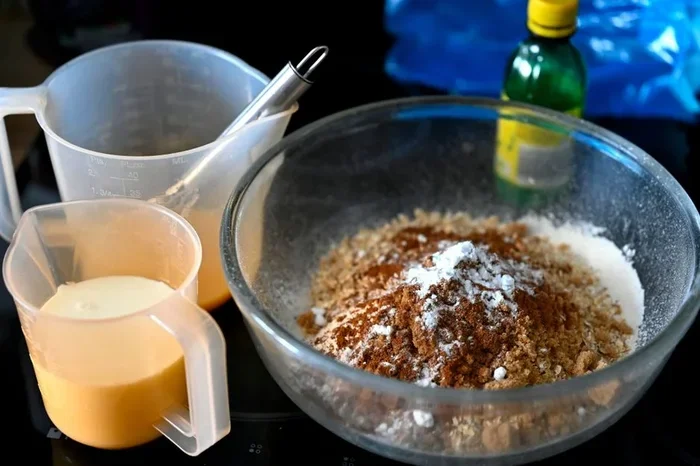
There are 4 tablespoons in a 1/4 cup of brown sugar. This simple tablespoon conversion is essential for any baker or cook. Whether you are scaling a recipe or substituting ingredients, knowing your kitchen measurements saves time and prevents mistakes.
Have you ever been mid-recipe and suddenly wondered, “how many tablespoons in 1/4 cup of brown sugar?” You are not alone. This is one of those kitchen measurements that comes up more often than you would think. Whether you are a beginner baker or a seasoned cook, having a solid grasp of tablespoon conversions makes your time in the kitchen so much smoother.
The answer is simple: 4 tablespoons make up 1/4 cup. But there is more to it than just the number. The way you pack your brown sugar, the type of measuring tools you use, and even your altitude can all affect the outcome. In this guide, we walk through everything you need to know about brown sugar measurement, from basic conversions to pro tips that will level up your cooking game.
Key Takeaways
- 4 tablespoons equal 1/4 cup: This is a standard US customary measurement that applies to brown sugar and most dry ingredients.
- Packing matters: Packed brown sugar weighs more than loose brown sugar, so your measuring technique affects the final result.
- Use the right tools: Dry measuring cups and measuring spoons give you the most accurate recipe measurements.
- Know your conversions: Understanding basic volume conversion ratios helps you adjust recipes on the fly.
- Brown sugar is different: Its moisture content and density make it behave differently than granulated sugar in measurements.
- Small errors add up: Even a slight miscalculation in baking measurements can change the texture and taste of your baked goods.
📑 Table of Contents
What Does 1/4 Cup Mean in Tablespoons?
Let us start with the basics. In the US customary measurement system, a cup is divided into 16 tablespoons. That means a quarter cup, or 1/4 cup, equals 4 tablespoons. This volume conversion is the same for brown sugar, white sugar, flour, and most other dry ingredients.
But here is where it gets interesting. Not all tablespoon conversions are created equal when it comes to how you measure the ingredient. Brown sugar is denser than many other dry ingredients because it contains molasses. This gives it a moist, slightly sticky texture that packs differently than granulated sugar.
When a recipe calls for 1/4 cup of brown sugar, it generally means 4 tablespoons that are firmly packed into the measuring cup. If you just scoop and leave it loose, you will end up with less sugar by weight. And in baking, precision matters a lot.
Why the Difference Between Loose and Packed Matters
Think of it this way. If you fill a measuring cup with loose brown sugar and tap it gently, you will have less sugar than if you press it down firmly. The difference can be as much as 15 to 20 percent by weight. For everyday cooking, this might not matter much. But for baking measurements, even a small difference can change the texture, moisture, and sweetness of your final product.
Most recipes that specify brown sugar assume you will pack it. The standard method is to scoop the brown sugar into the measuring cup and press it down with your thumb or the back of a spoon. You want it to hold its shape when you turn the cup over.
How to Measure Brown Sugar Correctly
Measuring brown sugar the right way is easier than you might think. It just takes a little practice and the right technique. Here is a step-by-step approach that works every time.
First, grab your dry measuring cup. The 1/4 cup size is what you need for this brown sugar measurement. Make sure the cup is clean and dry before you start.
Second, spoon the brown sugar into the cup. Do not pack it in right away. Just fill it up, mounding it slightly above the rim.
Third, press the sugar down firmly with your thumb or the flat back of a spoon. You want the sugar to be snug and level with the top of the cup.
Fourth, turn the cup over onto your mixing bowl or workspace. The brown sugar should slide out cleanly and hold its shape. If it crumbles, you did not pack it firmly enough.
Fifth, if the recipe calls for a specific weight, use a kitchen scale. This is the most accurate method for any dry ingredient measurement. A kitchen scale removes all the guesswork and gives you consistent results every single time.
Using Measuring Spoons for Smaller Amounts
Sometimes a recipe calls for just a tablespoon or two of brown sugar, not a full 1/4 cup. In those cases, reach for your measuring spoons instead of the measuring cup. One tablespoon of packed brown sugar is exactly one tablespoon. Four of those gives you your 1/4 cup.
If you are curious about other common measurements, knowing that how many scoops of coffee per cup of water follows a similar logic of ratios can help you understand the broader concept of kitchen measurement equivalents. The same principle of standard ratios applies across the kitchen.
Brown Sugar Weight and Volume Explained
Understanding the weight of brown sugar adds another layer of precision to your cooking measurements. One tablespoon of packed brown sugar weighs approximately 12 grams. That means 4 tablespoons, or 1/4 cup, of packed brown sugar weighs about 48 grams.
For comparison, one tablespoon of loose brown sugar weighs closer to 10 grams. So 1/4 cup of loosely packed brown sugar would be around 40 grams. That is a 20 percent difference just from how you pack the sugar!
This is why professional bakers and serious home cooks often prefer the weight method. When you measure by weight, you eliminate the variability that comes from packing techniques. A simple kitchen scale is one of the best investments you can make for your kitchen.
Most nutrition labels and sugar packaging list the weight per cup. A standard 1/4 pound (4-ounce) block of brown sugar, when packed, fills about 1 cup. Knowing this can help you eyeball quantities when you do not have measuring tools on hand.
How Brown Sugar Differs from Granulated Sugar
Brown sugar and granulated sugar are not the same when it comes to measuring. Brown sugar contains molasses, which adds moisture and density. Granulated sugar is lighter and flows more freely, so it does not pack as tightly.
This means that 1/4 cup of brown sugar weighs more than 1/4 cup of granulated sugar. The volume is the same (4 tablespoons), but the weight and behavior in a recipe are different. Brown sugar brings more moisture and a richer flavor, which is why it is a favorite in cookies, cakes, and sauces.
When you are substituting one for the other in a recipe, keep in mind that the texture and sweetness may shift slightly. The tablespoon conversion stays the same, but the final result might not be identical.
Common Kitchen Measurement Conversions
Once you know that 4 tablespoons equal 1/4 cup, you can build on that knowledge to master other common conversions. Here is a quick reference guide for kitchen equivalents that every home cook should know.
- 2 tablespoons = 1/8 cup
- 4 tablespoons = 1/4 cup
- 5 tablespoons + 1 teaspoon = 1/3 cup
- 8 tablespoons = 1/2 cup
- 10 tablespoons + 2 teaspoons = 2/3 cup
- 12 tablespoons = 3/4 cup
- 16 tablespoons = 1 cup
These standard measurements apply to dry ingredients measured in dry measuring cups. For liquid ingredients, you would use a liquid measuring cup, and the volume conversion ratios remain the same.
Having this conversion chart memorized or saved on your phone can be a real lifesaver. It makes adjusting recipes, halving or doubling them, and substituting ingredients so much easier. You will start to see these ratios everywhere in the kitchen, from measuring coffee for your morning brew to portioning out ingredients for a big batch of cookies.
Quick Tips for Memorizing Common Conversions
One easy trick is to remember that 1 cup equals 16 tablespoons. From there, you can just divide. Half of 16 is 8, so 1/2 cup equals 8 tablespoons. Half of 8 is 4, so 1/4 cup equals 4 tablespoons. It is just repeated halving.
Another helpful approach is to think of the cup as a clock face. 1/4 of the clock is at the 3 o’clock position, which corresponds to 4 out of the 16 total tablespoons. This visual trick can help you recall kitchen equivalents quickly when you are in the middle of cooking.
Tips for Accurate Measuring Every Time
Even experienced cooks can make measurement mistakes. The good news is that most of these errors are easy to avoid with a few simple habits. Here are some practical tips to improve your accuracy in the kitchen.
Always use the right type of measuring tool. Dry measuring cups are designed to be filled to the brim and leveled off. Liquid measuring cups have a pour spout and are meant to be read at eye level. Using the wrong type can lead to inaccurate recipe measurements.
Level off your dry ingredients with a straight edge, like the back of a knife. This ensures that you are not packing in more than the recipe calls for. For brown sugar, press it firmly but evenly, then level the top.
Do not pack flour the same way you pack brown sugar. Flour should be spooned lightly into the measuring cup and leveled off. Packing flour too tightly can add 20 to 30 percent more flour than intended, which can make baked goods dense and dry.
When in doubt, use a kitchen scale. This is the single best tool for achieving consistent cooking measurements. A scale costs very little and takes the guesswork out of every recipe.
Also, keep your measuring tools clean and dry. Residue from previous ingredients can throw off your measurements. And store your measuring spoons and cups in a designated spot so they are always easy to find.
Common Mistakes to Avoid
One of the biggest mistakes is scooping brown sugar directly from the bag with the measuring cup. This can compress the sugar unevenly and lead to inconsistent results. Always spoon the sugar into the cup first, then pack it down.
Another common error is not leveling off the top of the measuring cup. Even a small mound of extra brown sugar can throw off your tablespoon conversion and affect the balance of your recipe.
Finally, do not confuse liquid and dry measuring cups. They are designed differently and serve different purposes. Using a liquid measuring cup for dry ingredients, or vice versa, is a quick way to get inaccurate measurements.
Why Measurement Matters in Baking
Baking is often called a science, and for good reason. Unlike cooking, where you can easily adjust seasoning and flavors on the fly, baking relies on precise ratios of ingredients. Flour, sugar, fat, and liquid all interact in specific ways, and even small deviations can change the final product.
When you get your brown sugar measurement right, you ensure the right amount of moisture, sweetness, and structure in your baked goods. Too little brown sugar and your cookies might be dry and bland. Too much and they might spread too much or become overly moist.
This is especially true for recipes that rely on brown sugar for moisture, like gingerbread, banana bread, or caramel cookies. The molasses in brown sugar adds both flavor and humidity. Getting the 1/4 cup measurement right means getting the texture and taste exactly as the recipe intended.
Beyond brown sugar, accurate measuring spoons and cups are essential for all baking ingredients. From baking powder to cocoa powder, every ingredient needs to be measured correctly for the best results.
If you are just starting out with baking, spend some time getting comfortable with your measuring tools. Practice the packing technique for brown sugar. Learn how to level off flour. Over time, these skills become second nature, and you will notice a real improvement in your baking.
Remember, even professional bakers double-check their standard measurement conversions before starting a new recipe. It is a habit that pays off in consistency and quality. So the next time you reach for that 1/4 cup and a bag of brown sugar, you will know exactly how many tablespoons you need.
Understanding these basics also helps when you are adapting recipes for different serving sizes. Want to halve a batch of brownies? You will need to cut every ingredient in half, which means 2 tablespoons of brown sugar instead of 4. Want to double a muffin recipe? You will need 8 tablespoons, or 1/2 cup, of brown sugar. The volume conversion skills you build from mastering the 1/4 cup ratio apply everywhere in the kitchen.
Final Thoughts
So there you have it. 4 tablespoons in 1/4 cup of brown sugar. It is a simple fact, but one that forms the foundation of accurate cooking and baking. With the right technique, the proper tools, and a basic understanding of kitchen measurements, you can tackle any recipe with confidence.
Take a moment to familiarize yourself with the tablespoon conversion chart. Practice your packing technique for brown sugar. And if you want the most accurate results, invest in a kitchen scale. These small steps will make a big difference in the quality of your food.
The kitchen is a place where knowledge and practice come together. Every recipe you try, every measurement you nail, builds your skills and confidence. So go ahead, measure out that 1/4 cup of brown sugar, and get baking. You have got this!
Frequently Asked Questions
How many tablespoons are in a 1/4 cup of brown sugar?
There are 4 tablespoons in a 1/4 cup of brown sugar. This is a standard tablespoon conversion that applies to all dry ingredients measured in US customary units. Make sure to pack the brown sugar firmly for the most accurate result.
Does the type of brown sugar affect the tablespoon measurement?
The volume stays the same at 4 tablespoons per 1/4 cup, but the weight can vary depending on how firmly you pack the sugar. Light brown sugar and dark brown sugar both follow the same volume conversion, though dark brown sugar has more molasses and may weigh slightly more.
Can I use a liquid measuring cup for brown sugar?
It is not recommended. Liquid measuring cups are designed for pouring liquids and are read at eye level. For brown sugar and other dry ingredients, use a dry measuring cup. This ensures your baking measurements are accurate and consistent.
How much does 1/4 cup of brown sugar weigh?
1/4 cup of packed brown sugar weighs approximately 48 grams or 1.7 ounces. If the sugar is loosely packed, it may weigh closer to 40 grams. For the most precise brown sugar measurement, use a kitchen scale.
What is the best way to store leftover brown sugar?
Store brown sugar in an airtight container to keep it soft and prevent it from drying out. If it hardens, place a piece of bread or a damp paper towel in the container overnight. Proper food storage keeps your brown sugar fresh and ready to use for your next recipe.
How do I convert tablespoons to cups for other ingredients?
The basic volume conversion is the same for all dry ingredients: 16 tablespoons equal 1 cup. So 8 tablespoons is 1/2 cup, 4 tablespoons is 1/4 cup, and so on. This standard measurement applies across the board, whether you are measuring flour, sugar, or cocoa powder.
=== CONCLUSION ===
Knowing that there are 4 tablespoons in a 1/4 cup of brown sugar is one of those small facts that makes a big difference in the kitchen. It is a fundamental tablespoon conversion that every cook and baker should have in their back pocket. With the right measuring technique and a little practice, you will get consistent, reliable results every time you reach for that 1/4 cup measure.
Remember to pack your brown sugar firmly, level it off, and use the right tools for the job. These simple habits will elevate your cooking and baking to the next level. Happy measuring and happy cooking!