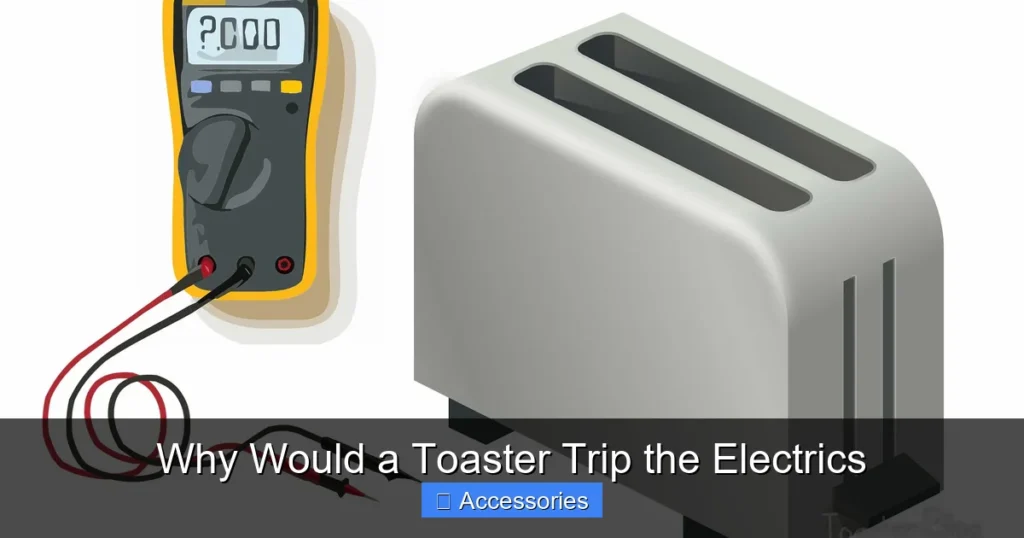
Ever reached for your toaster only to hear the familiar “pop” of a tripped breaker? It’s more common than you think—and not just because you left bread in too long. A toaster can trip the electrics due to internal faults, power surges, or simply being overloaded on a shared circuit. Understanding the causes helps you fix the issue fast and avoid dangerous electrical hazards.
This article dives into every possible reason behind a toaster tripping your home’s electrical system, from worn-out heating elements to outdated wiring. You’ll also find practical troubleshooting steps, safety precautions, and expert advice to prevent future trips. Whether you’re dealing with an old toaster or upgrading to a new model, this guide ensures your kitchen stays both functional and safe.
Key Takeaways
- Overloading the circuit: If multiple high-wattage appliances run simultaneously (like a microwave and toaster), they can exceed the circuit’s capacity and trigger a breaker.
- Faulty internal components: Worn heating elements, damaged thermostats, or frayed wires inside the toaster can cause short circuits or excessive current draw.
- Poor electrical connections: Loose prongs or corroded terminals increase resistance, leading to overheating and potential arcing that trips the breaker.
- Power surges or voltage spikes: Sudden increases in household voltage—often during storms or grid fluctuations—can overwhelm older toasters not built for modern loads.
- Ground faults or insulation failure: Damaged insulation around wires exposes live parts, creating a path to ground that activates ground fault circuit interrupters (GFCIs).
- Age and wear: Toasters over 5–7 years old are more prone to component degradation, especially if used daily without maintenance.
- Improper use or debris buildup: Crumbs blocking vents or using metal utensils can cause hot spots, smoke, or even small fires that activate safety mechanisms.
Have you ever been mid-toast, enjoying that satisfying crunch of golden brown bread, when suddenly—*click!*—the lights dim and your toaster shuts off? You reach for the reset button, only to feel a jolt of frustration. What just happened? Why would a toaster trip the electrics?
It turns out, your toaster isn’t broken by accident. There are real, technical reasons why this appliance—seemingly simple—can become a trigger for your home’s electrical protection systems. And while it might seem like a minor inconvenience, understanding these causes is crucial for both safety and appliance longevity.
In this comprehensive guide, we’ll walk through every plausible explanation for why a toaster trips the circuit breaker or fuse box. From basic overload scenarios to hidden internal faults, you’ll learn how electricity flows (or fails to flow) through your toaster and what you can do to stop the drama before it starts. Plus, we’ll share smart tips to keep your mornings smooth and your wiring safe.
Let’s crack open the truth behind the pop—because sometimes, the most innocent kitchen gadgets hide the biggest electrical surprises.
Key Takeaways
- Understanding Why Would A Toaster Trip The Electrics: Provides essential knowledge
📑 Table of Contents
How Does a Toaster Work—And Why Can It Be Dangerous?
Before diving into why your toaster might be causing trouble, let’s briefly revisit how it actually functions. At its core, a toaster uses electric current to heat thin coils—called heating elements—inside narrow slots. When you insert bread and press down the lever, the mechanism closes the circuit, sending power directly to those coils. The coils glow red-hot within seconds, radiating infrared heat upward and downward to toast your slices evenly.
This process relies on precise control: the thermostat monitors temperature and cuts power once the desired browning level is reached. Meanwhile, internal wiring must remain intact and insulated to prevent energy loss or dangerous leaks.
Now here’s the catch: if any part of this system malfunctions—whether due to age, misuse, or external factors—it can send more electricity than intended, create sparks, generate excess heat, or even expose live wires. And when that happens? Your home’s safety devices kick in: the circuit breaker trips to cut off power instantly.
Think of your toaster as a tiny but powerful electrical device plugged into a larger network. Just like your refrigerator or microwave, it draws a specific amount of amperage. But unlike larger appliances designed for continuous duty, most toasters are meant for intermittent use—only minutes at a time. That makes them surprisingly vulnerable to stressors that wouldn’t affect heavier equipment.
Common Causes of a Toaster Tripping the Breaker

Visual guide about Why Would a Toaster Trip the Electrics
Image source: missvickie.com
So what exactly sets off the breaker when you turn on your toaster? Let’s break down the most frequent culprits:
1. Electrical Overload on the Circuit
Every home has circuits rated for a certain maximum load—usually 15 or 20 amps. Older homes often have 15-amp circuits shared among outlets in the kitchen, including the ones your toaster plugs into. If you’re already running other high-draw devices—such as a coffee maker, blender, or air fryer—on the same circuit, adding a toaster could push total consumption past the limit.
For example, a standard toaster uses about 800–1500 watts (depending on size), which translates to roughly 6.7–12.5 amps at 120 volts. Add another appliance drawing 6+ amps, and you’ve hit 18+ amps—well beyond a 15-amp circuit’s threshold. Even if no single device exceeds its rating, combined usage triggers overload protection.
This is especially common in rental units or older homes where wiring hasn’t been upgraded since the 1970s or earlier. Modern kitchens pack dozens of gadgets into tight spaces, increasing reliance on shared circuits.
2. Faulty Heating Elements or Internal Short Circuits
Inside your toaster, the heating element is essentially a coiled wire made of nichrome—a nickel-chromium alloy resistant to oxidation. Over time, repeated heating and cooling cycles cause microscopic cracks or breaks in the wire. When this happens, the resistance drops dramatically, allowing more current to flow than designed. This surge can cause the element to overheat rapidly, potentially melting surrounding plastic parts or igniting nearby materials.
Sometimes, the short isn’t obvious. For instance, crumbs from previous toasting sessions may accumulate near the base and conduct electricity across exposed terminals. Or, moisture from spilled juice or cleaning liquids could bridge gaps between live and neutral wires.
Even without visible damage, aging components lose their ability to regulate heat efficiently. A failing thermostat might keep the element powered longer than needed, creating sustained hot spots that degrade insulation and increase fire risk.
3. Poor Plug Connections or Loose Wiring
The humble plug-and-socket connection is a frequent weak point. If your toaster’s prongs are bent, loose, or corroded, contact becomes intermittent. Instead of clean conduction, you get arcing—tiny sparks jumping between metal contacts as electricity struggles to pass through. Arcing generates intense heat at the interface, warming the plug housing and possibly melting plastic or burning fingers.
Similarly, internal wiring inside the cord or within the toaster body may fray due to bending, kinking, or repeated strain. A partially severed wire can intermittently touch another conductor, creating unpredictable current paths that confuse your breaker.
Regular use—especially pulling the cord out by the plug—wears down these connections faster. Many users don’t realize that constantly yanking the cord strains the internal solder joints and insulation.
4. Power Surges or Voltage Spikes
Your toaster expects steady 120-volt (in the U.S.) or 230-volt (in Europe) input. But utility grids aren’t always stable. During thunderstorms, transformer issues, or when heavy machinery starts up elsewhere in the neighborhood, voltage can spike temporarily. These surges last milliseconds but deliver far more energy than a toaster’s components can handle.
Older toasters lack modern surge protection circuitry found in newer models. So when a sudden 150V spike hits, the increased voltage forces more electrons through the heating element, producing way more heat than intended. This can blow a fuse internally or damage semiconductors (if present), making the toaster behave erratically—including tripping the main breaker.
Modern homes often have whole-house surge protectors, but they’re usually installed at the service panel, not at individual outlets. That means smaller devices like toasters remain unprotected unless you use dedicated surge strips.
5. Ground Faults Due to Insulation Failure
Toasters aren’t typically grounded—they rely on double insulation or reinforced insulation per safety standards. However, if the outer coating around internal wires cracks or wears away (due to age, heat, or physical damage), bare copper strands may come into contact with metal casing. That creates a “ground fault”: current escaping through a non-intended path instead of completing the circuit through the heating element.
When enough leakage current occurs (typically above 5 milliamps), GFCI (Ground Fault Circuit Interrupter) outlets or AFCI (Arc Fault Circuit Interrupter) breakers detect the imbalance and shut off power immediately. While rare in standard toasters, this scenario becomes more likely after drops, cracks, or improper repairs.
6. Debris Buildup and Improper Use
We all know crumbs fall into the toaster. But did you know that even small amounts can pose serious risks? Crumbs are excellent conductors when compacted or dampened. They can form bridges between live and neutral contacts, mimicking a short circuit. In extreme cases, accumulated organic matter reaches ignition temperature and smolders, triggering smoke alarms or thermal cutoffs.
Using metal utensils to remove stuck food introduces another hazard. Metal conducts electricity perfectly, so inserting a fork or knife near live parts can complete an unintended circuit, causing shocks or arcing. Even aluminum foil placed in the slot during cleaning can create dangerous arcs if it touches both sides of the slot.
Beyond crumbs, overloading the slots with thick bagels, frozen waffles, or dense bread increases mechanical stress on the heating elements. Thicker items take longer to toast, forcing elements to work harder and hotter than rated—another path to overheating.
Troubleshooting Steps When Your Toaster Keeps Tripping

Visual guide about Why Would a Toaster Trip the Electrics
Image source: images-na.ssl-images-amazon.com
If your toaster keeps tripping the breaker, don’t assume it’s doomed. Try these systematic checks before tossing it:
Step 1: Test the Outlet Alone
Plug only the toaster into the outlet—no other devices. Turn it on and see if it trips immediately. If yes, the problem is almost certainly within the toaster itself. If not, the issue lies elsewhere in your electrical setup.
Step 2: Inspect the Plug and Cord
Look closely at the plug ends for scorch marks, melted plastic, or bent prongs. Run your fingers along the cord for stiffness, cracks, or exposed wires. Shake the plug gently—if it feels loose, the internal pins may be loose. Never use a visibly damaged appliance.
Step 3: Clean Thoroughly
Unplug the toaster and invert it over a trash can. Tap the slots vigorously to dislodge crumbs. Use a soft brush or compressed air for stubborn residue. Avoid vacuuming directly—static electricity can damage delicate parts or spark. For sticky spills, wipe with a slightly damp cloth, then dry completely.
Step 4: Try a Different Outlet or Circuit
Plug the toaster into another outlet on a different circuit. If it works fine there, the original outlet may be faulty or overloaded. Consider moving the toaster permanently to a safer location.
Step 5: Check Breaker and Fuse Box Settings
Ensure the breaker wasn’t accidentally switched off or set to “test” mode (common in AFCI/GFCI units). Reset it fully and monitor whether it trips again within seconds or minutes. Frequent immediate trips suggest an active fault; delayed trips may indicate gradual degradation.
Step 6: Monitor Usage Patterns
Keep a log: note when the toaster trips (morning rush? after using microwave?) and list other appliances running simultaneously. This helps identify overload patterns or timing clues pointing to external causes.
After trying these steps, if the toaster still trips consistently, it’s likely suffering from internal failure. Continuing to use it risks fire or electrocution—replace it immediately.
Safety Tips to Prevent Future Trips
Visual guide about Why Would a Toaster Trip the Electrics
Image source: simplybreakers.com
Prevention beats repair every time. Follow these best practices to keep your toaster—and your home—safe:
Use Dedicated Circuits Wisely
While true dedicated circuits for small appliances are rare in residential settings, avoid clustering high-wattage devices on one outlet strip. Keep toasters, microwaves, and blenders on separate branches whenever possible.
Invest in Surge Protection
Plug your toaster into a surge-protected power strip with joule ratings above 1000 joules. This absorbs transient voltage spikes and shields sensitive electronics. Replace strips every 2–3 years or after major surges.
Clean Regularly—But Safely
Make toaster cleaning a weekly habit. Never use water inside slots or immerse any part in liquid. Always unplug before brushing or wiping.
Upgrade Old Appliances
Manufacturers recall faulty models periodically. If your toaster is over 7 years old and trips frequently, consider replacement. Newer models include improved thermal fuses, better insulation, and fail-safe designs.
Never Bypass Safety Features
Some DIYers try taping over broken latches or removing thermal cutoffs to force operation. This voids warranties and invites danger. Always consult a licensed electrician for modifications.
Avoid Overloading Slots
Toast two slices max unless your model explicitly supports larger loads. Frozen products should defrost first to prevent uneven heating and extended cycle times.
When to Call a Professional Electrician
Know your limits. While most toaster issues are DIY-friendly, certain situations demand expert help:
– If multiple outlets on the same circuit trip when used together, you may have a wiring fault in the junction box.
– Repeated breaker trips despite testing the toaster alone suggest degraded wiring or improper grounding downstream.
– Scorch marks on walls, outlets, or switches near the kitchen indicate serious arc faults requiring rewiring.
– You smell burning plastic or see blackening around the outlet—evacuate immediately and call emergency services.
Electricians can perform advanced diagnostics using clamp meters, insulation testers, and thermal imaging to pinpoint hidden faults invisible to the naked eye.
Conclusion: Stay Safe, Toast Smart
A tripping toaster isn’t just annoying—it’s a warning sign. Whether caused by overload, internal decay, or environmental stressors, it tells you something needs attention. By understanding the mechanics behind electrical safety and taking proactive steps, you transform a frustrating incident into a learning opportunity.
Remember: your toaster is a powerful little machine capable of both convenience and catastrophe. Treat it with respect, maintain it diligently, and never ignore repeated trips. With proper care and awareness, your morning toast will remain a joy, not a jolt.
And hey—if you’re ever unsure whether your appliance is acting up or if it’s truly hazardous, err on the side of caution. Better safe than sorry, especially when electricity is involved.
—
Frequently Asked Questions
Can a toaster really start a fire if it keeps tripping?
Yes, repeatedly using a faulty toaster increases fire risk. Overheated elements, melted insulation, or crumb buildup can ignite nearby materials. Tripping breakers is your home’s last line of defense—once that stops working, danger rises sharply.
Why does my toaster trip only when I use it with other appliances?
This indicates circuit overload. Your home’s wiring handles limited amperage per branch. Combining high-wattage devices (toaster + microwave + blender) on one circuit exceeds its capacity, triggering automatic shutdown to prevent overheating wires.
Is it safe to use a toaster with a cracked heating element?
No. A cracked element creates unstable current flow, increasing chances of short circuits, arcing, or internal fires. Replace the unit immediately. Do not attempt to repair it yourself—internal components require professional handling.
How often should I clean my toaster?
At least once a week. Daily crumb accumulation builds up quickly and poses fire hazards. Unplug, invert, and gently tap slots over trash. Avoid vacuuming directly; use a soft brush or canned air for thorough cleaning.
Can a power surge from lightning damage my toaster?
Absolutely. Lightning-induced surges can fry internal circuits even if the toaster appears fine afterward. Use surge protectors and unplug during storms for added protection. Consider replacing older models lacking modern safeguards.
What’s the difference between AFCI and GFCI breakers?
AFCI (Arc Fault Circuit Interrupter) detects dangerous arcing inside wires—common in aging appliances like toasters. GFCI (Ground Fault Circuit Interrupter) protects against current leakage to ground (e.g., wet hands touching metal). Most homes now require AFCI in living areas for fire prevention.