A 20 pound turkey typically needs 4 to 5 hours at 325°F to cook through completely. The exact 20 pound turkey cooking time depends on whether it is stuffed, your oven type, and the roasting method you choose. Using a meat thermometer and letting the bird rest properly are the keys to safe, juicy, and flavorful results.
A 20 pound turkey is the star of many holiday tables. Whether it is Thanksgiving, Christmas, or a special family gathering, getting the roast time right matters. Nobody wants a dry bird or a raw center. That is why we put together this complete 20 pound turkey cooking time guide.
This article covers everything you need to know. From oven temperature to resting time, we have you covered. You will learn how long to cook a 20 lb turkey, what factors change the timing, and how to get crispy skin every single time. Let us dive in.
Key Takeaways
- Plan for 4 to 5 hours: A 20 pound turkey cooking time averages about 4 to 5 hours at 325°F when unstuffed.
- Always use a meat thermometer: The safe internal temperature is 165°F in the thickest part of the breast and thigh.
- Let it rest for 30 to 45 minutes: Resting allows juices to redistribute, making carving easier and meat more flavorful.
- Brining adds moisture: A simple brine can significantly improve the texture and taste of your roast.
- Stuffed turkeys take longer: Expect an extra 30 to 45 minutes of cook time if you fill the cavity.
- Baste every 45 minutes: Regular basting keeps the skin crispy and the meat moist throughout the cook.
- Carve with the right tools: Sharp knives make a big difference in presentation and ease.
📑 Table of Contents
- How Long Does It Take to Cook a 20 Pound Turkey?
- Best Temperature for Cooking a 20 Pound Turkey
- Step-by-Step: How to Cook a 20 Pound Turkey
- Factors That Affect 20 Pound Turkey Cooking Time
- Common Mistakes to Avoid When Cooking a 20 Pound Turkey
- How to Store and Reheat Leftover Turkey
- Final Thoughts on 20 Pound Turkey Cooking Time
How Long Does It Take to Cook a 20 Pound Turkey?
The short answer is about 4 to 5 hours at 325°F. But the full 20 pound turkey cooking time varies based on several factors. Understanding these helps you plan your meal with confidence.
Unstuffed vs Stuffed Turkey
An unstuffed 20 pound turkey cooks faster than a stuffed one. When you fill the cavity with dressing, heat takes longer to reach the center. Here is a quick comparison:
- Unstuffed: 4 to 4.5 hours at 325°F
- Stuffed: 4.5 to 5.5 hours at 325°F
Always check that the stuffing reaches 165°F inside. This is a food safety must. Use a probe thermometer in the center of the dressing to confirm.
Oven Type Matters
Not all ovens heat the same way. A conventional oven may need slightly longer than a convection oven. Convection fans circulate hot air, which reduces cook time by about 15 to 25 percent. If you use a convection setting, start checking the turkey about 30 minutes earlier than the standard time.
Also, consider your oven size. A cramped oven can block airflow and cook unevenly. For a large bird like a 20 pounder, you want plenty of space around the pan. If your kitchen setup is tight, you might want to look into a toaster oven big enough for a turkey as an alternative, though a full-size oven remains the best choice for even roasting.
Best Temperature for Cooking a 20 Pound Turkey
The recommended temperature for roasting a turkey is 325°F. This is the sweet spot endorsed by the USDA and most cooking experts. Here is why it works so well:
- Even cooking: 325°F allows the bird to cook from edge to center without burning the outside.
- Moisture retention: Lower heat keeps the breast meat juicy over a longer period.
- Crispy skin: The moderate temperature renders fat slowly, giving you golden, crackling skin.
Some cooks start at a higher temperature for the first 30 minutes to kickstart browning. Then they drop it to 325°F for the rest of the cook. This trick works well if you want extra-crispy skin without drying out the meat.
What If You Roast at a Different Temperature?
Higher temperatures like 350°F or 375°F reduce cook time but increase the risk of dry breast meat. Lower temperatures like 275°F take much longer but produce very tender results. For most home cooks, 325°F is the safest and most reliable choice.
Step-by-Step: How to Cook a 20 Pound Turkey
Follow these steps for a foolproof roast. Each stage plays a role in the final 20 pound turkey cooking time and quality.
Step 1: Thaw the Turkey Properly
Never cook a frozen turkey directly. Plan ahead for thawing. The safest method is to place the bird in the refrigerator on a tray. Allow about 24 hours for every 4 to 5 pounds. So a 20 pound turkey needs roughly 4 to 5 days in the fridge. If you are short on time, you can thaw it in cold water. Change the water every 30 minutes. This method takes about 30 minutes per pound, so plan for around 10 hours.
Step 2: Brine for Flavor and Moisture
Brining is a game-changer for big birds. A simple wet brine of water, salt, sugar, and spices soaks into the meat over 12 to 24 hours. This step helps the turkey retain moisture during roasting. The result is juicier meat with deeper flavor. If you are short on time, a dry brine with salt and herbs works well too. Just pat the bird dry and season generously the night before.
Step 3: Prep and Season
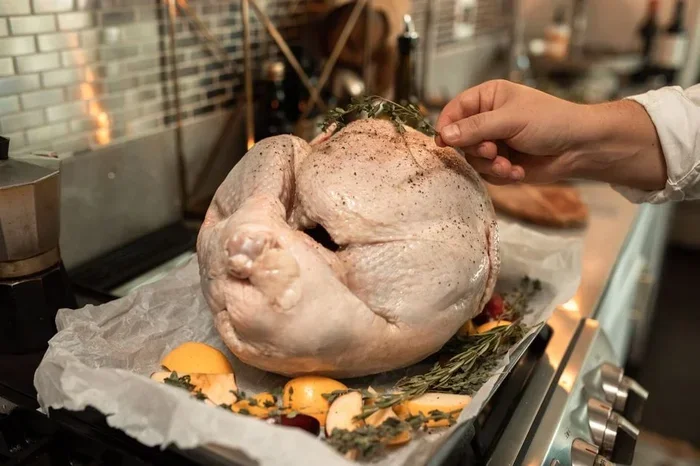
Remove the giblets and neck from the cavity. Pat the bird completely dry with paper towels. Dry skin crisps up much better than wet skin. Rub butter or olive oil all over the exterior. Season the cavity with aromatics like onion, garlic, citrus, and fresh herbs. These add subtle flavor as the turkey roasts.
Step 4: Roast and Monitor
Place the turkey breast-side up on a rack in a roasting pan. Insert a meat thermometer into the thickest part of the breast and the innermost part of the thigh. Set a timer and resist the urge to open the oven too often. Every time you open the door, you lose heat and extend the 20 pound turkey cooking time.
Baste the bird every 45 minutes with pan juices. This keeps the surface moist and promotes even browning. If the skin is browning too fast, tent the breast loosely with foil.
Step 5: Check Internal Temperature
The turkey is done when the internal temperature reaches 165°F in both the breast and thigh. The breast should read 165°F. The thigh can go slightly higher, around 170 to 175°F, for a more done feel. Always check in multiple spots because ovens have hot and cold zones.
Step 6: Rest Before Carving
Once the 20 pound turkey cooking time is complete, pull it out and let it rest. Cover it loosely with foil and wait at least 30 to 45 minutes. This resting period allows the juices to settle back into the meat. When you finally carve, every slice will be moist and tender. Cutting too soon releases all those juices onto the cutting board instead of keeping them in the bird.
Factors That Affect 20 Pound Turkey Cooking Time
Several variables can shift your cook time. Being aware of these helps you adjust and avoid surprises.
Starting Temperature of the Bird
A turkey straight from the fridge will take longer than one brought to room temperature first. Take the bird out about 1 hour before roasting. This small step can shave 20 to 30 minutes off the total cook time.
Roasting Pan and Rack
A deep roasting pan with a V-rack elevates the turkey and allows hot air to circulate underneath. This promotes even cooking. A flat pan without a rack can cause the bottom to cook slower and the skin to steam instead of crisp.
Bird Shape and Size Variations
Not all 20 pound turkeys are the same shape. A wider bird takes longer to cook through than a taller, narrower one. The thickness of the breast and the depth of the thighs both matter. Always rely on internal temperature rather than time alone.
Altitude
High-altitude cooking can affect roast times. At elevations above 3,000 feet, air is thinner and heat transfers differently. You may need to increase the temperature slightly or extend the cook time by 10 to 15 percent.
Common Mistakes to Avoid When Cooking a 20 Pound Turkey
Even experienced cooks make mistakes with big turkeys. Here are the most common ones and how to avoid them.
- Not thawing long enough: A partially frozen turkey cooks unevenly and takes much longer than expected.
- Overcooking the breast: The breast dries out faster than the thighs. If you reach 165°F in the breast but the thigh is still at 160°F, remove the bird and let carryover cooking finish the job.
- Skipping the rest: Cutting into a hot turkey releases all the juices. Patience pays off with juicier meat.
- Opening the oven too often: Each peek drops the oven temperature and adds to the total 20 pound turkey cooking time.
- Using a dull thermometer: An inaccurate thermometer gives you false readings. Invest in a good instant-read or leave-in probe thermometer.
How to Store and Reheat Leftover Turkey
After the big meal, you will likely have leftovers. Proper storage keeps the turkey fresh and safe to eat for days.
Remove the meat from the bones and store it in an airtight container. Refrigerate within 2 hours of cooking. Cooked turkey stays good in the fridge for 3 to 4 days. For longer storage, freeze it in portions. Frozen turkey maintains quality for up to 3 months.
To reheat, add a splash of broth or gravy to the meat and warm it gently in the oven at 325°F. This keeps the texture close to fresh. Avoid microwaving large portions, as they tend to heat unevenly and can make the meat rubbery.
If you have a lot of leftover carcass, do not throw it away. Simmer the bones into a rich turkey stock. Use it for soups, risottos, or gravies in the days ahead.
Final Thoughts on 20 Pound Turkey Cooking Time
Cooking a 20 pound turkey does not have to be stressful. With the right temperature, timing, and a little patience, you can serve a show-stopping roast that everyone will remember. Remember the basics: 325°F, about 4 to 5 hours for an unstuffed bird, and always check the internal temperature with a reliable thermometer.
Let the turkey rest before carving. Baste it regularly. And most importantly, enjoy the process. The aroma of a roasting turkey filling the kitchen is one of the best parts of the holiday season. Use this guide as your go-to reference every time you roast a big bird. You will feel confident and prepared every single time.
Pair your perfectly cooked turkey with the right sides and tools. A quality turkey carving knife set makes serving easier and more elegant. A sturdy roasting pan designed for turkey ensures even heat distribution and easy cleanup. These small investments elevate your whole cooking experience.
Now you have everything you need to plan and execute a flawless roast. Your 20 pound turkey cooking time is in your hands. Go make it a memorable meal.
Frequently Asked Questions
How long does it take to cook a 20 pound turkey at 325°F?
An unstuffed 20 pound turkey takes about 4 to 4.5 hours at 325°F. A stuffed turkey takes closer to 4.5 to 5.5 hours. Always use a meat thermometer to confirm doneness, as oven variations can shift the timing.
What is the safe internal temperature for a 20 pound turkey?
The USDA recommends an internal temperature of 165°F in the thickest part of the breast and the innermost part of the thigh. Check multiple spots because heat distribution can vary within the bird.
Should I cover my turkey with foil while roasting?
You do not need to cover the turkey for most of the cook. If the skin is browning too quickly, tent the breast loosely with foil for the last hour. This prevents burning while the rest of the bird finishes cooking.
Can I cook a 20 pound turkey at 350°F instead of 325°F?
Yes, but the cook time will be shorter, about 3.5 to 4.5 hours. Higher temperatures increase the risk of dry breast meat. If you choose 350°F, monitor the internal temperature closely and pull the bird as soon as it hits 165°F.
How do I know when my 20 pound turkey is done?
The best way is to use a meat thermometer. When the breast reaches 165°F and the thigh reaches 170 to 175°F, the turkey is done. The juices should run clear when you pierce the thickest part of the thigh.
How long should I let my turkey rest before carving?
Let the turkey rest for at least 30 to 45 minutes after removing it from the oven. Cover it loosely with foil to keep it warm. This resting period allows the juices to redistribute, resulting in moist, easy-to-carve meat.