
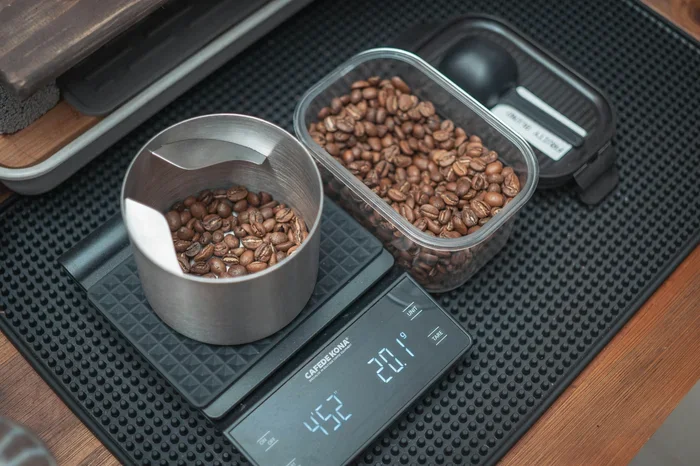
Finding the right amount of coffee beans makes all the difference. Most people use 10 to 15 grams of coffee beans per cup for a balanced flavor. This guide explains the best coffee bean measurement for your taste. You will learn simple tips to brew better coffee every time.
Making great coffee starts with one simple question. How much coffee should you use? Many people guess. Many people use the same spoon every time. But guessing often leads to weak or bitter drinks. The truth is simple. A small change in the amount of coffee changes the whole cup.
You do not need fancy gear to get it right. You just need a clear number to start from. That number is your grams of coffee beans per cup. Once you know this number, you can tweak it to match your taste. Some days you want a bold mug. Some days you want something light. A little math helps you hit the sweet spot.
This guide keeps things easy. You will learn a solid starting point. You will see how roast level, grind size, and brew method change the amount. You will also find quick tips you can use right away. Let us dive in.
Key Takeaways
- Standard Ratio: Use 10 to 15 grams of coffee beans per cup for a balanced brew.
- Personal Taste: Adjust the amount up or down based on how strong you like your coffee.
- Bean Type Matters: Dark roast and light roast beans may need slight measurement tweaks.
- Grind Size: Finer grinds often need less coffee, while coarser grinds may need more.
- Water Ratio: A good rule is 1 gram of coffee for every 15 to 18 grams of water.
- Consistency: Use a scale for repeatable results instead of guessing with scoops.
- Freshness: Freshly ground beans deliver better flavor than pre-ground coffee.
📑 Table of Contents
- Why Grams of Coffee Beans per Cup Matter
- The Standard Starting Point for Grams of Coffee Beans per Cup
- How Brew Method Changes the Amount
- How Roast, Grind, and Bean Type Affect the Dose
- Measuring Coffee Beans with a Scale
- Common Mistakes When Measuring Coffee Beans
- Adjusting the Amount for Your Taste
- Quick Tips for Better Coffee Every Day
- Final Thoughts on Grams of Coffee Beans per Cup
Why Grams of Coffee Beans per Cup Matter
Coffee is a balance of flavor, strength, and body. Too little coffee and the cup tastes thin. Too much coffee and the cup tastes heavy or bitter. The right amount brings out the best notes in the beans. It also helps you repeat a good cup on another day.
Many home brewers use scoops or tablespoons. That can work. But scoops vary in size. Beans also vary in density. A dark roast can feel lighter than a light roast. That means the same scoop can hold different amounts of coffee. Grams solve this problem. They give you a steady measure you can trust.
When you track coffee bean measurement in grams, you gain control. You can raise the dose for a stronger mug. You can lower it for a smoother sip. You can also compare results from one brew to the next. This makes it easier to learn what you like.
Here is a simple way to think about it:
- Weak coffee: not enough beans for the water used
- Balanced coffee: a steady ratio that suits your taste
- Strong coffee: more beans per cup or less water
If you are new to weighing coffee, do not worry. You only need a basic kitchen scale. Many scales show grams with one small button. That is all you need to start.
The Standard Starting Point for Grams of Coffee Beans per Cup
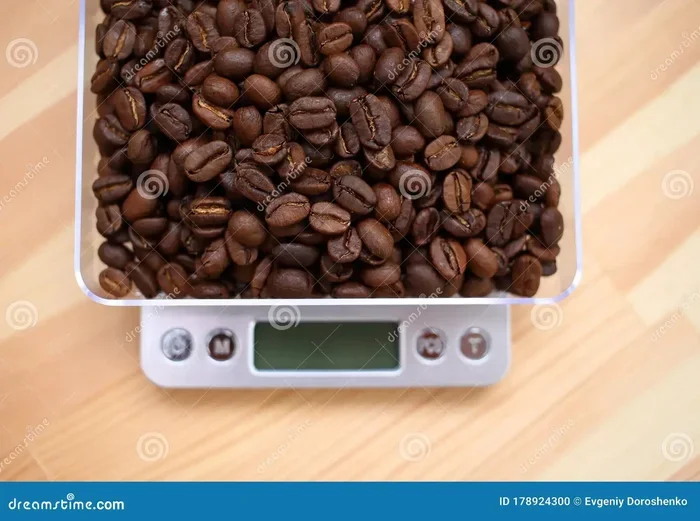
A good starting point is easy to remember. For a standard cup, many brewers begin with 10 to 15 grams of coffee beans per cup. This range works well for most drip methods and many single-cup brewers. It gives a clean, balanced flavor for most people.
Visual guide about fresh coffee beans weighing
Image source: thumbs.dreamstime.com
What is a standard cup? In coffee talk, a cup often means about 6 to 8 ounces of water. That is smaller than a large mug. If you use a bigger mug, you will likely want more coffee. If you use a small cup, you may want a little less.
Here is a simple starting chart:
- Small cup, about 6 ounces: 10 grams of beans
- Medium cup, about 8 ounces: 12 to 14 grams of beans
- Large mug, about 10 to 12 ounces: 15 to 18 grams of beans
These numbers are starting points. They are not strict rules. Your taste matters most. If you like a bold cup, move toward the higher end. If you like a lighter cup, move toward the lower end.
You may also hear people talk about the coffee to water ratio. This is just another way to say how much coffee you use for a certain amount of water. A common ratio is 1 gram of coffee for every 15 to 18 grams of water. That ratio lines up well with the numbers above for most daily brewing.
If you ever wonder how this compares to scoops, you can read more in our guide on how many scoops of coffee per cup of water. It helps to see both methods side by side.
How Brew Method Changes the Amount
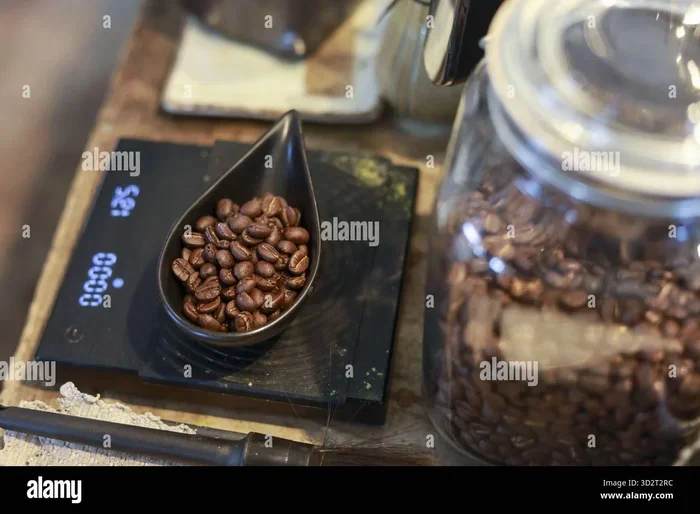
Not all brewers use the same amount of coffee. A drip machine, a pour-over, a French press, and a single-serve brewer all behave a little differently. The grind, the water flow, and the brew time all play a part. So the best grams of coffee beans per cup can shift with the method.
Visual guide about fresh coffee beans weighing
Image source: c8.alamy.com
Drip Coffee
Drip coffee is a common starting point for many homes. For a standard pot, people often use a medium dose. For one cup, 10 to 15 grams is a solid range. If the coffee tastes flat, add a gram or two. If it tastes harsh, remove a gram or two. Small changes make a big difference.
Pour-Over
Pour-over coffee often uses a slightly higher dose for a clean, bright cup. Many people like a ratio near 1 to 15 or 1 to 16. That means a 12-ounce mug may use around 14 to 16 grams of beans. The slower pour can extract more flavor, so the amount matters.
French Press
A French press usually needs a coarser grind and a slightly higher dose. The water sits with the coffee for a few minutes. That longer contact can pull out more flavor. Many people use about 12 to 16 grams for a standard cup. If the cup feels muddy or heavy, lower the dose a bit.
Single-Serve and Pod-Style Brewers
Single-serve brewers can be tricky. Some use pre-measured pods. Others let you add your own grounds. If you use your own grounds, start near 10 to 14 grams for a regular cup. If you want a stronger result, try a slightly higher dose or a finer grind. If you want to explore pod-friendly setups, you may find our page on best single cup coffee maker k cup compatible useful.
The main idea is simple. Match the amount to the method. Then adjust for taste. A method does not decide your perfect cup. You do.
How Roast, Grind, and Bean Type Affect the Dose
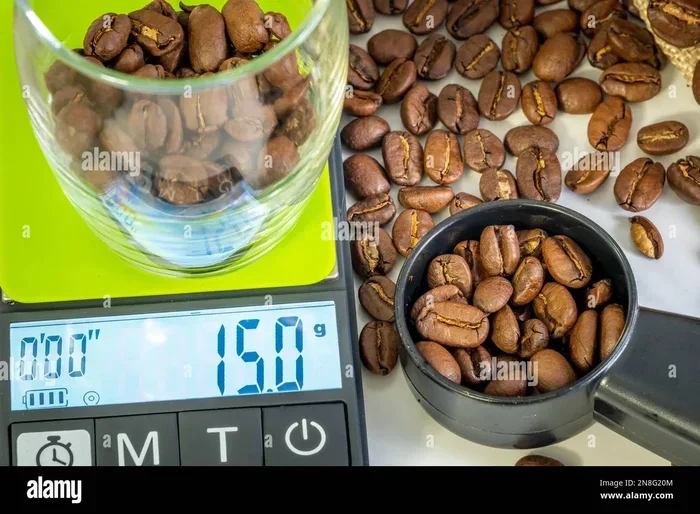
Two bags of coffee can look the same but taste very different. The roast level changes the bean density. The grind size changes how fast water pulls flavor from the beans. Even the bean type can change the feel of the cup. These factors can nudge your coffee bean measurement up or down.
Visual guide about fresh coffee beans weighing
Image source: c8.alamy.com
Roast Level
Light roast beans are often denser. They can feel heavier for the same volume. Dark roast beans are often less dense. They can feel lighter. If you switch from one roast to another, you may notice a change in strength even if you use the same grams. Many people keep the same gram amount and adjust by taste.
Grind Size
Grind size changes extraction. A finer grind gives water more surface area. That can make the cup taste stronger or more intense. A coarser grind gives water less surface area. That can make the cup taste lighter. If you change your grind, you may want to adjust the dose a little.
- Finer grind: may need a touch less coffee for the same strength
- Coarser grind: may need a touch more coffee for the same strength
Bean Type and Freshness
Some beans taste bright and lively. Some taste deep and chocolatey. These flavor styles do not change the math much, but they change what you enjoy. Fresh beans also tend to give a cleaner, more lively cup. If your beans sit too long, the flavor can fade. That can make the cup seem weaker even when the dose is right.
If you are curious about what happens before the beans reach your grinder, you can check how is coffee beans made. It gives a simple look at the path from seed to cup.
Measuring Coffee Beans with a Scale
A scale is the easiest way to get consistent results. It removes the guesswork. It also helps you repeat a cup you love. You do not need a fancy scale. A small digital scale works well. Look for one that measures in grams and turns on quickly.
Here is a simple way to measure:
- Tare the container: place your bean container or grinder basket on the scale and zero it out
- Add beans slowly: stop near your target gram amount
- Check the number: adjust by a gram if needed
- Grind right before brewing: fresh grounds taste better
If you brew one cup at a time, weigh the beans for that cup. If you brew a small pot, weigh the total amount for all cups and divide by the number of cups. This keeps the grams of coffee beans per cup steady across the whole batch.
Some people prefer volume measures like tablespoons. That can work in a pinch. But it is less exact. If you want to compare both methods, see how to measure coffee in a coffee maker. It explains practical ways to measure without confusion.
Quick tip: write down your starting grams. Note the taste. Then change one thing at a time. That makes it easier to learn what works.
Common Mistakes When Measuring Coffee Beans
Even simple brewing can go sideways if a few details get missed. Here are the most common mistakes people make when they figure out grams of coffee beans per cup.
- Using the same scoop for every bean: different beans and roasts can change the real amount
- Ignoring mug size: a large mug needs more coffee than a small cup
- Changing too many things at once: adjust grams, grind, or water one at a time
- Grinding too early: ground coffee loses freshness faster than whole beans
- Using stale beans: old beans can taste flat even with the right dose
- Forgetting the water amount: the coffee-to-water balance matters as much as the bean amount
A good habit is to keep a small note on your phone or near your brewer. Write the bean amount, water amount, and grind setting. After a few tries, you will see patterns. You will also know which changes improve the cup.
Another common mistake is chasing a perfect number instead of a perfect taste. The best cup is the one you enjoy. Numbers help you get there. They do not replace your palate.
Adjusting the Amount for Your Taste
Once you have a starting point, tuning the cup is easy. Think of it like turning a dial. Small moves create small changes. Large moves create bigger changes. Here is a simple way to adjust:
- If the cup tastes weak: add 1 to 2 grams of beans next time
- If the cup tastes too strong: remove 1 to 2 grams of beans next time
- If the cup tastes bitter: check grind size and brew time as well as the dose
- If the cup tastes sour: try a finer grind or a slightly higher dose
Taste is personal. Some people want a punchy morning cup. Some people want a gentle afternoon cup. Both are fine. The goal is to find a repeatable range that fits your day.
If you like a strong cup but do not want extra bitterness, try a small increase in beans before you change the grind. That often gives a fuller body without making the cup harsh. If you want a smoother cup, lower the dose a little and keep the water amount steady.
It also helps to think about your routine. If you brew the same way each morning, a steady coffee bean measurement makes life easier. You can set your scale, grind, and water once. Then you can enjoy the same good result most days.
Quick Tips for Better Coffee Every Day
You do not need a long checklist to make better coffee. A few small habits help a lot. Here are some easy tips:
- Weigh your beans: grams give you a steady starting point
- Use fresh beans: whole beans keep flavor longer than pre-ground coffee
- Match grind to method: coarse for French press, medium for drip, finer for pour-over
- Keep water clean and fresh: good water improves taste
- Warm your mug: a warm mug helps the coffee stay hot longer
- Clean your brewer: old oils and residue can change the flavor
If you use a reusable cup or filter setup, keep it clean and stored well. Good storage habits help too. For example, if you use filters often, you can learn more in how to store coffee filters. Small details like storage and cleanliness make a real difference over time.
Another helpful habit is to taste with purpose. Take a sip before you add sugar or cream. Notice the strength, body, and flavor. Then decide if you want to change the dose next time. This simple habit speeds up learning.
Final Thoughts on Grams of Coffee Beans per Cup
The best grams of coffee beans per cup depend on your taste, your mug, and your brew method. A solid starting point is 10 to 15 grams for a standard cup. From there, you can move up or down by a gram or two until the cup feels right. That is all it takes to build a better routine.
Coffee is one of those things that gets better when you pay attention. A scale helps. A steady ratio helps. Fresh beans help. But your palate is the final judge. If a cup tastes good, it is good. If it needs a tweak, make one small change and try again.
Over time, you will learn your favorite range. You will know how much coffee you need for a quick mug, a large mug, or a full pot. You will also know when to adjust for a darker roast or a different grind. That knowledge turns coffee from a guess into a habit you can trust.
So start simple. Pick a number. Brew. Taste. Adjust. Repeat. Before long, you will have a go-to amount that makes every cup taste the way you want.
Frequently Asked Questions
How many grams of coffee beans per cup should I use to start?
A good starting point is 10 to 15 grams of coffee beans per cup for a standard 6 to 8 ounce cup. You can adjust up or down based on how strong you like your coffee.
Do I need a scale to measure coffee beans?
No, but a scale helps a lot. It gives you a steady measure so you can repeat a good cup. Scoops can work, but they are less exact because bean density varies.
Does grind size change how many grams I should use?
Yes, a little. A finer grind can make coffee taste stronger, so you may use slightly less. A coarser grind can make coffee taste lighter, so you may use slightly more.
How much coffee should I use for a large mug?
For a large mug, start with 15 to 18 grams of beans and adjust to taste. Bigger mugs need more coffee because there is more water to flavor.
Is a higher gram amount always better for strong coffee?
Not always. More beans can increase strength, but too many can make the cup bitter. If you want a stronger cup, try a small increase in grams before changing other factors.
What is the easiest way to find my perfect coffee amount?
Start with 12 grams for a medium cup, taste the result, and change by 1 to 2 grams next time. Keep notes on what you change so you can repeat the cup you enjoy.



