Is your kitchen sink making an annoying gurgle? This guide shows you simple, affordable fixes you can do yourself, from cleaning the trap to venting the drain. Follow the steps and enjoy a quiet, fast‑flowing sink again.
Key Takeaways
- Identify the cause: Most gurgles come from clogged traps, vent issues, or air bubbles in the pipe.
- Simple tools work: A bucket, plumber’s snake, and a cup of baking soda can solve many problems.
- Regular maintenance prevents noise: Monthly cleaning of the P‑trap and occasional vent checks keep the sink quiet.
- Know when to call a pro: Persistent gurgling after DIY attempts may signal a larger vent or sewer line issue.
- Safety first: Turn off water, protect floors, and wear gloves to avoid messes and injuries.
- Ventilation matters: Proper venting allows air to flow, stopping suction that creates gurgling sounds.
- DIY fixes are cost‑effective: Most solutions cost under $20 and can be completed in under an hour.
📑 Table of Contents
Introduction: The Mystery of the Gurgling Sink
There’s nothing more irritating than turning on the faucet and hearing a weird gurgle echo from the drain. It feels like the kitchen is trying to talk to you, but in a noisy, uncomfortable way. Most homeowners assume the problem is serious and call a plumber right away, but many times the fix is simple, inexpensive, and something you can do in your pajamas.
In this article, we’ll walk you through the exact steps to diagnose and fix a gurgling kitchen sink. You’ll learn why the sound happens, what tools you need, and how to prevent it from returning. By the end, you’ll feel confident tackling the issue yourself, saving money, and keeping your kitchen peaceful.
Why Does a Kitchen Sink Gurgle?
Air Trapped in the Drain Line
When water drains, it pushes air ahead of it. If the drain line cannot let that air escape, it creates a vacuum. The vacuum pulls on the water already in the pipe, causing a bubbling, gurgling noise. This is the most common cause.
Visual guide about How to Fix a Gurgling Kitchen Sink
Image source: i.ytimg.com
Clogged or Partially Blocked P‑Trap
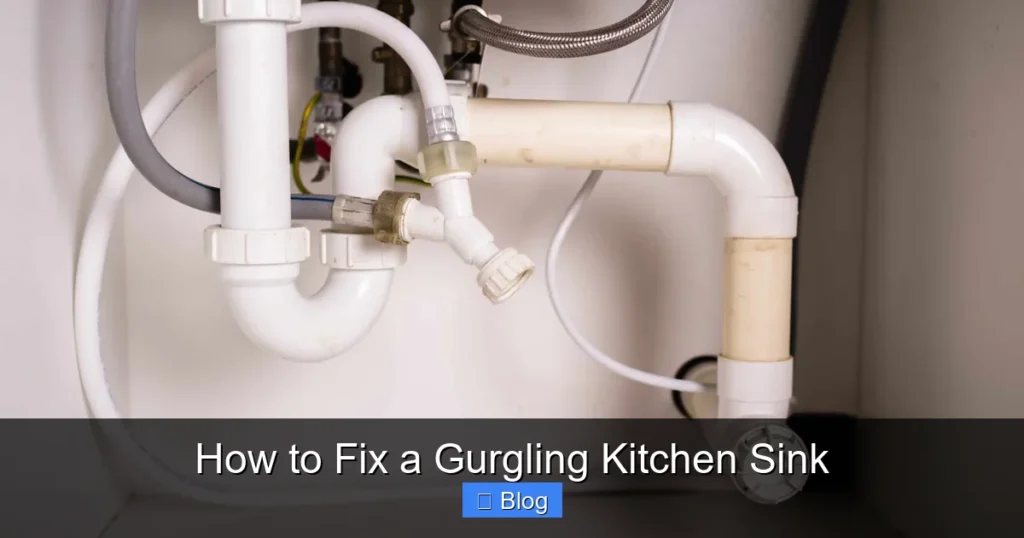
The P‑trap is the curved pipe under your sink. It holds a small amount of water that blocks sewer gases from coming up. Food particles, grease, or hair can build up inside, slowing the flow and forcing air to bubble through the water.
Improper or Blocked Venting
Every drain system has a vent pipe that lets air in and out. If the vent is blocked by leaves, a bird’s nest, or snow, the system can’t balance pressure, leading to gurgling noises when other fixtures (like the dishwasher) run.
Shared Drain Lines
In many homes, the kitchen sink shares a drain line with the dishwasher or even a bathroom sink. When the dishwasher finishes a cycle, the sudden rush of water can push air back toward the kitchen sink, creating a gurgle.
Essential Tools and Materials
Basic Toolkit
- Bucket
- Plunger (cup style works best)
- Plumber’s snake or hand auger (¼‑inch diameter)
- Adjustable wrench
- Channel‑lock pliers
- Flashlight
- Gloves
- Old towels or rags
Cleaning Supplies
- Baking soda
- White vinegar
- Hot water (as hot as your tap allows)
- Dish soap
Optional Extras
- Wet‑dry vacuum (helps pull out debris)
- Pipe inspection camera (for the curious DIYer)
Step‑by‑Step Guide to Fixing a Gurgling Kitchen Sink
Step 1: Confirm the Source
Before pulling anything apart, make sure the gurgle is actually coming from the sink and not the dishwasher or a nearby bathroom. Turn on the faucet and listen. Then, run the dishwasher on a short cycle. If the sound appears only when water runs, you’re dealing with a drain‑related issue.
Visual guide about How to Fix a Gurgling Kitchen Sink
Image source: i.ytimg.com
Visual guide about How to Fix a Gurgling Kitchen Sink
Image source: projectperfecthome.com
Step 2: Clear the P‑Trap
The P‑trap is the easiest place to start. Here’s how:
- Place a bucket under the trap to catch water.
- Loosen the slip nuts on both ends of the trap with an adjustable wrench.
- Remove the trap and dump its contents into the bucket.
- Use a bottle brush or an old toothbrush to scrub away any gunk.
- Reassemble the trap, tighten the nuts by hand, then give a final snug with the wrench (don’t over‑tighten).
Run hot water for a minute. If the gurgle stops, you’ve solved the problem.
Step 3: Use Baking Soda and Vinegar
If the trap was clean but the noise persists, a natural chemical reaction can clear minor blockages further down the line.
- Pour ½ cup of baking soda down the drain.
- Follow with ½ cup of white vinegar.
- Cover the drain with a plug or a wet cloth to keep the fizz inside.
- Wait 10‑15 minutes.
- Flush with a kettle of boiling water (or the hottest tap water you have).
This method breaks down grease and food debris without harsh chemicals.
Step 4: Snake the Drain
If the gurgle is still there, the blockage may be deeper.
- Insert the plumber’s snake into the drain opening.
- Turn the handle clockwise while feeding it forward.
- When you feel resistance, rotate the snake to break up the clog.
- Pull the snake out slowly, allowing debris to come with it.
- Run hot water to flush the pipe.
Most residential kitchen drains clear within a few pushes and pulls.
Step 5: Check the Vent Stack
When the sink still gurgles after the trap and pipe are clear, the vent is likely at fault.
- Locate the vent stack on your roof (it looks like a small pipe sticking up).
- From a safe ladder, inspect it for leaves, debris, or a squirrel’s nest.
- If you see a blockage, carefully remove it with a gloved hand or a garden trowel.
- For stubborn blockages, a garden hose can be used to flush the vent from the top down.
After clearing the vent, run water in the sink and another fixture (like a bathroom sink) to test for balanced pressure. The gurgle should disappear.
Step 6: Test the Dishwasher Connection
Sometimes the dishwasher’s air gap or hose can cause back‑pressure.
- Disconnect the dishwasher drain hose (have a bucket ready).
- Inspect the hose for kinks or clogs.
- Re‑attach securely, ensuring the hose loops higher than the sink drain (this prevents backflow).
- Run a short dishwasher cycle and listen.
If the gurgle stops, the issue was the hose configuration.
Step 7: When to Call a Professional
If you’ve tried all the steps above and the sink still gurgles, it may indicate:
- A broken vent pipe inside the wall.
- A collapsed or severely corroded drain line.
- Sewer line issues beyond your home’s plumbing.
In these cases, a licensed plumber can perform a camera inspection and recommend repair or replacement.
Preventive Maintenance: Keep the Gurgle Away for Good
Monthly P‑Trap Flush
Every month, pour a cup of hot water mixed with a few drops of dish soap down the drain. Follow with a half‑cup of baking soda and vinegar, then flush again. This routine prevents buildup.
Use a Drain Guard
Install a mesh screen over the sink drain to catch food scraps. Empty it after each use.
Avoid Grease Down the Drain
Let cooking grease cool, then pour it into a disposable container and throw it in the trash. Grease solidifies in pipes and is a major cause of blockages.
Maintain the Roof Vent
Twice a year, climb onto the roof (or have a professional do it) and clear any debris from the vent stack. A clear vent means balanced air pressure.
Run Hot Water After Heavy Use
After washing dishes or cooking a big meal, run hot water for a minute. This helps move any residual food particles through the system.
Conclusion: Quiet Sink, Happy Kitchen
A gurgling kitchen sink is rarely a sign of a catastrophic plumbing failure. Most of the time, it’s simply a clogged trap, a bit of grease, or a blocked vent. By following the steps above, you can diagnose the cause, apply a quick fix, and keep your sink silent for the long haul. Remember to perform regular maintenance, and you’ll rarely hear that annoying gurgle again. If you ever feel stuck, don’t hesitate to call a professional—better safe than sorry.
🎥 Related Video: How to Diagnose a Gurgling Sink | Ask This Old House
📺 This Old House
Ask This Old House plumbing and heating expert Richard Trethewey shows host Kevin O’Connor the proper way to ventilate a …
Frequently Asked Questions
Why does my kitchen sink gurgle only when the dishwasher runs?
The dishwasher shares the same drain line, and when it empties, it pushes air back toward the sink. A clogged trap or improper hose height can amplify the noise.
Can I use chemical drain cleaners to stop the gurgling?
It’s best to avoid harsh chemicals. They can damage pipes and don’t address vent issues. Natural methods like baking soda and vinegar are safer and often effective.
How often should I clean the P‑trap?
Cleaning the P‑trap every 3‑4 months is a good rule of thumb, especially if you cook with a lot of grease or food scraps.
What if the vent stack is on the roof and I can’t reach it?
Hire a qualified roofer or plumber to inspect and clear the vent. Safety is paramount; don’t attempt roof work without proper equipment.
Will a wet‑dry vacuum help remove a blockage?
Yes, a wet‑dry vacuum can be very effective at pulling out loose debris from the drain after you’ve loosened the trap.
Is a gurgling sink a sign of a sewer line problem?
Occasionally, especially if multiple fixtures gurgle simultaneously, it can indicate a larger sewer line issue. If DIY fixes fail, have a plumber perform a camera inspection.