This Hungarian goulash recipe delivers a rich, hearty beef stew packed with smoky paprika and tender root vegetables. You will learn how to make authentic goulash from scratch with simple ingredients and easy step-by-step instructions. Whether you are new to Hungarian cuisine or a seasoned cook, this guide covers everything you need for a perfect pot of goulash every time.
There is something truly magical about a pot of Hungarian goulash simmering on the stove. This classic dish has warmed hearts and filled homes across Hungary for centuries. At its core, a great Hungarian goulash recipe is all about simple ingredients coming together to create something extraordinary. You do not need fancy techniques or expensive cuts of meat. All you need is patience, good paprika, and a sturdy pot.
If you have been looking for a comforting, hearty meal that feels like a warm hug, you are in the right place. This guide walks you through every step of making authentic Hungarian goulash at home. We will cover the ingredients, the cooking process, and plenty of tips to help you nail it on your first try. By the end, you will feel confident enough to make this dish your own family favorite.
Key Takeaways
- Authentic Flavor: Hungarian goulash relies on sweet Hungarian paprika as its star ingredient, creating a smoky, rich flavor unlike any regular beef stew.
- Simple Ingredients: You only need beef chuck, onions, garlic, broth, paprika, and a few root vegetables to make this hearty stew.
- Low and Slow Cooking: The secret to tender, melt-in-your-mouth beef is patience. Let the goulash simmer for 1.5 to 2 hours for the best results.
- Meal Prep Friendly: Hungarian goulash tastes even better the next day and stores well in the fridge for up to 4 days or freezes for 3 months.
- Versatile and Customizable: You can adjust the heat level, add different vegetables, or experiment with herbs to make this recipe your own.
- Traditional Pairings: Serve with egg noodles, crusty bread, or a dollop of sour cream for an authentic Hungarian dining experience.
📑 Table of Contents
What Makes Hungarian Goulash Special
Hungarian goulash is not just another beef stew. It is a dish with deep cultural roots and a flavor profile that sets it apart from other stews you may have tried. The star of the show is Hungarian paprika, a spice that gives the dish its signature red color and smoky sweetness.
The Role of Paprika in Authentic Goulash
Paprika is not just a seasoning in Hungarian cooking. It is a way of life. Hungarian paprika comes in several varieties, from sweet to hot. For a traditional goulash, you want to use sweet paprika as the base. A small amount of hot paprika can add a gentle kick if you like a little heat. The paprika gets bloomed in oil at the start of cooking, which unlocks its full flavor and color.
Unlike many stews that rely on tomato paste or heavy cream for depth, goulash lets the paprika do the heavy lifting. This is what gives a proper Hungarian goulash recipe its distinctive taste that you cannot replicate with regular beef stew seasoning. The paprika spice creates a warm, earthy flavor that defines the entire dish.
A Brief History of Hungarian Goulash
The word goulash comes from the Hungarian word “gulyás,” which means herdsman. In the past, Hungarian cowboys would cook this dish over open fires using tough cuts of beef and whatever vegetables they had on hand. Over time, the recipe evolved and became a staple of Hungarian cuisine and home cooking. Today, it is served in homes and restaurants across Hungary and around the world.
The beauty of this dish is that it has stayed true to its roots. It is still a simple, humble meal made with care and patience. That is what makes traditional goulash so special. It is Eastern European food at its finest, representing generations of culinary wisdom.
Ingredients You Will Need for a Perfect Goulash
One of the best things about this Hungarian goulash recipe is how few ingredients you need. You probably already have most of them in your pantry. Here is what you will need to gather before you start cooking.
Essential Ingredients
- Beef chuck – about 2 pounds, cut into 1-inch cubes. This cut has the right amount of fat and connective tissue to become tender during slow cooking. It is the ideal choice for any hearty stew recipe.
- Sweet Hungarian paprika – 2 to 3 tablespoons. This is the soul of the dish. Do not substitute with regular paprika if you can avoid it.
- Onions – 2 large, diced. Onions form the base of the flavor and break down into a sweet, rich sauce.
- Garlic – 4 cloves, minced. Fresh garlic adds a pungent depth that dried garlic simply cannot match.
- Beef broth – 4 cups. Use good quality broth for the best flavor in your Hungarian meat stew.
- Tomato paste – 2 tablespoons. This adds a subtle richness and helps thicken the stew.
- Carrots and potatoes – 2 carrots and 2 medium potatoes, cubed. These Hungarian root vegetables add heartiness and natural sweetness.
- Bay leaves – 2 leaves. They add a subtle herbal note that rounds out the flavor.
- Salt and black pepper – to taste.
Optional Ingredients to Elevate Your Goulash
- Bell peppers – add a sweet, slightly smoky flavor that complements the paprika beautifully.
- Caraway seeds – a traditional Hungarian addition that gives the stew an earthy, warm note.
- Fresh tomatoes – 2 chopped, for added acidity and freshness.
- Lovage – a Hungarian herb similar to celery leaf. It is hard to find outside of Europe, but it is worth seeking out if you want the most authentic Hungarian recipe possible.
Having the right ingredients is half the battle. Do not rush this step. Good ingredients make a huge difference in the final result of your beef goulash.
Step-by-Step Instructions for the Hungarian Goulash Recipe
Now for the fun part. Making Hungarian goulash is straightforward, but it does require some patience. The low and slow cooking method is what transforms tough beef chunks into melt-in-your-mouth tenderness. This is the heart of goulash cooking tips that every home cook should know.
Step 1: Prepare the Beef
Pat the beef cubes dry with paper towels. This might seem like a small detail, but it makes a big difference. Dry meat browns better and develops a richer flavor. Season the cubes generously with salt and pepper before moving to the next step.
Step 2: Sear the Beef
Heat a large Dutch oven or heavy pot over medium-high heat. Add a tablespoon of oil and wait until it shimmers. Working in batches, add the beef cubes and let them sear on all sides. Do not crowd the pot. You want a nice brown crust on each piece. This should take about 3 to 4 minutes per side. Remove the browned beef and set it aside.
Those browned bits stuck to the bottom of the pot are flavor gold. Do not wash them away. They form the foundation of your goulash stew‘s rich taste.
Step 3: Cook the Onions and Build the Base
Reduce the heat to medium. Add the diced onions to the same pot and stir them into the beef drippings. Cook for about 5 minutes until they turn soft and translucent. Add the minced garlic and cook for another minute until fragrant.
Now add the tomato paste and stir everything together. Let it cook for about 2 minutes. This concentrates the flavor and removes any raw taste from the paste.
Step 4: Add the Paprika and Broth
Remove the pot from the heat for a moment. Add the sweet paprika and stir it into the onion mixture. The heat from the pot will bloom the paprika and release its oils. Be careful not to burn it, as burnt paprika turns bitter and ruins the dish.
Return the pot to low heat. Pour in the beef broth and stir well. Add the bay leaves and bring everything to a gentle simmer. This is where the magic begins as the paprika goulash starts to develop its deep, complex flavor.
Step 5: Slow Cook Until Tender
Add the seared beef back into the pot along with the carrots and potatoes. Bring the stew to a boil, then reduce the heat to low. Cover the pot and let it simmer for about 1.5 to 2 hours. Stir occasionally and check the liquid level. The goulash is done when the beef is fork-tender and the vegetables are soft.
If you prefer a thicker stew, you can remove the lid during the last 20 minutes of cooking to let some of the liquid evaporate. This also concentrates the flavors beautifully.
Step 6: Taste and Adjust
Before serving, taste the goulash and adjust the seasoning. Add more salt, pepper, or paprika if needed. Some people like a splash of red wine vinegar at the end to brighten the flavors. This is entirely optional, but it can add a nice balance to the rich stew.
Tips for the Perfect Goulash Every Time
Even though Hungarian goulash is a forgiving dish, a few expert tips can take it from good to outstanding. These goulash cooking tips will help you avoid common pitfalls and achieve restaurant-quality results at home.
Use the Right Cut of Beef
Beef chuck is the ideal cut for goulash because it contains enough collagen to break down into gelatin during long cooking. This gives the stew a silky, rich texture. Avoid lean cuts like sirloin, as they can become dry and tough. If you want to explore different beef cuts and cooking methods, you might enjoy checking out slow cooker Mississippi pot roast for another excellent slow-cooked beef dish that uses similar principles of patience and low heat.
Do Not Skip the Searing Step
Searing the beef creates a Maillard reaction that adds complex, deep flavors to the stew. It is a step you should not rush or skip. The brown bits on the bottom of the pot are the foundation of your goulash’s rich flavor. Work in small batches to ensure each piece gets proper coverage.
Let the Paprika Bloom
Adding paprika to hot oil and stirring it for a minute or two before adding liquid is crucial. This process, called blooming, activates the flavor compounds in the spice and distributes them evenly throughout the dish. Cold paprika added directly to liquid will not deliver the same depth of flavor. This is one of the most important goulash cooking tips to remember.
Give It Time
Low and slow is the mantra of great goulash. Rushing the cook time will result in tough, chewy beef. If you are short on time during the week, you can also make this in a slow cooker. Simply follow the same searing and building steps, then transfer everything to the slow cooker and cook on low for 6 to 8 hours. This makes it perfect for Hungarian comfort food lovers who want a set-it-and-forget-it approach.
Common Mistakes to Avoid
- Using pre-ground paprika from the spice rack. Freshly ground paprika has a much more vibrant flavor. If all you have is pre-ground, use it but add a little extra to compensate.
- Adding the paprika directly to hot liquid. This will make the paprika clump and taste raw. Always bloom it in oil first for the best results.
- Overcrowding the pot when searing. This steams the meat instead of browning it. Work in small batches for a proper sear.
- Adding too much liquid. The stew should be thick and rich, not soupy. Use the measurements as a guide and adjust as needed.
Serving Suggestions and Pairings
Hungarian goulash is delicious on its own, but the right side dishes can turn it into a complete meal. Here are some serving ideas that pair beautifully with this hearty stew.
Traditional Accompaniments
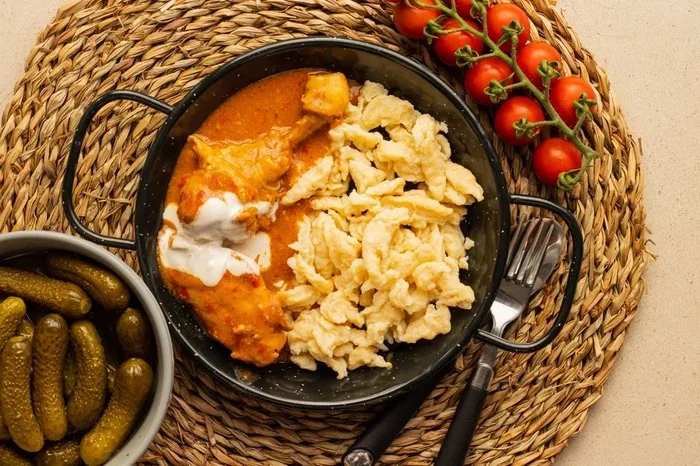
In Hungary, goulash is traditionally served with small egg noodles called csipetke or spaetzle. These noodles soak up the rich, flavorful broth perfectly. If you cannot find csipetke, wide egg noodles or even regular spaghetti broken into short pieces work well. A thick slice of rustic bread dipped into the goulash broth is one of life’s simple pleasures.
Some Hungarians also serve goulash with a dollop of sour cream on top, which adds a cool, tangy contrast to the warm, spicy stew. This is a classic Hungarian dinner recipe pairing that has been enjoyed for generations.
Soups as a Starter
If you are planning a Hungarian-themed dinner, consider serving a light soup alongside the goulash. A simple cream of mushroom soup makes an excellent starter. Its earthy, creamy flavor complements the paprika-rich goulash without overwhelming the palate. You could also serve a chilled cucumber salad for a refreshing contrast between courses.
Wine Pairings
A glass of Hungarian red wine is the perfect companion for goulash. Egri Bikavér, also known as Bull’s Blood, is a classic choice. Its bold, slightly spicy notes mirror the flavors in the stew beautifully. If you prefer something lighter, a Kékfrankos also works wonderfully with this Hungarian soup recipe tradition.
Storing and Reheating Your Goulash
One of the great things about Hungarian goulash is that it tastes even better the next day. The flavors have time to meld and deepen overnight, making it an ideal make-ahead meal for busy families.
How to Store Goulash
Let the goulash cool to room temperature before storing it. Transfer it to an airtight container and refrigerate within two hours of cooking. Properly stored goulash will keep in the fridge for up to 4 days. You can also freeze it for up to 3 months. Use freezer-safe containers and leave some room for expansion.
For those who love batch cooking and meal prep, goulash is one of the best dishes to make ahead. It freezes and reheats beautifully, making it a perfect option for busy weeknights when you need a hearty stew recipe without the effort.
How to Reheat Goulash
The best way to reheat goulash is on the stovetop over low heat. Add a splash of beef broth if the stew has thickened too much. Stir gently and heat until warmed through. Avoid microwaving if possible, as it can cause the beef to become tough and the vegetables to turn mushy.
If you enjoy hearty soups and stews, you might also like trying slow cooker split pea soup for another comforting, make-ahead meal that improves with time and tastes wonderful on cold evenings.
Why You Should Make Hungarian Goulash Tonight
There are many reasons to add this Hungarian goulash recipe to your cooking rotation. It is affordable, using inexpensive beef chuck and humble root vegetables. It is easy, requiring mostly hands-off simmering time. And it is deeply satisfying, delivering rich, complex flavors with minimal effort.
Hungarian goulash is also incredibly versatile. You can customize it to your taste by adjusting the paprika heat level, adding different vegetables, or experimenting with herbs. Once you make it a few times, you will develop your own signature version that your family will love.
This dish is more than just a meal. It is a connection to a rich culinary tradition that has been passed down through generations. Every bowl tells a story of Hungarian culture, hearty cooking, and the simple joy of good food shared with loved ones. So pull out your Dutch oven, gather your ingredients, and give this Hungarian goulash recipe a try. Your kitchen will smell incredible, and your taste buds will thank you.
Making goulash stew at home is easier than you think, and the results are worth every minute of simmering time. This Hungarian comfort food belongs in every home cook’s repertoire. Start tonight and discover why this dish has endured as a beloved classic for centuries.
Frequently Asked Questions
What is Hungarian goulash made of?
Hungarian goulash is made with beef chuck, sweet Hungarian paprika, onions, garlic, beef broth, tomato paste, and root vegetables like carrots and potatoes. The paprika is the defining ingredient that gives the dish its signature flavor and rich red color. Some recipes also include bell peppers, caraway seeds, or fresh tomatoes for extra depth.
How long does it take to make Hungarian goulash?
The active cooking time is about 30 minutes, including searing the beef and building the base. The total cook time is around 2 hours, as the stew needs to simmer low and slow until the beef is fork-tender. Using a slow cooker can extend the cook time to 6 to 8 hours on low, which is great for busy days.
Can I use ground beef instead of beef chuck for goulash?
While traditional goulash uses beef chuck or similar stewing beef, you can use ground beef if you prefer a different texture. Ground beef cooks faster, so you will need to adjust the simmering time accordingly. For more ideas on cooking with ground beef, you can explore various ground beef recipes to find the approach that works best for you.
What is the difference between Hungarian goulash and regular beef stew?
The main difference is the use of Hungarian paprika as the primary flavoring agent. Regular beef stew often relies on a mix of herbs, tomato paste, and flour for thickening. Hungarian goulash lets the paprika shine, creating a smoky, earthy flavor that is distinctly different. The preparation method also differs, with goulash focusing on blooming the paprika in oil before adding liquid.
Can I freeze Hungarian goulash?
Yes, Hungarian goulash freezes very well and actually tastes better after the flavors have had time to meld. Let the stew cool completely before transferring it to freezer-safe containers. It will keep in the freezer for up to 3 months. Thaw overnight in the refrigerator and reheat gently on the stovetop for the best results.
What should I serve with Hungarian goulash?
Traditional accompaniments include egg noodles, csipetke, or spaetzle, which soak up the rich broth beautifully. Crusty bread, sour cream, and a simple cucumber salad are also popular side choices. For a complete Hungarian meal, pair the goulash with a glass of Hungarian red wine such as Egri Bikavér or Kékfrankos.