
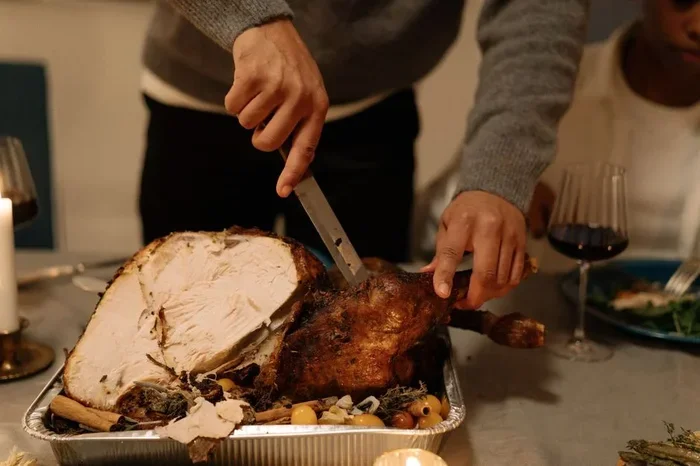
Knowing the right turkey cook time per pound is the single most important factor for a juicy, perfectly roasted turkey. This guide breaks down exact cooking times for every turkey size and method. Master turkey cook time per pound and say goodbye to dry, overcooked birds forever.
Key Takeaways
- General Rule: Plan for about 13-15 minutes per pound at 325°F for an unstuffed turkey.
- Stuffed Turkeys Take Longer: Add 30-45 minutes to the total cook time when the cavity is filled.
- Use a Meat Thermometer: The internal temperature should reach 165°F in the thickest part of the thigh.
- Resting Is Crucial: Let your turkey rest for 20-30 minutes before carving to lock in juices.
- Thawing Matters: A frozen turkey needs 24 hours per 4-5 pounds in the fridge before cooking.
- Size Affects Evenness: Turkeys over 18 pounds can cook unevenly, so consider splitting or spatchcocking.
- Oven Temperature Varies: Some recipes call for 325°F, others 350°F — know which works best for your bird.
📑 Table of Contents
- What Is Turkey Cook Time Per Pound?
- Turkey Cook Time Per Pound by Cooking Method
- How to Calculate Turkey Cook Time Per Pound
- Turkey Cook Time Per Pound for Different Turkey Sizes
- Common Mistakes That Affect Turkey Cook Time
- Quick Tips for Perfect Turkey Every Time
- Turkey Cook Time Per Pound: Final Thoughts
What Is Turkey Cook Time Per Pound?
Turkey cook time per pound is the standard measurement used to figure out how long to roast a turkey in the oven. It is the backbone of every good turkey recipe. Whether you are cooking a small bird for a weeknight dinner or a giant turkey for Thanksgiving, this number tells you everything you need to plan your meal.
The basic idea is simple. Multiply the weight of your turkey by the recommended minutes per pound. That gives you a baseline cooking time. But there is a catch. Several factors change the equation. These include whether the turkey is stuffed, how hot your oven runs, and the type of turkey you are working with.
If you have ever ended up with a dry turkey or one that is raw in the middle, you know how frustrating it can be to get this wrong. That is why understanding turkey cook time per pound is so important. It takes the guesswork out of your roast turkey plan and gives you a reliable starting point.
For more details on choosing the right equipment, check out this best pan to cook turkey in oven guide.
Why the “Minutes Per Pound” Rule Exists
The minutes-per-pound rule exists because heat moves through meat at a somewhat predictable rate. A larger bird needs more time for the heat to reach the center. A smaller bird cooks faster. This rule gives you a solid starting point. But it is not a guarantee. Always use a meat thermometer to confirm doneness.
Turkey Cook Time Per Pound by Cooking Method
Not all cooking methods are the same. The way you cook your turkey changes the total time significantly. Let us break down the most popular methods and their recommended cooking time per pound.
Standard Oven Roasting (325°F)
This is the most common method. Roast your turkey at 325°F for about 13-15 minutes per pound. This works well for both small and large birds. A 12-pound turkey will take roughly 2.5 to 3 hours. A 20-pound bird may need 4 to 4.5 hours.
Some cooks prefer a higher temperature, like 350°F. That method shaves off a little time, usually around 10-12 minutes per pound. But the higher heat can dry out the meat faster. If you go this route, keep a close eye on things.
Low and Slow Roasting (300°F)
Roasting at 300°F is a fantastic option if you want super tender meat. The turkey cook time per pound increases here. Plan for about 20-25 minutes per pound at this temperature. The low heat breaks down connective tissue slowly. This gives you a beautifully tender result.
The trade-off is time. A 15-pound turkey could take 5 to 6 hours this way. But if you have the patience, the results are worth it.
Covered vs. Uncovered Roasting
Covering your turkey with foil for the first part of cooking traps moisture. Then you remove the foil to let the skin crisp up. This approach can affect your total time by about 10-15 minutes. It is a great trick for keeping the meat juicy while still getting that golden crispy skin everyone loves.
Keeping Your Turkey Warm After Cooking
Once your turkey is done, you need to keep it warm until serving time. Properly maintaining temperature is important for both food safety and flavor. Learn more about this in our how to keep a turkey warm in the oven guide.
How to Calculate Turkey Cook Time Per Pound
Calculating your turkey cook time per pound is straightforward once you know the formula. Here is a simple step-by-step process.
Step 1: Weigh Your Turkey
Weigh the turkey with all the fixings inside the cavity. That means stuff it the way you plan to cook it. The weight with stuffing is what matters. A raw, empty turkey and a stuffed turkey of the same outer size will cook very differently.
Step 2: Choose Your Temperature
Decide on your oven temperature. 325°F is the safest and most widely recommended. 350°F works if you want a slightly shorter cook time. 300°F is best for a slow, hands-off roast.
Step 3: Apply the Formula
Multiply the turkey weight in pounds by the minutes per pound for your chosen method. Here is a quick example:
- 12-pound turkey at 325°F: 12 x 15 = 180 minutes (3 hours)
- 16-pound turkey at 350°F: 16 x 12 = 192 minutes (3.2 hours)
- 20-pound turkey at 300°F: 20 x 22 = 440 minutes (7.3 hours)
Step 4: Add Extra Time for Stuffing
If your turkey is stuffed, add 30-45 minutes to the total. The stuffing inside the cavity absorbs heat and slows things down. This is a very common mistake people make. They cook based on the outer weight alone and end up with undercooked filling.
Step 5: Check with a Thermometer
This step is non-negotiable. Insert a meat thermometer into the thickest part of the thigh. Do not let it touch the bone. The internal temperature must read 165°F. That is the food safety standard. If it has not reached that temperature, keep cooking and check again every 15 minutes.
Turkey Cook Time Per Pound for Different Turkey Sizes
Not all turkeys are created equal. The size of your bird changes things more than you might think. Here is a detailed look at how turkey size affects cooking time.
Small Turkeys (8-12 Pounds)
Small turkeys are great for weeknight dinners or small gatherings. At 325°F, plan for about 13-15 minutes per pound. An 8-pound turkey takes roughly 1.7 to 2 hours. A 12-pound turkey needs about 2.5 to 3 hours. These birds cook evenly and are harder to overcook.
Medium Turkeys (12-16 Pounds)
This is the sweet spot for most holiday tables. A 14-pound turkey at 325°F will take about 3 to 3.5 hours. At 350°F, you can shave 20-30 minutes off. Medium turkeys offer the best balance of meat and cookability. They heat through evenly without much drama.
Large Turkeys (16-20 Pounds)
Large turkeys need more attention. At 325°F, plan for 15-18 minutes per pound. A 20-pound bird may need 4 to 5 hours. The risk of uneven cooking goes up here. The outer breast can dry out while the inner thigh is still raw. To fix this, start breast-side down for the first hour. Then flip it breast-side up for the remaining time.
Extra-Large Turkeys (20+ Pounds)
Cooking a turkey over 20 pounds is tricky. The cooking time per pound increases, and the bird may not cook evenly at all. Consider spatchcocking (flattening the bird) to reduce the overall time. Spatchcocked turkeys cook in about 10-12 minutes per pound at 375°F. This is a game-changer for big birds.
Comparison Table: Turkey Cook Time by Size
| Turkey Weight | 325°F (Unstuffed) | 350°F (Unstuffed) | 325°F (Stuffed) |
|---|---|---|---|
| 8-10 lbs | 1.7 – 2.1 hrs | 1.3 – 1.7 hrs | 2.0 – 2.5 hrs |
| 12-14 lbs | 2.5 – 3.5 hrs | 2.0 – 2.8 hrs | 3.0 – 3.75 hrs |
| 16-18 lbs | 3.5 – 4.5 hrs | 3.0 – 3.8 hrs | 4.0 – 5.0 hrs |
| 20-22 lbs | 4.5 – 5.5 hrs | 3.8 – 4.5 hrs | 5.0 – 6.0 hrs |
Common Mistakes That Affect Turkey Cook Time
Even experienced home cooks make mistakes that throw off their turkey cook time per pound. Here are the biggest ones to avoid.
Not Thawing the Turkey Properly
A frozen turkey will take much longer to cook. The ice inside the bird absorbs heat and lowers the oven temperature around the meat. You should thaw your turkey in the fridge for about 24 hours per 4-5 pounds. A fully thawed bird cooks predictably. A partially frozen one cooks unevenly and may never reach the right internal temperature.
Opening the Oven Door Too Often
Every time you open the oven door, you lose heat. This can add 15-20 minutes to your total cooking time. Resist the urge to baste or check too frequently. Use the oven light to peek instead. Trust the process and let the heat do its job.
Cooking at the Wrong Temperature
Many people set their oven to 325°F without checking. Oven thermostats can be off by 25°F or more. Invest in an oven thermometer to verify your actual temperature. A 25°F difference can add or subtract 30 minutes from your total time. This is the kind of thing that catches people off guard. For comparison, similar poultry items like chicken wings in oven 400 have very different timing, so always use the right reference for your specific dish.
Ignoring the Resting Time
You have cooked your turkey to 165°F. You pull it out. You start carving immediately. Big mistake. The resting time is when the juices redistribute. Without it, all those flavorful juices run out onto your cutting board instead of staying in the meat. Let your turkey rest for at least 20-30 minutes tented with foil.
Overstuffing the Cavity
It is tempting to pack the cavity full of stuffing. But too much stuffing blocks heat from circulating properly. This increases the total cook time and can leave the center undercooked. Use a light hand when stuffing. You want enough for flavor, not so much that it affects the cooking time.
Quick Tips for Perfect Turkey Every Time
Here are some expert-level tips that make a real difference. These are easy to follow and give you the best chance at a perfect bird.
Brine Your Turkey the Night Before
Brining means soaking the turkey in a salt-water solution. This helps the meat retain moisture during cooking. A brined turkey stays juicier even if you slightly overcook it. Soak it for 12-24 hours in the fridge before cooking day.
Bring the Turkey to Room Temperature Before Cooking
Take the turkey out of the fridge 1-2 hours before cooking. A cold bird dropped into a hot oven takes longer to cook evenly. Room-temperature meat starts cooking faster and more uniformly. This simple step can save you 20-30 minutes of oven time.
Use a Rack in the Roasting Pan
A rack lifts the turkey off the bottom of the pan. This allows hot air to circulate underneath. It promotes even cooking and prevents the bottom from getting soggy. It also makes the bird easier to remove from the pan later.
Season Generously and Early
Rub butter, oil, and seasoning under the skin and over the outside. Seasoning the skin ahead of time lets the flavors penetrate. Do this the night before or at least a few hours before cooking. This is the foundation of a great turkey recipe.
Tent with Foil if the Skin Browns Too Fast
If the skin is getting dark before the meat is done, loosely tent foil over the breast. This shields it from direct heat. Keep checking every 20 minutes. Remove the foil for the last 30-45 minutes to let the skin crisp up.
Expert Insight: The Thermometer Is Your Best Friend
Professional chefs all agree on one thing. A reliable meat thermometer is the most important tool for roasting a turkey. No timer, no recipe, and no rule of thumb beats a thermometer reading 165°F in the thigh. This is the only way to guarantee a safe and perfectly cooked bird every single time.
Turkey Cook Time Per Pound: Final Thoughts
Getting the turkey cook time per pound right does not have to be stressful. Start with the basic formula. Multiply the weight by the minutes per pound for your chosen method. Add extra time for stuffing. And always verify with a meat thermometer.
Remember that every turkey is different. Size, temperature, stuffing, and oven accuracy all play a role. The more you cook turkeys, the better you get at estimating. Each cook teaches you something new. Do not be afraid to experiment and adjust based on your results.
Follow the tips in this guide, avoid the common mistakes, and you will have a beautiful, juicy turkey on your table. Master turkey cook time per pound and make your next turkey dinner one to remember.
Frequently Asked Questions
What is the standard turkey cook time per pound at 325°F?
At 325°F, plan for about 13-15 minutes per pound for an unstuffed turkey. So a 12-pound turkey takes roughly 2.5 to 3 hours. Always check the internal temperature with a meat thermometer to confirm it reaches 165°F in the thigh.
Does a stuffed turkey take longer to cook per pound?
Yes, a stuffed turkey needs extra time. Add about 30-45 minutes to the total cooking time compared to an unstuffed bird of the same weight. The stuffing inside the cavity absorbs heat and slows down the cooking process. Make sure the stuffing also reaches 165°F before serving.
How long does it take to cook a 20-pound turkey?
At 325°F, a 20-pound unstuffed turkey takes about 4.5 to 5.5 hours. At 350°F, it may take 3.8 to 4.5 hours. If stuffed, add extra time and plan for 5 to 6 hours at 325°F. Use a meat thermometer to check for doneness rather than relying solely on time.
Should I roast my turkey covered or uncovered?
A good approach is to cover the turkey with foil for the first two-thirds of cooking time. This keeps the meat moist. Then remove the foil for the final third to let the skin turn golden and crispy. You can also roast uncovered the entire time if you prefer crispier skin, but the meat may dry out faster.
How do I know when my turkey is fully cooked?
The only reliable way is a meat thermometer. Insert it into the thickest part of the thigh without touching the bone. The internal temperature must reach 165°F. Check the stuffing too if your turkey is stuffed. It should also be at 165°F. Juices running clear is another good visual sign.
Can I cook a frozen turkey without thawing it first?
You can, but it will take significantly longer. A frozen turkey may need 50% more time than a thawed one. The ice inside the bird absorbs heat and slows cooking. Thawing in the fridge for 24 hours per 4-5 pounds is highly recommended for more even cooking and better flavor. You can also use the cold water thawing method if you are short on time.



